1 / 3
Agate Grand Tour Obelisks
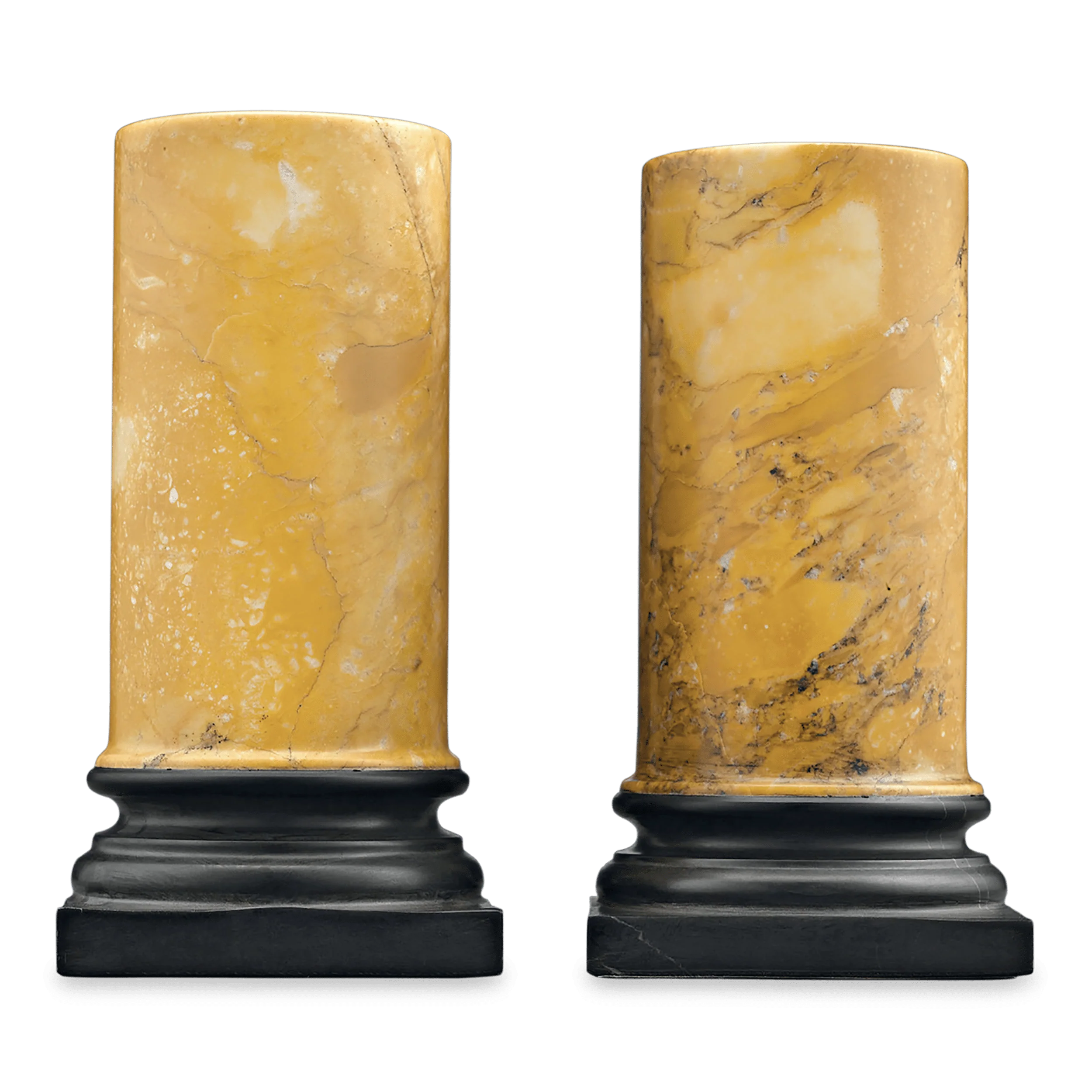
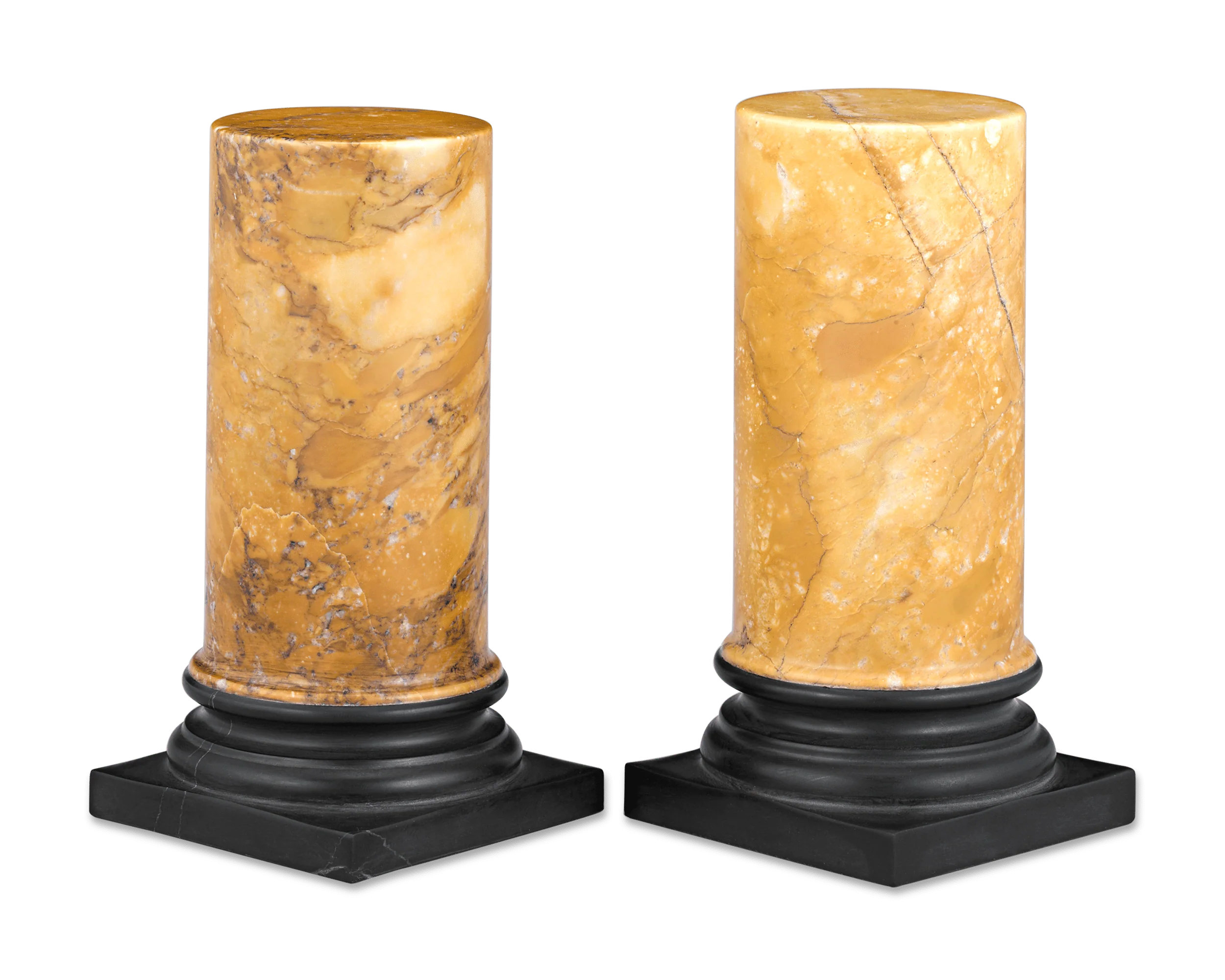
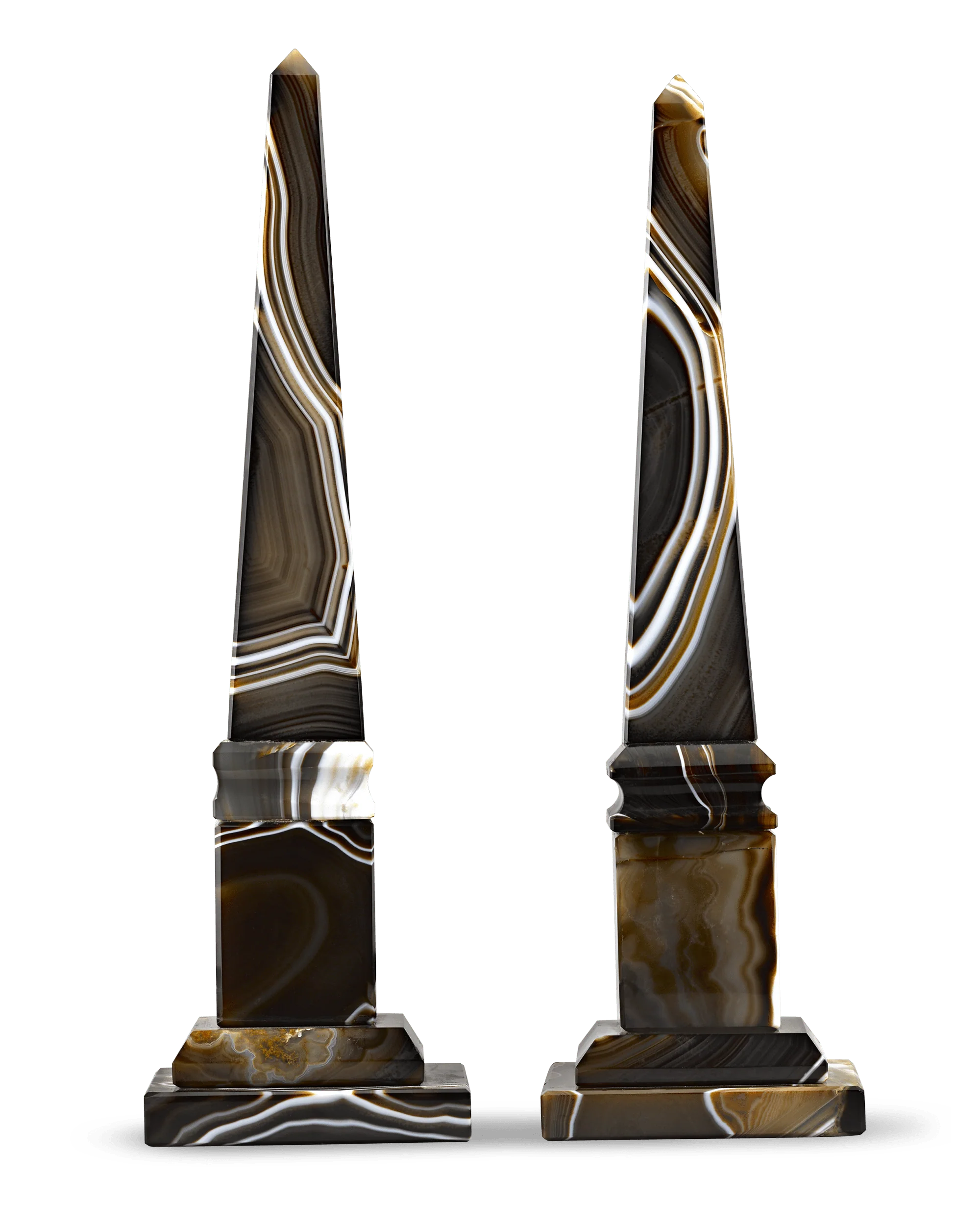
These impressive Egyptian Revival obelisks are crafted of dynamically patterned agate. The rare 19th-century models were almost certainly made in Italy during the height of the Grand Tour when the fervor for all things ancient pervaded the decorative arts. Rich in neoclassical elegance yet possessing an exotic worldliness, pieces such as these were extremely popular as Grand Tour souvenirs among members of the British aristocracy.
Models influenced by the ancient world pervaded interior design and the decorative arts of the 19th century. Interest in Egyptian art was already high after Napoléon's 1798 campaign in Egypt, which led to an influx of Egyptian art and design into European culture. Adding to this momentum was Jean-François Champollion’s deciphering of hieroglyphs in 1822, as well as the installation of an obelisk in Paris in 1836. The excitement for Egyptian-style art and architecture continued to grow over the coming decades, and the style remains highly fashionable among both collectors and designers today.
Circa 1850
3 1/2" square x 12 1/4" high
Models influenced by the ancient world pervaded interior design and the decorative arts of the 19th century. Interest in Egyptian art was already high after Napoléon's 1798 campaign in Egypt, which led to an influx of Egyptian art and design into European culture. Adding to this momentum was Jean-François Champollion’s deciphering of hieroglyphs in 1822, as well as the installation of an obelisk in Paris in 1836. The excitement for Egyptian-style art and architecture continued to grow over the coming decades, and the style remains highly fashionable among both collectors and designers today.
Circa 1850
3 1/2" square x 12 1/4" high
These impressive Egyptian Revival obelisks are crafted of dynamically patterned agate. The rare 19th-century models were almost certainly made in Italy during the height of the Grand Tour when the fervor for all things ancient pervaded the decorative arts. Rich in neoclassical elegance yet possessing an exotic worldliness, pieces such as these were extremely popular as Grand Tour souvenirs among members of the British aristocracy.
Models influenced by the ancient world pervaded interior design and the decorative arts of the 19th century. Interest in Egyptian art was already high after Napoléon's 1798 campaign in Egypt, which led to an influx of Egyptian art and design into European culture. Adding to this momentum was Jean-François Champollion’s deciphering of hieroglyphs in 1822, as well as the installation of an obelisk in Paris in 1836. The excitement for Egyptian-style art and architecture continued to grow over the coming decades, and the style remains highly fashionable among both collectors and designers today.
Circa 1850
3 1/2" square x 12 1/4" high
Models influenced by the ancient world pervaded interior design and the decorative arts of the 19th century. Interest in Egyptian art was already high after Napoléon's 1798 campaign in Egypt, which led to an influx of Egyptian art and design into European culture. Adding to this momentum was Jean-François Champollion’s deciphering of hieroglyphs in 1822, as well as the installation of an obelisk in Paris in 1836. The excitement for Egyptian-style art and architecture continued to grow over the coming decades, and the style remains highly fashionable among both collectors and designers today.
Circa 1850
3 1/2" square x 12 1/4" high
$12,850.00
Agate Grand Tour Obelisks—
$12,850.00
Description
These impressive Egyptian Revival obelisks are crafted of dynamically patterned agate. The rare 19th-century models were almost certainly made in Italy during the height of the Grand Tour when the fervor for all things ancient pervaded the decorative arts. Rich in neoclassical elegance yet possessing an exotic worldliness, pieces such as these were extremely popular as Grand Tour souvenirs among members of the British aristocracy.
Models influenced by the ancient world pervaded interior design and the decorative arts of the 19th century. Interest in Egyptian art was already high after Napoléon's 1798 campaign in Egypt, which led to an influx of Egyptian art and design into European culture. Adding to this momentum was Jean-François Champollion’s deciphering of hieroglyphs in 1822, as well as the installation of an obelisk in Paris in 1836. The excitement for Egyptian-style art and architecture continued to grow over the coming decades, and the style remains highly fashionable among both collectors and designers today.
Circa 1850
3 1/2" square x 12 1/4" high
Models influenced by the ancient world pervaded interior design and the decorative arts of the 19th century. Interest in Egyptian art was already high after Napoléon's 1798 campaign in Egypt, which led to an influx of Egyptian art and design into European culture. Adding to this momentum was Jean-François Champollion’s deciphering of hieroglyphs in 1822, as well as the installation of an obelisk in Paris in 1836. The excitement for Egyptian-style art and architecture continued to grow over the coming decades, and the style remains highly fashionable among both collectors and designers today.
Circa 1850
3 1/2" square x 12 1/4" high