1 / 3
Bronze Palanquin Leopard Finial
Bronze Palanquin Leopard Finial
Circa 1800
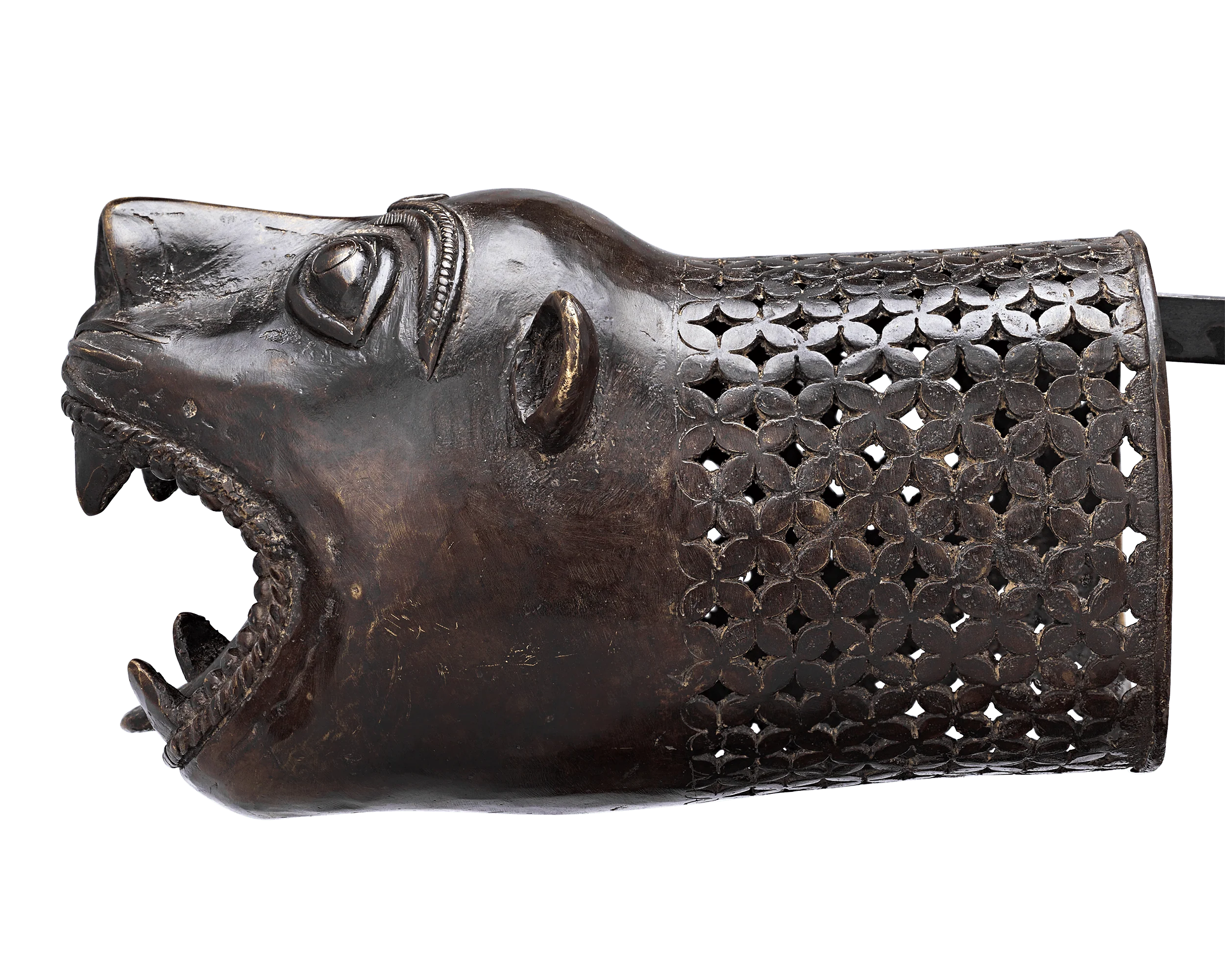
Cast in the form of a fierce leopard, this rare bronze finial once adorned the end of a palanquin pole and dates to the turn of the 19th century. The palanquin, or “palki,” is a litter-style conveyance that has been used in India for centuries to transport individuals in enclosed compartments borne on poles. Finials like this one were attached to the ends of those poles, combining ornamentation with function in a display of craftsmanship and status.
The word “palanquin” derives from the Sanskrit palanki, meaning “bed” or “couch.” These richly draped conveyances were traditionally carried by four to eight bearers—known variously as behara, dulia or boyee, depending on the region. Interiors were often appointed with plush bedding and pillows to ensure comfort while traveling. Although palanquins are first mentioned in the 3rd-century BCE epic Ramayana, their peak usage occurred during the Mughal era, from the 16th through 19th centuries. With the rise of railways and roadways capable of supporting wheeled transport, their everyday use declined. Today, palanquins continue to appear in ceremonial contexts, particularly in weddings.
The ornamentation and complexity of a palanquin were closely tied to the social status of its owner. Finials followed the same conventions, serving not only as decorative elements but also as indicators of gender. Women’s palanquins were typically adorned with floral motifs—especially lotuses—and birds, while those belonging to men often featured fierce animals or mythical creatures drawn from Indian folklore.
Similar palanquin finials are held in the collections of the Victoria and Albert Museum in London and the Metropolitan Museum of Art in New York. The Heritage Transport Museum in Taoru, India, features an entire exhibit dedicated to palanquins, showcasing a diverse array of finials.
8 1/4" length x 6" wide x 5" high
Circa 1800
Cast in the form of a fierce leopard, this rare bronze finial once adorned the end of a palanquin pole and dates to the turn of the 19th century. The palanquin, or “palki,” is a litter-style conveyance that has been used in India for centuries to transport individuals in enclosed compartments borne on poles. Finials like this one were attached to the ends of those poles, combining ornamentation with function in a display of craftsmanship and status.
The word “palanquin” derives from the Sanskrit palanki, meaning “bed” or “couch.” These richly draped conveyances were traditionally carried by four to eight bearers—known variously as behara, dulia or boyee, depending on the region. Interiors were often appointed with plush bedding and pillows to ensure comfort while traveling. Although palanquins are first mentioned in the 3rd-century BCE epic Ramayana, their peak usage occurred during the Mughal era, from the 16th through 19th centuries. With the rise of railways and roadways capable of supporting wheeled transport, their everyday use declined. Today, palanquins continue to appear in ceremonial contexts, particularly in weddings.
The ornamentation and complexity of a palanquin were closely tied to the social status of its owner. Finials followed the same conventions, serving not only as decorative elements but also as indicators of gender. Women’s palanquins were typically adorned with floral motifs—especially lotuses—and birds, while those belonging to men often featured fierce animals or mythical creatures drawn from Indian folklore.
Similar palanquin finials are held in the collections of the Victoria and Albert Museum in London and the Metropolitan Museum of Art in New York. The Heritage Transport Museum in Taoru, India, features an entire exhibit dedicated to palanquins, showcasing a diverse array of finials.
8 1/4" length x 6" wide x 5" high
Bronze Palanquin Leopard Finial
Circa 1800
Cast in the form of a fierce leopard, this rare bronze finial once adorned the end of a palanquin pole and dates to the turn of the 19th century. The palanquin, or “palki,” is a litter-style conveyance that has been used in India for centuries to transport individuals in enclosed compartments borne on poles. Finials like this one were attached to the ends of those poles, combining ornamentation with function in a display of craftsmanship and status.
The word “palanquin” derives from the Sanskrit palanki, meaning “bed” or “couch.” These richly draped conveyances were traditionally carried by four to eight bearers—known variously as behara, dulia or boyee, depending on the region. Interiors were often appointed with plush bedding and pillows to ensure comfort while traveling. Although palanquins are first mentioned in the 3rd-century BCE epic Ramayana, their peak usage occurred during the Mughal era, from the 16th through 19th centuries. With the rise of railways and roadways capable of supporting wheeled transport, their everyday use declined. Today, palanquins continue to appear in ceremonial contexts, particularly in weddings.
The ornamentation and complexity of a palanquin were closely tied to the social status of its owner. Finials followed the same conventions, serving not only as decorative elements but also as indicators of gender. Women’s palanquins were typically adorned with floral motifs—especially lotuses—and birds, while those belonging to men often featured fierce animals or mythical creatures drawn from Indian folklore.
Similar palanquin finials are held in the collections of the Victoria and Albert Museum in London and the Metropolitan Museum of Art in New York. The Heritage Transport Museum in Taoru, India, features an entire exhibit dedicated to palanquins, showcasing a diverse array of finials.
8 1/4" length x 6" wide x 5" high
Circa 1800
Cast in the form of a fierce leopard, this rare bronze finial once adorned the end of a palanquin pole and dates to the turn of the 19th century. The palanquin, or “palki,” is a litter-style conveyance that has been used in India for centuries to transport individuals in enclosed compartments borne on poles. Finials like this one were attached to the ends of those poles, combining ornamentation with function in a display of craftsmanship and status.
The word “palanquin” derives from the Sanskrit palanki, meaning “bed” or “couch.” These richly draped conveyances were traditionally carried by four to eight bearers—known variously as behara, dulia or boyee, depending on the region. Interiors were often appointed with plush bedding and pillows to ensure comfort while traveling. Although palanquins are first mentioned in the 3rd-century BCE epic Ramayana, their peak usage occurred during the Mughal era, from the 16th through 19th centuries. With the rise of railways and roadways capable of supporting wheeled transport, their everyday use declined. Today, palanquins continue to appear in ceremonial contexts, particularly in weddings.
The ornamentation and complexity of a palanquin were closely tied to the social status of its owner. Finials followed the same conventions, serving not only as decorative elements but also as indicators of gender. Women’s palanquins were typically adorned with floral motifs—especially lotuses—and birds, while those belonging to men often featured fierce animals or mythical creatures drawn from Indian folklore.
Similar palanquin finials are held in the collections of the Victoria and Albert Museum in London and the Metropolitan Museum of Art in New York. The Heritage Transport Museum in Taoru, India, features an entire exhibit dedicated to palanquins, showcasing a diverse array of finials.
8 1/4" length x 6" wide x 5" high
$1,347.50
Original: $3,850.00
-65%Bronze Palanquin Leopard Finial—
$3,850.00
$1,347.50Description
Bronze Palanquin Leopard Finial
Circa 1800
Cast in the form of a fierce leopard, this rare bronze finial once adorned the end of a palanquin pole and dates to the turn of the 19th century. The palanquin, or “palki,” is a litter-style conveyance that has been used in India for centuries to transport individuals in enclosed compartments borne on poles. Finials like this one were attached to the ends of those poles, combining ornamentation with function in a display of craftsmanship and status.
The word “palanquin” derives from the Sanskrit palanki, meaning “bed” or “couch.” These richly draped conveyances were traditionally carried by four to eight bearers—known variously as behara, dulia or boyee, depending on the region. Interiors were often appointed with plush bedding and pillows to ensure comfort while traveling. Although palanquins are first mentioned in the 3rd-century BCE epic Ramayana, their peak usage occurred during the Mughal era, from the 16th through 19th centuries. With the rise of railways and roadways capable of supporting wheeled transport, their everyday use declined. Today, palanquins continue to appear in ceremonial contexts, particularly in weddings.
The ornamentation and complexity of a palanquin were closely tied to the social status of its owner. Finials followed the same conventions, serving not only as decorative elements but also as indicators of gender. Women’s palanquins were typically adorned with floral motifs—especially lotuses—and birds, while those belonging to men often featured fierce animals or mythical creatures drawn from Indian folklore.
Similar palanquin finials are held in the collections of the Victoria and Albert Museum in London and the Metropolitan Museum of Art in New York. The Heritage Transport Museum in Taoru, India, features an entire exhibit dedicated to palanquins, showcasing a diverse array of finials.
8 1/4" length x 6" wide x 5" high
Circa 1800
Cast in the form of a fierce leopard, this rare bronze finial once adorned the end of a palanquin pole and dates to the turn of the 19th century. The palanquin, or “palki,” is a litter-style conveyance that has been used in India for centuries to transport individuals in enclosed compartments borne on poles. Finials like this one were attached to the ends of those poles, combining ornamentation with function in a display of craftsmanship and status.
The word “palanquin” derives from the Sanskrit palanki, meaning “bed” or “couch.” These richly draped conveyances were traditionally carried by four to eight bearers—known variously as behara, dulia or boyee, depending on the region. Interiors were often appointed with plush bedding and pillows to ensure comfort while traveling. Although palanquins are first mentioned in the 3rd-century BCE epic Ramayana, their peak usage occurred during the Mughal era, from the 16th through 19th centuries. With the rise of railways and roadways capable of supporting wheeled transport, their everyday use declined. Today, palanquins continue to appear in ceremonial contexts, particularly in weddings.
The ornamentation and complexity of a palanquin were closely tied to the social status of its owner. Finials followed the same conventions, serving not only as decorative elements but also as indicators of gender. Women’s palanquins were typically adorned with floral motifs—especially lotuses—and birds, while those belonging to men often featured fierce animals or mythical creatures drawn from Indian folklore.
Similar palanquin finials are held in the collections of the Victoria and Albert Museum in London and the Metropolitan Museum of Art in New York. The Heritage Transport Museum in Taoru, India, features an entire exhibit dedicated to palanquins, showcasing a diverse array of finials.
8 1/4" length x 6" wide x 5" high