1 / 6
+1
Campo del Cielo Meteorite
Campo del Cielo Meteorite
Fell to earth circa 4,000-5,000 BCE
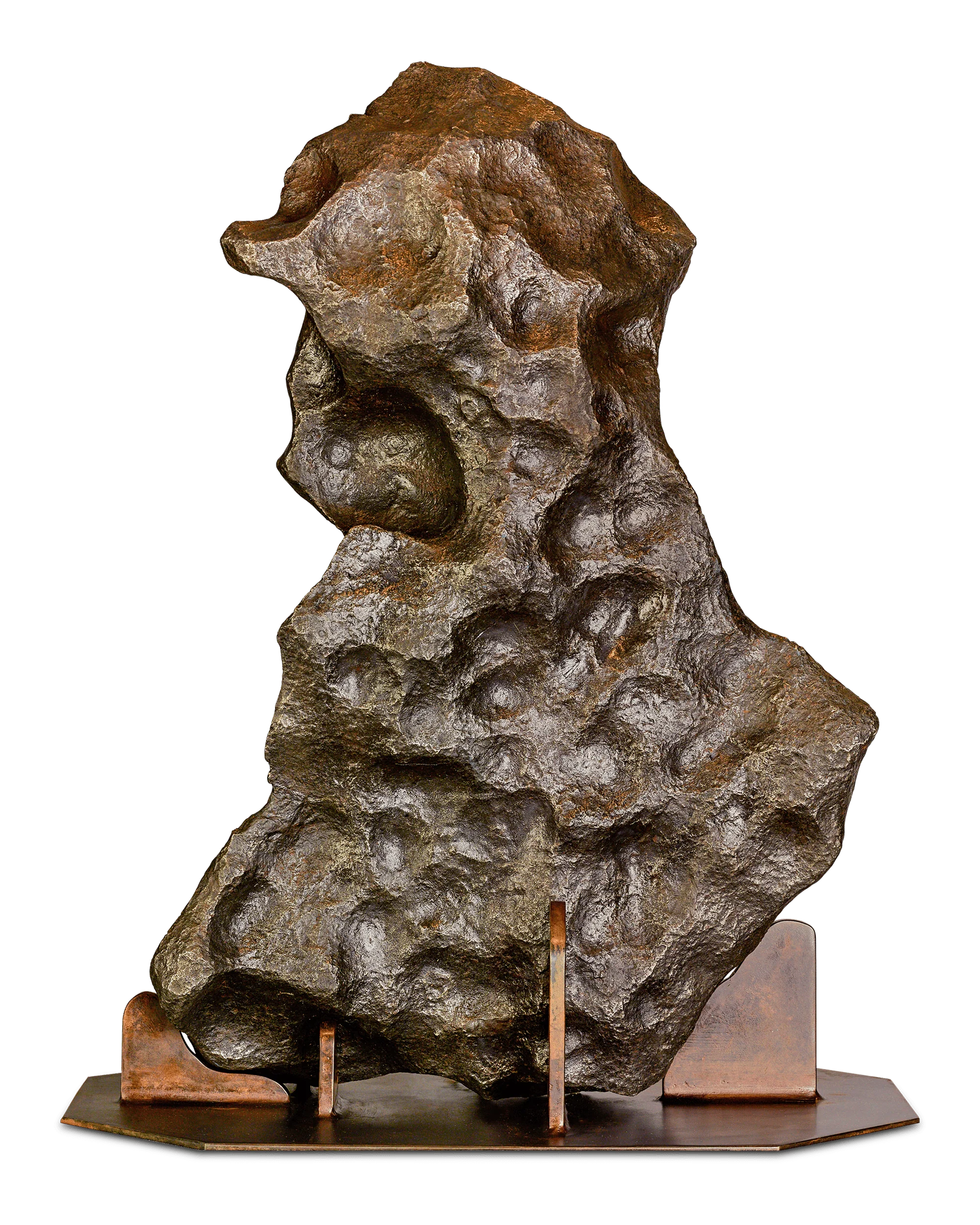
A relic of cosmic history, this extraordinary Campo del Cielo meteorite took form billions of years ago. Falling to Earth circa 4,000–5,000 BCE in what is now northern Argentina, this specimen, weighing an impressive 328 pounds, is an “out of this world” rarity.
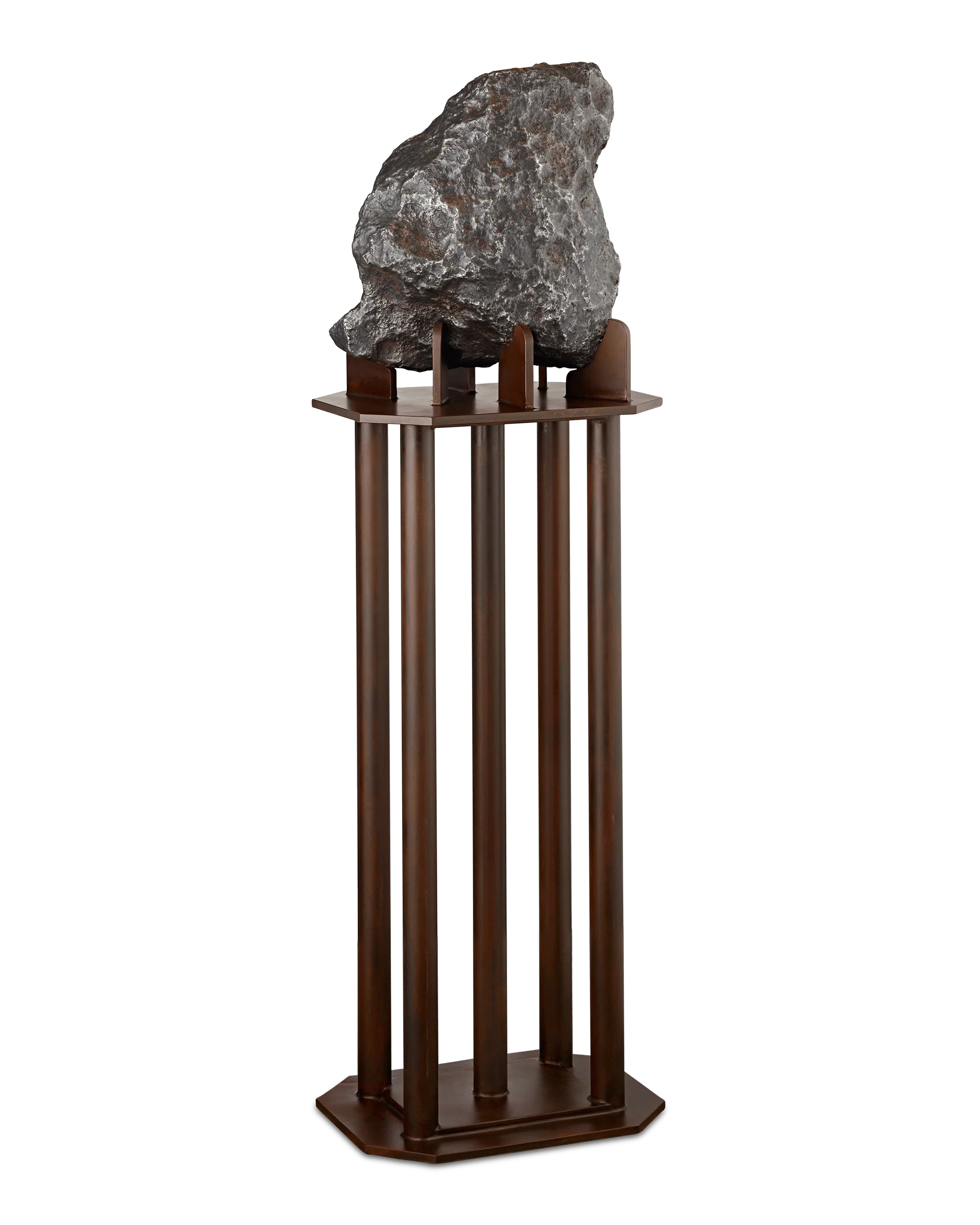
Its commanding sculptural presence is defined by dramatic regmaglypts, the distinctive thumbprint-like impressions formed as the meteorite tore through Earth’s atmosphere. The surface reveals a powerful interplay of textures, with smooth, time-worn contours contrasting against deeply pitted areas. Subtle gunmetal hues and silvery highlights enhance its raw metallic beauty, giving the object an appearance strikingly reminiscent of modern abstract sculpture.
Recovered from Argentina’s famed Campo del Cielo, or “Field of Heaven,” this strewn field is among the most important meteorite sites in the world. First documented by Spanish explorers in 1576 while investigating the source of indigenous iron weapons, the site has captivated scientists and collectors for centuries. Due to their immense size and rarity, most Campo del Cielo meteorites are preserved in institutions such as the Smithsonian and London’s Natural History Museum, making privately held examples of this scale exceptionally rare.
Meteorite: 18 3/4" high x 16 1/2" wide x 10 1/2" deep
On stand: 59 1/2" high
Fell to earth circa 4,000-5,000 BCE
A relic of cosmic history, this extraordinary Campo del Cielo meteorite took form billions of years ago. Falling to Earth circa 4,000–5,000 BCE in what is now northern Argentina, this specimen, weighing an impressive 328 pounds, is an “out of this world” rarity.
Its commanding sculptural presence is defined by dramatic regmaglypts, the distinctive thumbprint-like impressions formed as the meteorite tore through Earth’s atmosphere. The surface reveals a powerful interplay of textures, with smooth, time-worn contours contrasting against deeply pitted areas. Subtle gunmetal hues and silvery highlights enhance its raw metallic beauty, giving the object an appearance strikingly reminiscent of modern abstract sculpture.
Recovered from Argentina’s famed Campo del Cielo, or “Field of Heaven,” this strewn field is among the most important meteorite sites in the world. First documented by Spanish explorers in 1576 while investigating the source of indigenous iron weapons, the site has captivated scientists and collectors for centuries. Due to their immense size and rarity, most Campo del Cielo meteorites are preserved in institutions such as the Smithsonian and London’s Natural History Museum, making privately held examples of this scale exceptionally rare.
Meteorite: 18 3/4" high x 16 1/2" wide x 10 1/2" deep
On stand: 59 1/2" high
Campo del Cielo Meteorite
Fell to earth circa 4,000-5,000 BCE
A relic of cosmic history, this extraordinary Campo del Cielo meteorite took form billions of years ago. Falling to Earth circa 4,000–5,000 BCE in what is now northern Argentina, this specimen, weighing an impressive 328 pounds, is an “out of this world” rarity.
Its commanding sculptural presence is defined by dramatic regmaglypts, the distinctive thumbprint-like impressions formed as the meteorite tore through Earth’s atmosphere. The surface reveals a powerful interplay of textures, with smooth, time-worn contours contrasting against deeply pitted areas. Subtle gunmetal hues and silvery highlights enhance its raw metallic beauty, giving the object an appearance strikingly reminiscent of modern abstract sculpture.
Recovered from Argentina’s famed Campo del Cielo, or “Field of Heaven,” this strewn field is among the most important meteorite sites in the world. First documented by Spanish explorers in 1576 while investigating the source of indigenous iron weapons, the site has captivated scientists and collectors for centuries. Due to their immense size and rarity, most Campo del Cielo meteorites are preserved in institutions such as the Smithsonian and London’s Natural History Museum, making privately held examples of this scale exceptionally rare.
Meteorite: 18 3/4" high x 16 1/2" wide x 10 1/2" deep
On stand: 59 1/2" high
Fell to earth circa 4,000-5,000 BCE
A relic of cosmic history, this extraordinary Campo del Cielo meteorite took form billions of years ago. Falling to Earth circa 4,000–5,000 BCE in what is now northern Argentina, this specimen, weighing an impressive 328 pounds, is an “out of this world” rarity.
Its commanding sculptural presence is defined by dramatic regmaglypts, the distinctive thumbprint-like impressions formed as the meteorite tore through Earth’s atmosphere. The surface reveals a powerful interplay of textures, with smooth, time-worn contours contrasting against deeply pitted areas. Subtle gunmetal hues and silvery highlights enhance its raw metallic beauty, giving the object an appearance strikingly reminiscent of modern abstract sculpture.
Recovered from Argentina’s famed Campo del Cielo, or “Field of Heaven,” this strewn field is among the most important meteorite sites in the world. First documented by Spanish explorers in 1576 while investigating the source of indigenous iron weapons, the site has captivated scientists and collectors for centuries. Due to their immense size and rarity, most Campo del Cielo meteorites are preserved in institutions such as the Smithsonian and London’s Natural History Museum, making privately held examples of this scale exceptionally rare.
Meteorite: 18 3/4" high x 16 1/2" wide x 10 1/2" deep
On stand: 59 1/2" high
$134,750.00
Original: $385,000.00
-65%Campo del Cielo Meteorite—
$385,000.00
$134,750.00Description
Campo del Cielo Meteorite
Fell to earth circa 4,000-5,000 BCE
A relic of cosmic history, this extraordinary Campo del Cielo meteorite took form billions of years ago. Falling to Earth circa 4,000–5,000 BCE in what is now northern Argentina, this specimen, weighing an impressive 328 pounds, is an “out of this world” rarity.
Its commanding sculptural presence is defined by dramatic regmaglypts, the distinctive thumbprint-like impressions formed as the meteorite tore through Earth’s atmosphere. The surface reveals a powerful interplay of textures, with smooth, time-worn contours contrasting against deeply pitted areas. Subtle gunmetal hues and silvery highlights enhance its raw metallic beauty, giving the object an appearance strikingly reminiscent of modern abstract sculpture.
Recovered from Argentina’s famed Campo del Cielo, or “Field of Heaven,” this strewn field is among the most important meteorite sites in the world. First documented by Spanish explorers in 1576 while investigating the source of indigenous iron weapons, the site has captivated scientists and collectors for centuries. Due to their immense size and rarity, most Campo del Cielo meteorites are preserved in institutions such as the Smithsonian and London’s Natural History Museum, making privately held examples of this scale exceptionally rare.
Meteorite: 18 3/4" high x 16 1/2" wide x 10 1/2" deep
On stand: 59 1/2" high
Fell to earth circa 4,000-5,000 BCE
A relic of cosmic history, this extraordinary Campo del Cielo meteorite took form billions of years ago. Falling to Earth circa 4,000–5,000 BCE in what is now northern Argentina, this specimen, weighing an impressive 328 pounds, is an “out of this world” rarity.
Its commanding sculptural presence is defined by dramatic regmaglypts, the distinctive thumbprint-like impressions formed as the meteorite tore through Earth’s atmosphere. The surface reveals a powerful interplay of textures, with smooth, time-worn contours contrasting against deeply pitted areas. Subtle gunmetal hues and silvery highlights enhance its raw metallic beauty, giving the object an appearance strikingly reminiscent of modern abstract sculpture.
Recovered from Argentina’s famed Campo del Cielo, or “Field of Heaven,” this strewn field is among the most important meteorite sites in the world. First documented by Spanish explorers in 1576 while investigating the source of indigenous iron weapons, the site has captivated scientists and collectors for centuries. Due to their immense size and rarity, most Campo del Cielo meteorites are preserved in institutions such as the Smithsonian and London’s Natural History Museum, making privately held examples of this scale exceptionally rare.
Meteorite: 18 3/4" high x 16 1/2" wide x 10 1/2" deep
On stand: 59 1/2" high