1 / 2
Double Gourd Satsuma Vase
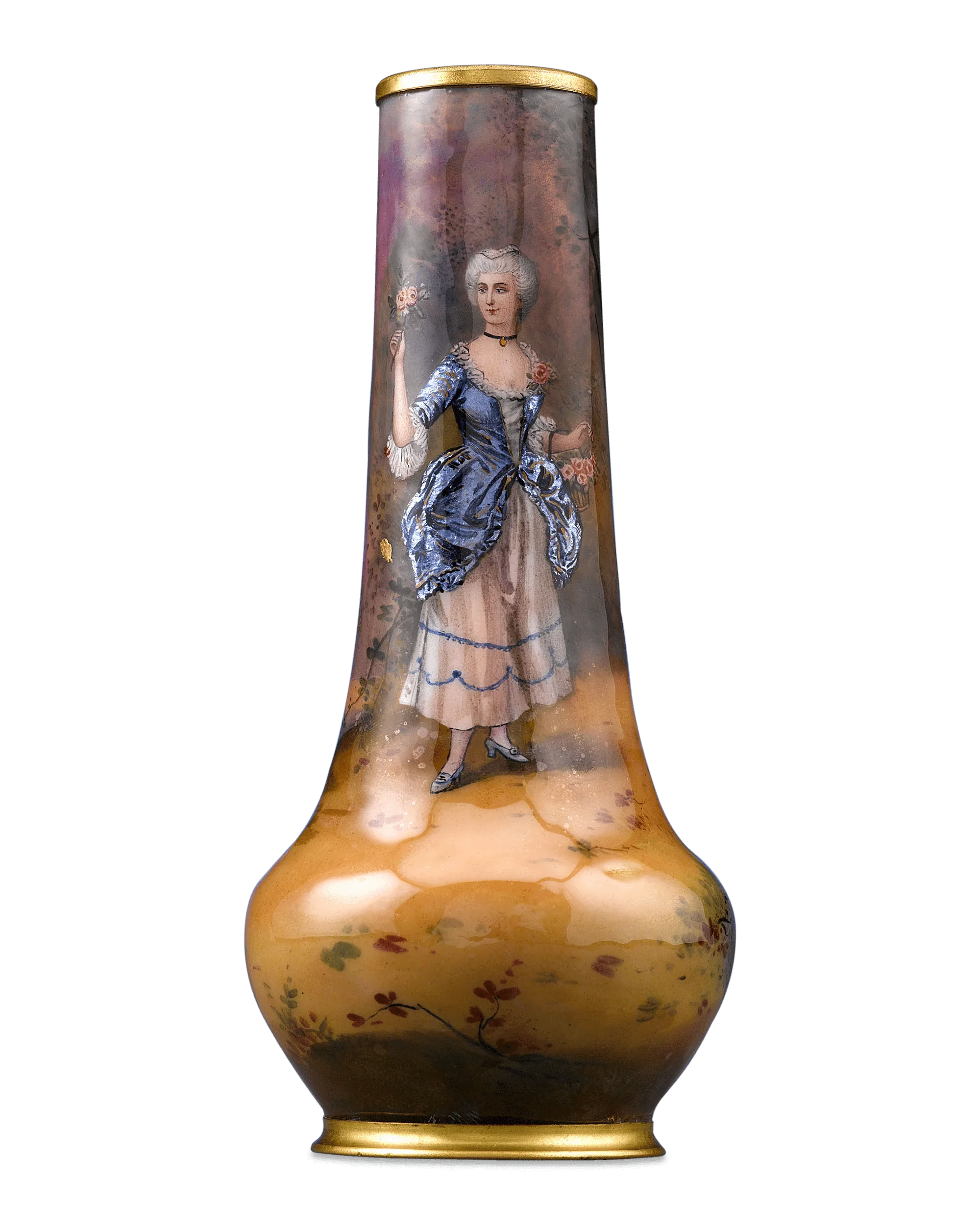
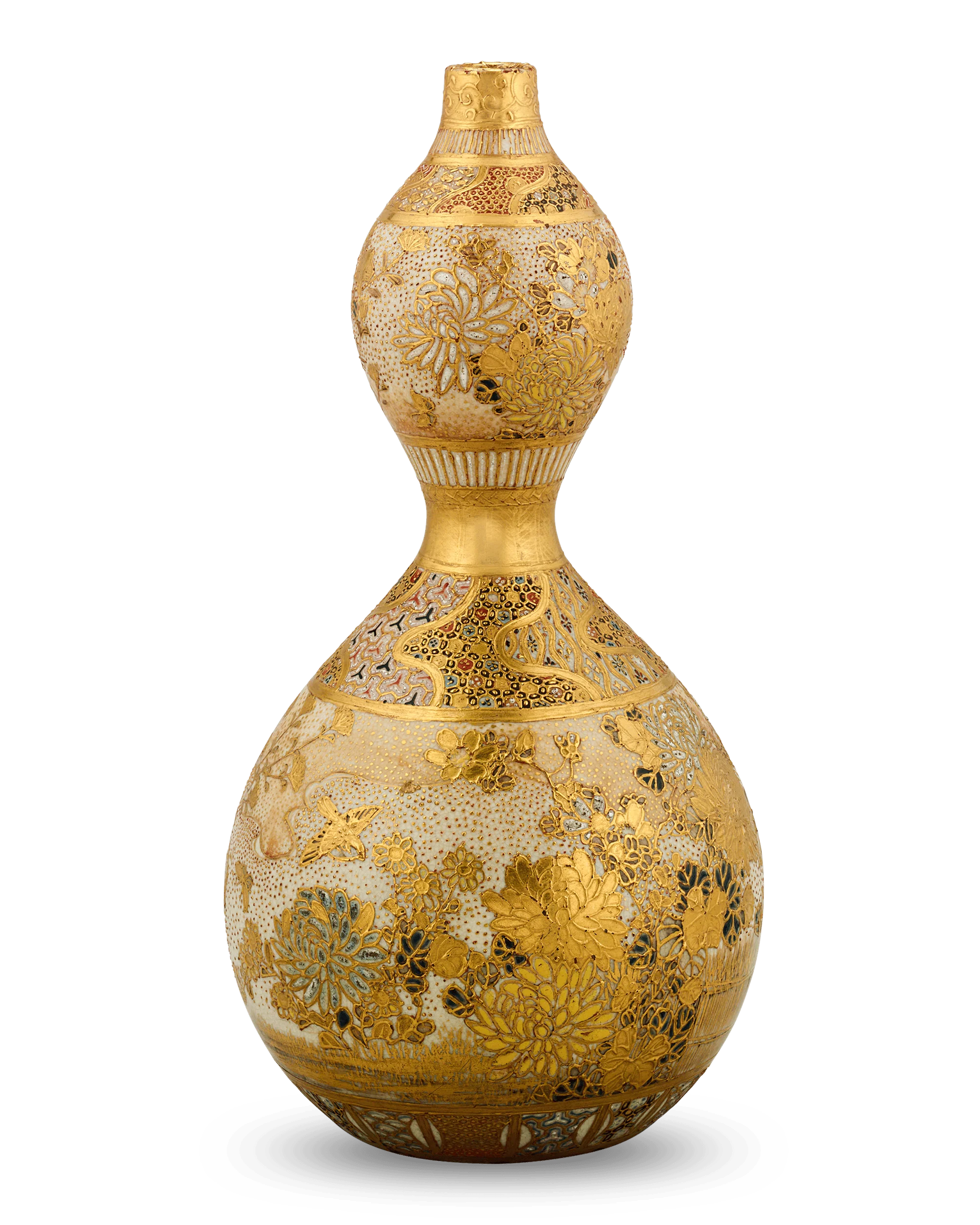
This exquisitely detailed, double-gourd Japanese Satsuma vase represents the zenith of Japanese earthenware artistry. Elaborately hand-painted, it features detailed floral motifs, which were more popular in earlier Satsuma decorations. The artist masterfully captures the intricate designs within the scene, showcasing exceptional skill.
Unlike later Meiji period Satsuma vessels, which often incorporate animals and figures, this vase's floral designs are characteristic of the earlier Meiji period, enhancing its rarity and value. This stunning vase features chrysanthemums, blossoms and dainty butterflies. It was said that the beauty of the chrysanthemum resembled the nobles and became the Imperial Family Emblem in Japan.
It is rumored that the finest Satsuma painters would go blind due to the extreme intricacy of their work, a testament to the meticulous detail exhibited in this pottery.
Satsuma earthenware, a quintessential art form of the Meiji period, has captivated collectors for nearly 150 years. First crafted in the 17th century, its distinctive style—featuring overglaze enamel and gilded detailing—was perfected around 1790. Early designs focused on nature, particularly floral and animal motifs, with architectural and human elements emerging in the 19th century.
Meiji period (1868-1912)
7" high x 3 1/2" in diameter
Unlike later Meiji period Satsuma vessels, which often incorporate animals and figures, this vase's floral designs are characteristic of the earlier Meiji period, enhancing its rarity and value. This stunning vase features chrysanthemums, blossoms and dainty butterflies. It was said that the beauty of the chrysanthemum resembled the nobles and became the Imperial Family Emblem in Japan.
It is rumored that the finest Satsuma painters would go blind due to the extreme intricacy of their work, a testament to the meticulous detail exhibited in this pottery.
Satsuma earthenware, a quintessential art form of the Meiji period, has captivated collectors for nearly 150 years. First crafted in the 17th century, its distinctive style—featuring overglaze enamel and gilded detailing—was perfected around 1790. Early designs focused on nature, particularly floral and animal motifs, with architectural and human elements emerging in the 19th century.
Meiji period (1868-1912)
7" high x 3 1/2" in diameter
This exquisitely detailed, double-gourd Japanese Satsuma vase represents the zenith of Japanese earthenware artistry. Elaborately hand-painted, it features detailed floral motifs, which were more popular in earlier Satsuma decorations. The artist masterfully captures the intricate designs within the scene, showcasing exceptional skill.
Unlike later Meiji period Satsuma vessels, which often incorporate animals and figures, this vase's floral designs are characteristic of the earlier Meiji period, enhancing its rarity and value. This stunning vase features chrysanthemums, blossoms and dainty butterflies. It was said that the beauty of the chrysanthemum resembled the nobles and became the Imperial Family Emblem in Japan.
It is rumored that the finest Satsuma painters would go blind due to the extreme intricacy of their work, a testament to the meticulous detail exhibited in this pottery.
Satsuma earthenware, a quintessential art form of the Meiji period, has captivated collectors for nearly 150 years. First crafted in the 17th century, its distinctive style—featuring overglaze enamel and gilded detailing—was perfected around 1790. Early designs focused on nature, particularly floral and animal motifs, with architectural and human elements emerging in the 19th century.
Meiji period (1868-1912)
7" high x 3 1/2" in diameter
Unlike later Meiji period Satsuma vessels, which often incorporate animals and figures, this vase's floral designs are characteristic of the earlier Meiji period, enhancing its rarity and value. This stunning vase features chrysanthemums, blossoms and dainty butterflies. It was said that the beauty of the chrysanthemum resembled the nobles and became the Imperial Family Emblem in Japan.
It is rumored that the finest Satsuma painters would go blind due to the extreme intricacy of their work, a testament to the meticulous detail exhibited in this pottery.
Satsuma earthenware, a quintessential art form of the Meiji period, has captivated collectors for nearly 150 years. First crafted in the 17th century, its distinctive style—featuring overglaze enamel and gilded detailing—was perfected around 1790. Early designs focused on nature, particularly floral and animal motifs, with architectural and human elements emerging in the 19th century.
Meiji period (1868-1912)
7" high x 3 1/2" in diameter
$1,207.50
Original: $3,450.00
-65%Double Gourd Satsuma Vase—
$3,450.00
$1,207.50Description
This exquisitely detailed, double-gourd Japanese Satsuma vase represents the zenith of Japanese earthenware artistry. Elaborately hand-painted, it features detailed floral motifs, which were more popular in earlier Satsuma decorations. The artist masterfully captures the intricate designs within the scene, showcasing exceptional skill.
Unlike later Meiji period Satsuma vessels, which often incorporate animals and figures, this vase's floral designs are characteristic of the earlier Meiji period, enhancing its rarity and value. This stunning vase features chrysanthemums, blossoms and dainty butterflies. It was said that the beauty of the chrysanthemum resembled the nobles and became the Imperial Family Emblem in Japan.
It is rumored that the finest Satsuma painters would go blind due to the extreme intricacy of their work, a testament to the meticulous detail exhibited in this pottery.
Satsuma earthenware, a quintessential art form of the Meiji period, has captivated collectors for nearly 150 years. First crafted in the 17th century, its distinctive style—featuring overglaze enamel and gilded detailing—was perfected around 1790. Early designs focused on nature, particularly floral and animal motifs, with architectural and human elements emerging in the 19th century.
Meiji period (1868-1912)
7" high x 3 1/2" in diameter
Unlike later Meiji period Satsuma vessels, which often incorporate animals and figures, this vase's floral designs are characteristic of the earlier Meiji period, enhancing its rarity and value. This stunning vase features chrysanthemums, blossoms and dainty butterflies. It was said that the beauty of the chrysanthemum resembled the nobles and became the Imperial Family Emblem in Japan.
It is rumored that the finest Satsuma painters would go blind due to the extreme intricacy of their work, a testament to the meticulous detail exhibited in this pottery.
Satsuma earthenware, a quintessential art form of the Meiji period, has captivated collectors for nearly 150 years. First crafted in the 17th century, its distinctive style—featuring overglaze enamel and gilded detailing—was perfected around 1790. Early designs focused on nature, particularly floral and animal motifs, with architectural and human elements emerging in the 19th century.
Meiji period (1868-1912)
7" high x 3 1/2" in diameter