1 / 10
+5
Early Electric Regulator Clock by Vigreux Brillié
Early Electric Mantel Regulator Clock
Vigreux Brillié
Circa 1900
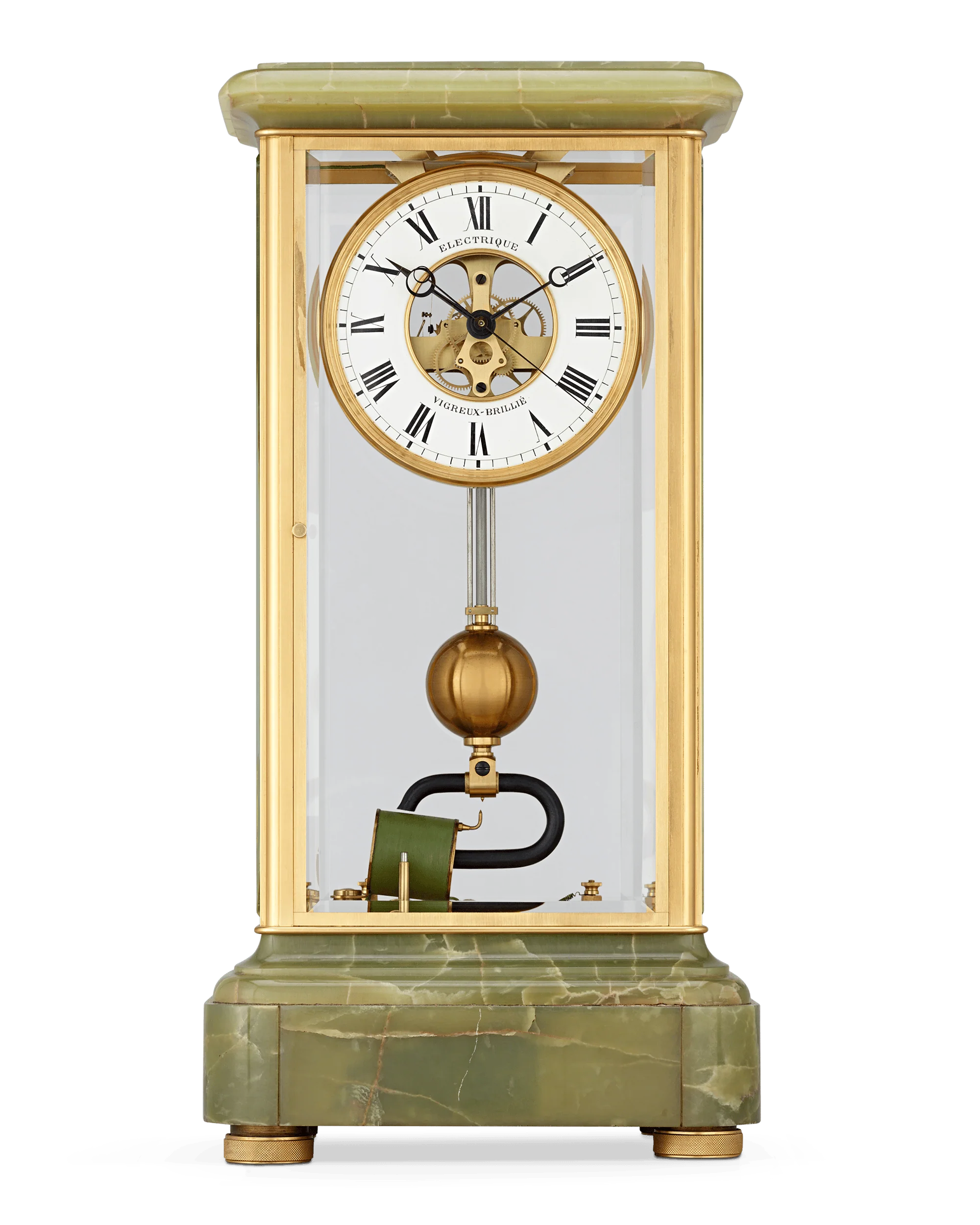
This rare and important early electric mantel regulator by the distinguished French firm Vigreux Brillié represents a pivotal moment in the evolution of horology. Created circa 1900, it marks the transition from traditional mechanical timekeeping to electrically driven precision instruments. The clock’s sophisticated movement, with an early electric impulse system, demonstrates remarkable technical ingenuity. The clock also utilizes a multi-metal compensating pendulum, which was associated with higher-quality examples. As one of the foremost innovators in French electrical timekeeping, Vigreux Brillié supplied clocks to institutions such as the Paris Observatory, cementing its importance in the history of precision timekeeping.
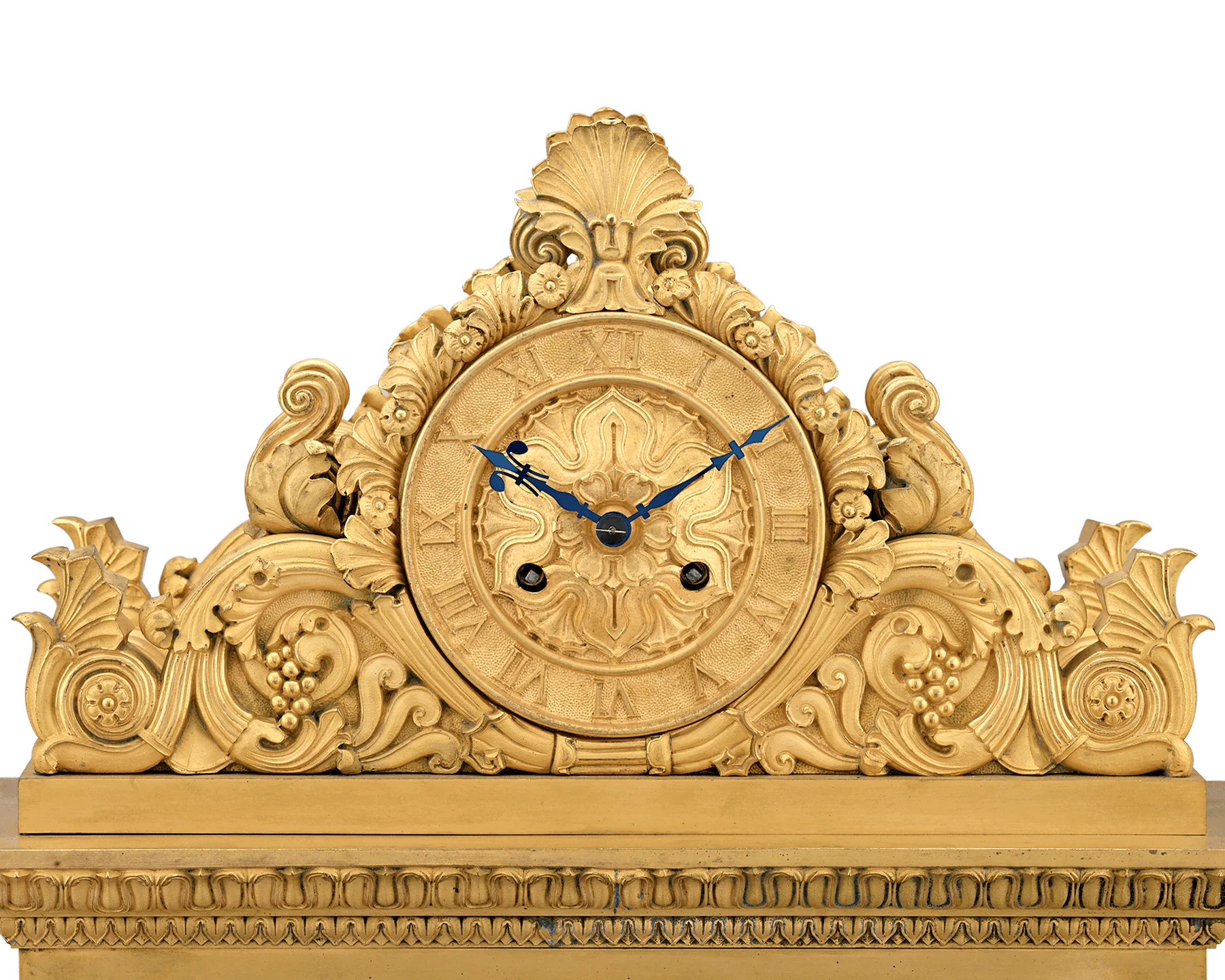
Elegantly constructed, the clock is housed in a refined gilt bronze case with a shaped green onyx top and base, elevated by adjustable feet and enclosed by thick beveled glass panels. The open, glazed design reveals the beautifully skeletonized movement within, allowing full appreciation of its finely cut wheelwork and mechanical complexity. The white porcelain chapter ring dial, with Roman numerals and steel Breguet-style hands, is complemented by a sweep seconds hand. The combination of luminous onyx, warm gilt bronze and exposed mechanics creates a striking harmony, especially notable given that many early electric clocks prioritized function over aesthetic refinement.
Founded in 1897 by Lucien Brillié and Charles Vigreux in Levallois-Perret near Paris, Vigreux Brillié quickly rose to prominence as the leading French manufacturer of electric clocks. Building upon early patents such as the 1901 Fery electric clock, the firm pioneered commercially viable electric timekeeping systems at a time when such technology remained highly specialized. Their clocks were instrumental in advancing synchronized time distribution across France, and examples from this formative period are now highly sought after for both their historical and technical significance.
Dial signed "Vigreux Brillié"
22 1/2" high x 11 1/4" wide x 8 1/4" deep
Vigreux Brillié
Circa 1900
This rare and important early electric mantel regulator by the distinguished French firm Vigreux Brillié represents a pivotal moment in the evolution of horology. Created circa 1900, it marks the transition from traditional mechanical timekeeping to electrically driven precision instruments. The clock’s sophisticated movement, with an early electric impulse system, demonstrates remarkable technical ingenuity. The clock also utilizes a multi-metal compensating pendulum, which was associated with higher-quality examples. As one of the foremost innovators in French electrical timekeeping, Vigreux Brillié supplied clocks to institutions such as the Paris Observatory, cementing its importance in the history of precision timekeeping.
Elegantly constructed, the clock is housed in a refined gilt bronze case with a shaped green onyx top and base, elevated by adjustable feet and enclosed by thick beveled glass panels. The open, glazed design reveals the beautifully skeletonized movement within, allowing full appreciation of its finely cut wheelwork and mechanical complexity. The white porcelain chapter ring dial, with Roman numerals and steel Breguet-style hands, is complemented by a sweep seconds hand. The combination of luminous onyx, warm gilt bronze and exposed mechanics creates a striking harmony, especially notable given that many early electric clocks prioritized function over aesthetic refinement.
Founded in 1897 by Lucien Brillié and Charles Vigreux in Levallois-Perret near Paris, Vigreux Brillié quickly rose to prominence as the leading French manufacturer of electric clocks. Building upon early patents such as the 1901 Fery electric clock, the firm pioneered commercially viable electric timekeeping systems at a time when such technology remained highly specialized. Their clocks were instrumental in advancing synchronized time distribution across France, and examples from this formative period are now highly sought after for both their historical and technical significance.
Dial signed "Vigreux Brillié"
22 1/2" high x 11 1/4" wide x 8 1/4" deep
Early Electric Mantel Regulator Clock
Vigreux Brillié
Circa 1900
This rare and important early electric mantel regulator by the distinguished French firm Vigreux Brillié represents a pivotal moment in the evolution of horology. Created circa 1900, it marks the transition from traditional mechanical timekeeping to electrically driven precision instruments. The clock’s sophisticated movement, with an early electric impulse system, demonstrates remarkable technical ingenuity. The clock also utilizes a multi-metal compensating pendulum, which was associated with higher-quality examples. As one of the foremost innovators in French electrical timekeeping, Vigreux Brillié supplied clocks to institutions such as the Paris Observatory, cementing its importance in the history of precision timekeeping.
Elegantly constructed, the clock is housed in a refined gilt bronze case with a shaped green onyx top and base, elevated by adjustable feet and enclosed by thick beveled glass panels. The open, glazed design reveals the beautifully skeletonized movement within, allowing full appreciation of its finely cut wheelwork and mechanical complexity. The white porcelain chapter ring dial, with Roman numerals and steel Breguet-style hands, is complemented by a sweep seconds hand. The combination of luminous onyx, warm gilt bronze and exposed mechanics creates a striking harmony, especially notable given that many early electric clocks prioritized function over aesthetic refinement.
Founded in 1897 by Lucien Brillié and Charles Vigreux in Levallois-Perret near Paris, Vigreux Brillié quickly rose to prominence as the leading French manufacturer of electric clocks. Building upon early patents such as the 1901 Fery electric clock, the firm pioneered commercially viable electric timekeeping systems at a time when such technology remained highly specialized. Their clocks were instrumental in advancing synchronized time distribution across France, and examples from this formative period are now highly sought after for both their historical and technical significance.
Dial signed "Vigreux Brillié"
22 1/2" high x 11 1/4" wide x 8 1/4" deep
Vigreux Brillié
Circa 1900
This rare and important early electric mantel regulator by the distinguished French firm Vigreux Brillié represents a pivotal moment in the evolution of horology. Created circa 1900, it marks the transition from traditional mechanical timekeeping to electrically driven precision instruments. The clock’s sophisticated movement, with an early electric impulse system, demonstrates remarkable technical ingenuity. The clock also utilizes a multi-metal compensating pendulum, which was associated with higher-quality examples. As one of the foremost innovators in French electrical timekeeping, Vigreux Brillié supplied clocks to institutions such as the Paris Observatory, cementing its importance in the history of precision timekeeping.
Elegantly constructed, the clock is housed in a refined gilt bronze case with a shaped green onyx top and base, elevated by adjustable feet and enclosed by thick beveled glass panels. The open, glazed design reveals the beautifully skeletonized movement within, allowing full appreciation of its finely cut wheelwork and mechanical complexity. The white porcelain chapter ring dial, with Roman numerals and steel Breguet-style hands, is complemented by a sweep seconds hand. The combination of luminous onyx, warm gilt bronze and exposed mechanics creates a striking harmony, especially notable given that many early electric clocks prioritized function over aesthetic refinement.
Founded in 1897 by Lucien Brillié and Charles Vigreux in Levallois-Perret near Paris, Vigreux Brillié quickly rose to prominence as the leading French manufacturer of electric clocks. Building upon early patents such as the 1901 Fery electric clock, the firm pioneered commercially viable electric timekeeping systems at a time when such technology remained highly specialized. Their clocks were instrumental in advancing synchronized time distribution across France, and examples from this formative period are now highly sought after for both their historical and technical significance.
Dial signed "Vigreux Brillié"
22 1/2" high x 11 1/4" wide x 8 1/4" deep
$46,500.00
Early Electric Regulator Clock by Vigreux Brillié—
$46,500.00
Description
Early Electric Mantel Regulator Clock
Vigreux Brillié
Circa 1900
This rare and important early electric mantel regulator by the distinguished French firm Vigreux Brillié represents a pivotal moment in the evolution of horology. Created circa 1900, it marks the transition from traditional mechanical timekeeping to electrically driven precision instruments. The clock’s sophisticated movement, with an early electric impulse system, demonstrates remarkable technical ingenuity. The clock also utilizes a multi-metal compensating pendulum, which was associated with higher-quality examples. As one of the foremost innovators in French electrical timekeeping, Vigreux Brillié supplied clocks to institutions such as the Paris Observatory, cementing its importance in the history of precision timekeeping.
Elegantly constructed, the clock is housed in a refined gilt bronze case with a shaped green onyx top and base, elevated by adjustable feet and enclosed by thick beveled glass panels. The open, glazed design reveals the beautifully skeletonized movement within, allowing full appreciation of its finely cut wheelwork and mechanical complexity. The white porcelain chapter ring dial, with Roman numerals and steel Breguet-style hands, is complemented by a sweep seconds hand. The combination of luminous onyx, warm gilt bronze and exposed mechanics creates a striking harmony, especially notable given that many early electric clocks prioritized function over aesthetic refinement.
Founded in 1897 by Lucien Brillié and Charles Vigreux in Levallois-Perret near Paris, Vigreux Brillié quickly rose to prominence as the leading French manufacturer of electric clocks. Building upon early patents such as the 1901 Fery electric clock, the firm pioneered commercially viable electric timekeeping systems at a time when such technology remained highly specialized. Their clocks were instrumental in advancing synchronized time distribution across France, and examples from this formative period are now highly sought after for both their historical and technical significance.
Dial signed "Vigreux Brillié"
22 1/2" high x 11 1/4" wide x 8 1/4" deep
Vigreux Brillié
Circa 1900
This rare and important early electric mantel regulator by the distinguished French firm Vigreux Brillié represents a pivotal moment in the evolution of horology. Created circa 1900, it marks the transition from traditional mechanical timekeeping to electrically driven precision instruments. The clock’s sophisticated movement, with an early electric impulse system, demonstrates remarkable technical ingenuity. The clock also utilizes a multi-metal compensating pendulum, which was associated with higher-quality examples. As one of the foremost innovators in French electrical timekeeping, Vigreux Brillié supplied clocks to institutions such as the Paris Observatory, cementing its importance in the history of precision timekeeping.
Elegantly constructed, the clock is housed in a refined gilt bronze case with a shaped green onyx top and base, elevated by adjustable feet and enclosed by thick beveled glass panels. The open, glazed design reveals the beautifully skeletonized movement within, allowing full appreciation of its finely cut wheelwork and mechanical complexity. The white porcelain chapter ring dial, with Roman numerals and steel Breguet-style hands, is complemented by a sweep seconds hand. The combination of luminous onyx, warm gilt bronze and exposed mechanics creates a striking harmony, especially notable given that many early electric clocks prioritized function over aesthetic refinement.
Founded in 1897 by Lucien Brillié and Charles Vigreux in Levallois-Perret near Paris, Vigreux Brillié quickly rose to prominence as the leading French manufacturer of electric clocks. Building upon early patents such as the 1901 Fery electric clock, the firm pioneered commercially viable electric timekeeping systems at a time when such technology remained highly specialized. Their clocks were instrumental in advancing synchronized time distribution across France, and examples from this formative period are now highly sought after for both their historical and technical significance.
Dial signed "Vigreux Brillié"
22 1/2" high x 11 1/4" wide x 8 1/4" deep