
1 / 3
Extraterrestrial Peridot Ring, 1.64 Carats
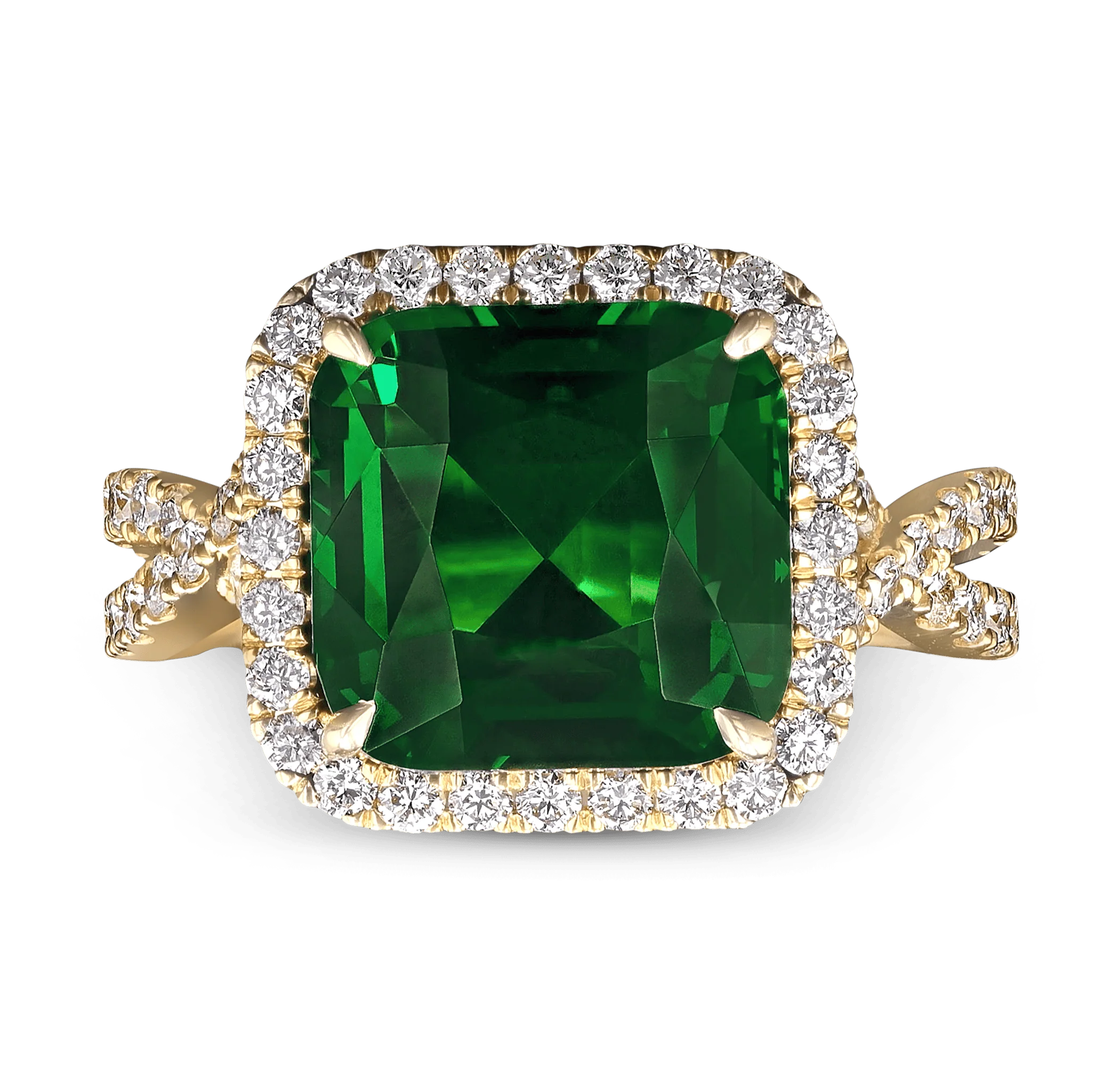
Truly out of this world, this extraordinary ring displays a trio of extraterrestrial peridots—gems formed in space and recovered from a pallasite meteorite. Totaling 1.64 carats, the perfectly matched vivid green gemstones are as dazzling as they are rare. The exceptional gems are framed by a halo of vibrant yellow diamonds totaling 0.30 carat and set in 18K yellow gold.
Pallasitic peridots are among the rarest gems known, originating in stony-iron meteorites that formed in the early solar system. These peridots are preserved fragments of olivine embedded in a nickel-iron matrix, delivered to Earth via cosmic impact. The accompanying GIA reports confirm their celestial origin. With stunning clarity and saturated color, these space-born gems rival and even exceed their terrestrial counterparts.
Download the Reports
Pallasitic peridots are among the rarest gems known, originating in stony-iron meteorites that formed in the early solar system. These peridots are preserved fragments of olivine embedded in a nickel-iron matrix, delivered to Earth via cosmic impact. The accompanying GIA reports confirm their celestial origin. With stunning clarity and saturated color, these space-born gems rival and even exceed their terrestrial counterparts.
Download the Reports
Truly out of this world, this extraordinary ring displays a trio of extraterrestrial peridots—gems formed in space and recovered from a pallasite meteorite. Totaling 1.64 carats, the perfectly matched vivid green gemstones are as dazzling as they are rare. The exceptional gems are framed by a halo of vibrant yellow diamonds totaling 0.30 carat and set in 18K yellow gold.
Pallasitic peridots are among the rarest gems known, originating in stony-iron meteorites that formed in the early solar system. These peridots are preserved fragments of olivine embedded in a nickel-iron matrix, delivered to Earth via cosmic impact. The accompanying GIA reports confirm their celestial origin. With stunning clarity and saturated color, these space-born gems rival and even exceed their terrestrial counterparts.
Download the Reports
Pallasitic peridots are among the rarest gems known, originating in stony-iron meteorites that formed in the early solar system. These peridots are preserved fragments of olivine embedded in a nickel-iron matrix, delivered to Earth via cosmic impact. The accompanying GIA reports confirm their celestial origin. With stunning clarity and saturated color, these space-born gems rival and even exceed their terrestrial counterparts.
Download the Reports
$98,500.00
Extraterrestrial Peridot Ring, 1.64 Carats—
$98,500.00
Description
Truly out of this world, this extraordinary ring displays a trio of extraterrestrial peridots—gems formed in space and recovered from a pallasite meteorite. Totaling 1.64 carats, the perfectly matched vivid green gemstones are as dazzling as they are rare. The exceptional gems are framed by a halo of vibrant yellow diamonds totaling 0.30 carat and set in 18K yellow gold.
Pallasitic peridots are among the rarest gems known, originating in stony-iron meteorites that formed in the early solar system. These peridots are preserved fragments of olivine embedded in a nickel-iron matrix, delivered to Earth via cosmic impact. The accompanying GIA reports confirm their celestial origin. With stunning clarity and saturated color, these space-born gems rival and even exceed their terrestrial counterparts.
Download the Reports
Pallasitic peridots are among the rarest gems known, originating in stony-iron meteorites that formed in the early solar system. These peridots are preserved fragments of olivine embedded in a nickel-iron matrix, delivered to Earth via cosmic impact. The accompanying GIA reports confirm their celestial origin. With stunning clarity and saturated color, these space-born gems rival and even exceed their terrestrial counterparts.
Download the Reports