1 / 3
Fabergé Rock Crystal and Guilloché Enamel Cane
Enamel, Rock Crystal and Gold Cane
Fabergé
Circa 1903-1917
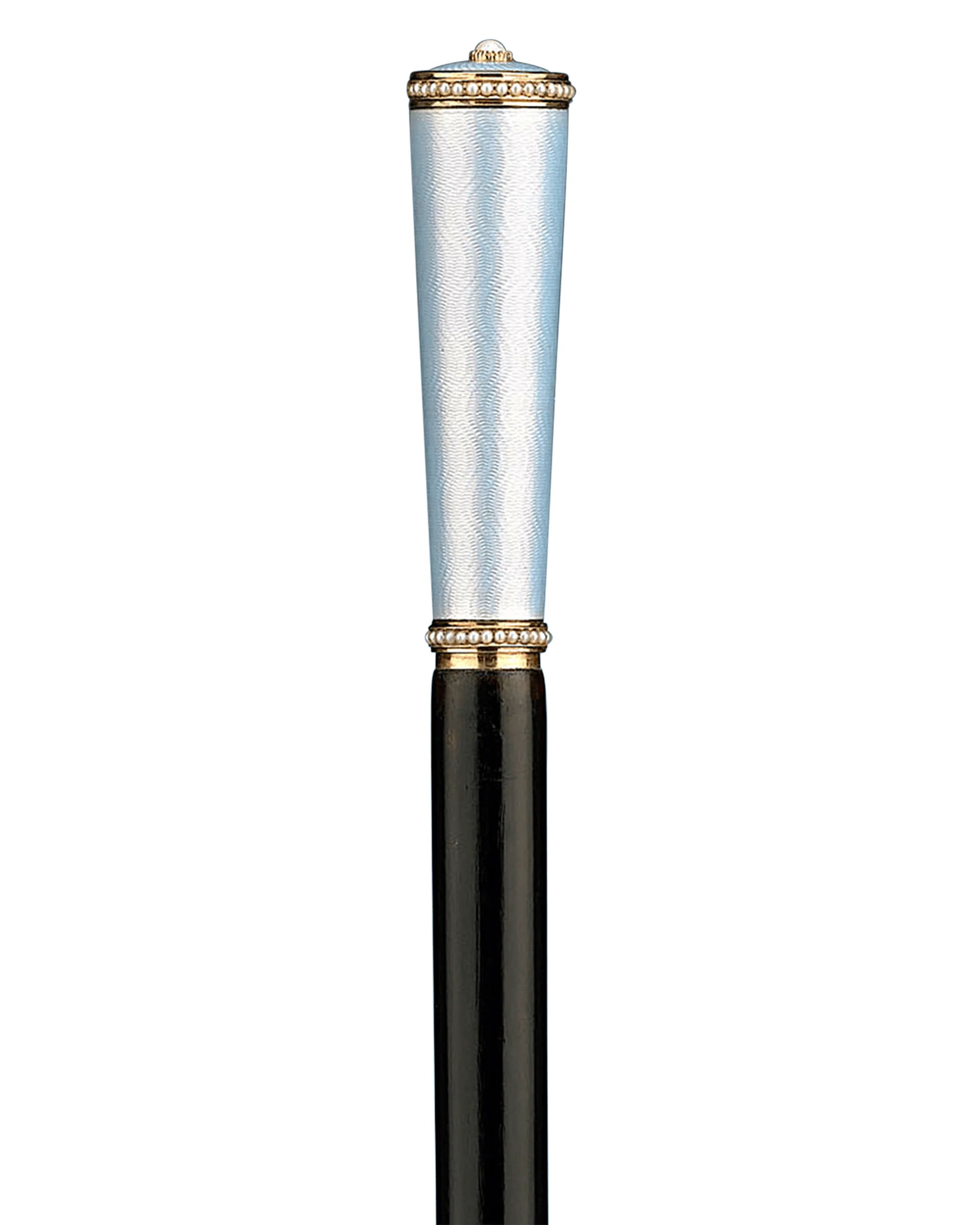
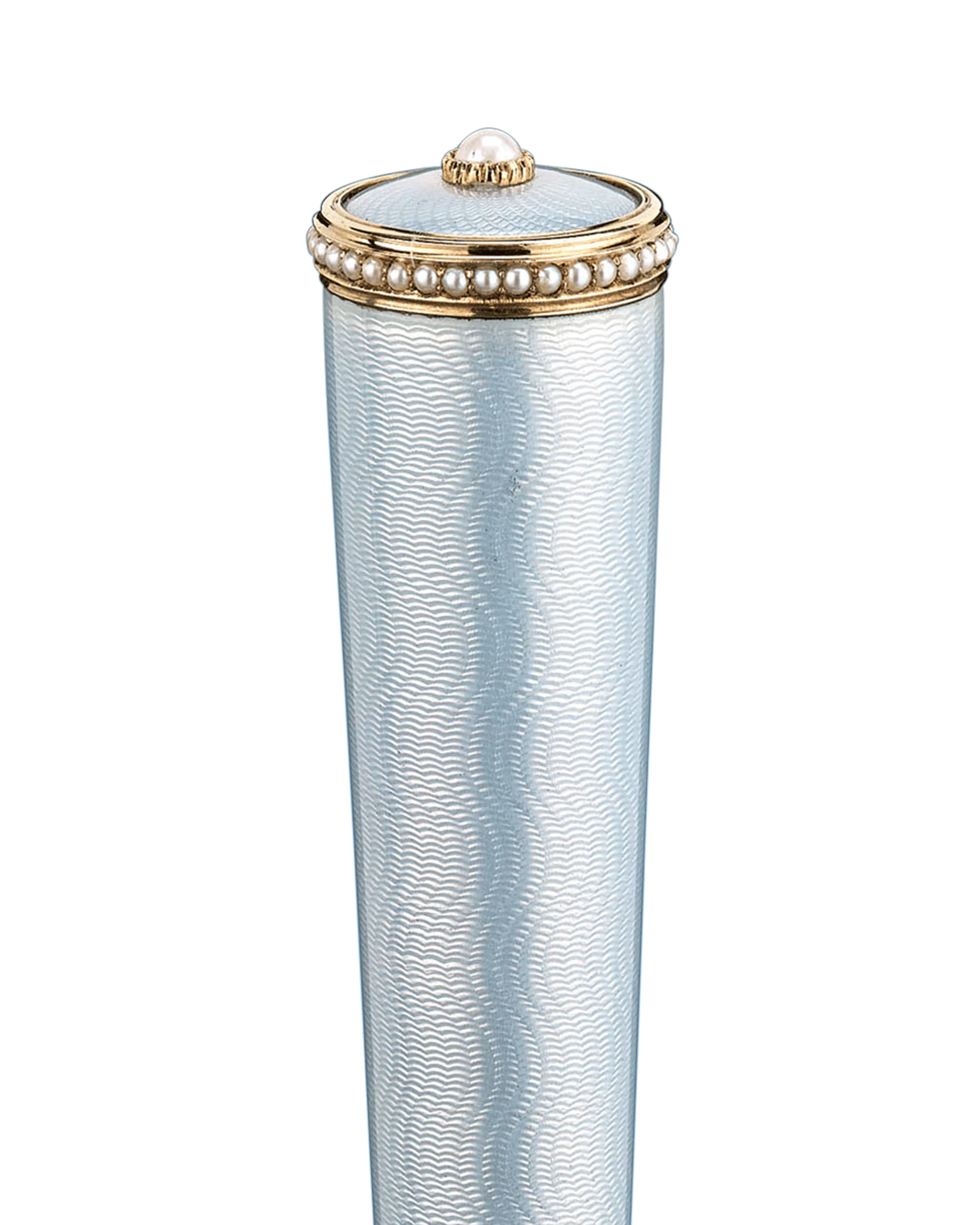
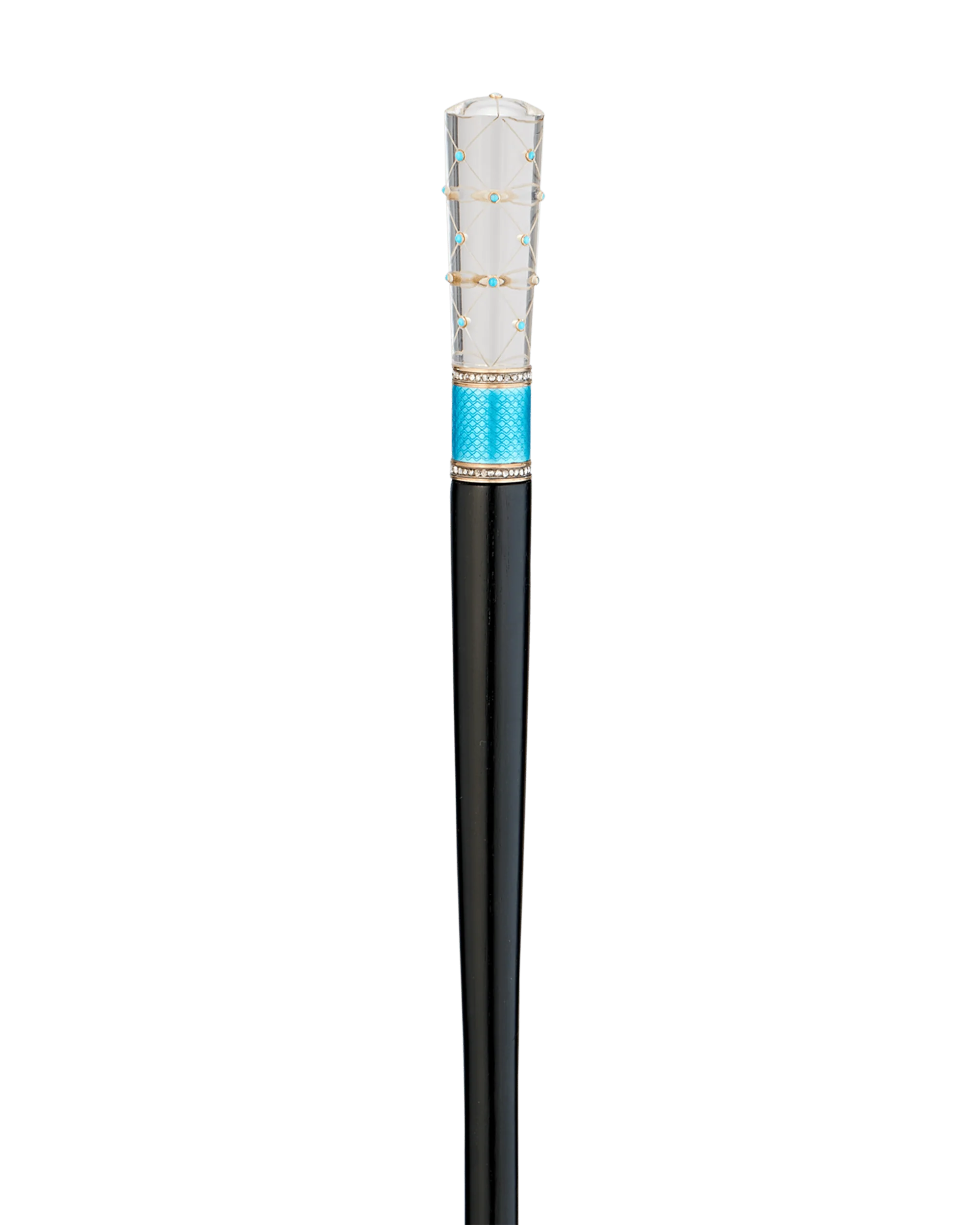
This elegant walking stick is crowned by an exquisite Fabergé handle, carved from rock crystal and mounted in gold with diamonds, turquoise cabochons and translucent blue guilloché enamel. Set upon a handsome ebonized shaft, the cane exemplifies the luxury and technical virtuosity that defined the House of Fabergé during the final years of Imperial Russia. Bearing the workmaster’s mark of Henrik Wigström, Fabergé’s last great senior workmaster, the design belongs to the firm’s celebrated late Imperial period.
The handle unites several of Fabergé’s most celebrated techniques and materials, including carved rock crystal, diamond-set gold mounts and translucent blue guilloché enamel over an engine-turned ground. The vivid enamel contrasts beautifully with the clear crystal and sparkling diamonds, creating an elegant composition characteristic of the firm’s finest decorative works.
Henrik Wigström succeeded Michael Perkhin as Fabergé’s senior workmaster in 1903 and remained in the position until 1917. Responsible for many of the firm’s most important creations, including the majority of the Imperial Easter Eggs produced during this period, Wigström carried Fabergé’s legacy into its final and most technically accomplished years. Founded in 1842 in Saint Petersburg by Gustav Fabergé and later transformed by Peter Carl Fabergé into the foremost luxury arts firm of Imperial Russia, the House of Fabergé became synonymous with extraordinary craftsmanship and aristocratic patronage. Following the Russian Revolution of 1917, the original firm ceased operations, making surviving works such as this exceptionally desirable examples of Imperial Russian artistry.
Bears the workmaster's marks of Henrik Wigström, active 1903-1917
Marked with the 56 zolotnik gold mark for 14K gold
35 1/2" length
Fabergé
Circa 1903-1917
This elegant walking stick is crowned by an exquisite Fabergé handle, carved from rock crystal and mounted in gold with diamonds, turquoise cabochons and translucent blue guilloché enamel. Set upon a handsome ebonized shaft, the cane exemplifies the luxury and technical virtuosity that defined the House of Fabergé during the final years of Imperial Russia. Bearing the workmaster’s mark of Henrik Wigström, Fabergé’s last great senior workmaster, the design belongs to the firm’s celebrated late Imperial period.
The handle unites several of Fabergé’s most celebrated techniques and materials, including carved rock crystal, diamond-set gold mounts and translucent blue guilloché enamel over an engine-turned ground. The vivid enamel contrasts beautifully with the clear crystal and sparkling diamonds, creating an elegant composition characteristic of the firm’s finest decorative works.
Henrik Wigström succeeded Michael Perkhin as Fabergé’s senior workmaster in 1903 and remained in the position until 1917. Responsible for many of the firm’s most important creations, including the majority of the Imperial Easter Eggs produced during this period, Wigström carried Fabergé’s legacy into its final and most technically accomplished years. Founded in 1842 in Saint Petersburg by Gustav Fabergé and later transformed by Peter Carl Fabergé into the foremost luxury arts firm of Imperial Russia, the House of Fabergé became synonymous with extraordinary craftsmanship and aristocratic patronage. Following the Russian Revolution of 1917, the original firm ceased operations, making surviving works such as this exceptionally desirable examples of Imperial Russian artistry.
Bears the workmaster's marks of Henrik Wigström, active 1903-1917
Marked with the 56 zolotnik gold mark for 14K gold
35 1/2" length
Enamel, Rock Crystal and Gold Cane
Fabergé
Circa 1903-1917
This elegant walking stick is crowned by an exquisite Fabergé handle, carved from rock crystal and mounted in gold with diamonds, turquoise cabochons and translucent blue guilloché enamel. Set upon a handsome ebonized shaft, the cane exemplifies the luxury and technical virtuosity that defined the House of Fabergé during the final years of Imperial Russia. Bearing the workmaster’s mark of Henrik Wigström, Fabergé’s last great senior workmaster, the design belongs to the firm’s celebrated late Imperial period.
The handle unites several of Fabergé’s most celebrated techniques and materials, including carved rock crystal, diamond-set gold mounts and translucent blue guilloché enamel over an engine-turned ground. The vivid enamel contrasts beautifully with the clear crystal and sparkling diamonds, creating an elegant composition characteristic of the firm’s finest decorative works.
Henrik Wigström succeeded Michael Perkhin as Fabergé’s senior workmaster in 1903 and remained in the position until 1917. Responsible for many of the firm’s most important creations, including the majority of the Imperial Easter Eggs produced during this period, Wigström carried Fabergé’s legacy into its final and most technically accomplished years. Founded in 1842 in Saint Petersburg by Gustav Fabergé and later transformed by Peter Carl Fabergé into the foremost luxury arts firm of Imperial Russia, the House of Fabergé became synonymous with extraordinary craftsmanship and aristocratic patronage. Following the Russian Revolution of 1917, the original firm ceased operations, making surviving works such as this exceptionally desirable examples of Imperial Russian artistry.
Bears the workmaster's marks of Henrik Wigström, active 1903-1917
Marked with the 56 zolotnik gold mark for 14K gold
35 1/2" length
Fabergé
Circa 1903-1917
This elegant walking stick is crowned by an exquisite Fabergé handle, carved from rock crystal and mounted in gold with diamonds, turquoise cabochons and translucent blue guilloché enamel. Set upon a handsome ebonized shaft, the cane exemplifies the luxury and technical virtuosity that defined the House of Fabergé during the final years of Imperial Russia. Bearing the workmaster’s mark of Henrik Wigström, Fabergé’s last great senior workmaster, the design belongs to the firm’s celebrated late Imperial period.
The handle unites several of Fabergé’s most celebrated techniques and materials, including carved rock crystal, diamond-set gold mounts and translucent blue guilloché enamel over an engine-turned ground. The vivid enamel contrasts beautifully with the clear crystal and sparkling diamonds, creating an elegant composition characteristic of the firm’s finest decorative works.
Henrik Wigström succeeded Michael Perkhin as Fabergé’s senior workmaster in 1903 and remained in the position until 1917. Responsible for many of the firm’s most important creations, including the majority of the Imperial Easter Eggs produced during this period, Wigström carried Fabergé’s legacy into its final and most technically accomplished years. Founded in 1842 in Saint Petersburg by Gustav Fabergé and later transformed by Peter Carl Fabergé into the foremost luxury arts firm of Imperial Russia, the House of Fabergé became synonymous with extraordinary craftsmanship and aristocratic patronage. Following the Russian Revolution of 1917, the original firm ceased operations, making surviving works such as this exceptionally desirable examples of Imperial Russian artistry.
Bears the workmaster's marks of Henrik Wigström, active 1903-1917
Marked with the 56 zolotnik gold mark for 14K gold
35 1/2" length
$12,075.00
Original: $34,500.00
-65%Fabergé Rock Crystal and Guilloché Enamel Cane—
$34,500.00
$12,075.00Description
Enamel, Rock Crystal and Gold Cane
Fabergé
Circa 1903-1917
This elegant walking stick is crowned by an exquisite Fabergé handle, carved from rock crystal and mounted in gold with diamonds, turquoise cabochons and translucent blue guilloché enamel. Set upon a handsome ebonized shaft, the cane exemplifies the luxury and technical virtuosity that defined the House of Fabergé during the final years of Imperial Russia. Bearing the workmaster’s mark of Henrik Wigström, Fabergé’s last great senior workmaster, the design belongs to the firm’s celebrated late Imperial period.
The handle unites several of Fabergé’s most celebrated techniques and materials, including carved rock crystal, diamond-set gold mounts and translucent blue guilloché enamel over an engine-turned ground. The vivid enamel contrasts beautifully with the clear crystal and sparkling diamonds, creating an elegant composition characteristic of the firm’s finest decorative works.
Henrik Wigström succeeded Michael Perkhin as Fabergé’s senior workmaster in 1903 and remained in the position until 1917. Responsible for many of the firm’s most important creations, including the majority of the Imperial Easter Eggs produced during this period, Wigström carried Fabergé’s legacy into its final and most technically accomplished years. Founded in 1842 in Saint Petersburg by Gustav Fabergé and later transformed by Peter Carl Fabergé into the foremost luxury arts firm of Imperial Russia, the House of Fabergé became synonymous with extraordinary craftsmanship and aristocratic patronage. Following the Russian Revolution of 1917, the original firm ceased operations, making surviving works such as this exceptionally desirable examples of Imperial Russian artistry.
Bears the workmaster's marks of Henrik Wigström, active 1903-1917
Marked with the 56 zolotnik gold mark for 14K gold
35 1/2" length
Fabergé
Circa 1903-1917
This elegant walking stick is crowned by an exquisite Fabergé handle, carved from rock crystal and mounted in gold with diamonds, turquoise cabochons and translucent blue guilloché enamel. Set upon a handsome ebonized shaft, the cane exemplifies the luxury and technical virtuosity that defined the House of Fabergé during the final years of Imperial Russia. Bearing the workmaster’s mark of Henrik Wigström, Fabergé’s last great senior workmaster, the design belongs to the firm’s celebrated late Imperial period.
The handle unites several of Fabergé’s most celebrated techniques and materials, including carved rock crystal, diamond-set gold mounts and translucent blue guilloché enamel over an engine-turned ground. The vivid enamel contrasts beautifully with the clear crystal and sparkling diamonds, creating an elegant composition characteristic of the firm’s finest decorative works.
Henrik Wigström succeeded Michael Perkhin as Fabergé’s senior workmaster in 1903 and remained in the position until 1917. Responsible for many of the firm’s most important creations, including the majority of the Imperial Easter Eggs produced during this period, Wigström carried Fabergé’s legacy into its final and most technically accomplished years. Founded in 1842 in Saint Petersburg by Gustav Fabergé and later transformed by Peter Carl Fabergé into the foremost luxury arts firm of Imperial Russia, the House of Fabergé became synonymous with extraordinary craftsmanship and aristocratic patronage. Following the Russian Revolution of 1917, the original firm ceased operations, making surviving works such as this exceptionally desirable examples of Imperial Russian artistry.
Bears the workmaster's marks of Henrik Wigström, active 1903-1917
Marked with the 56 zolotnik gold mark for 14K gold
35 1/2" length