1 / 3
Indian Elephant goad
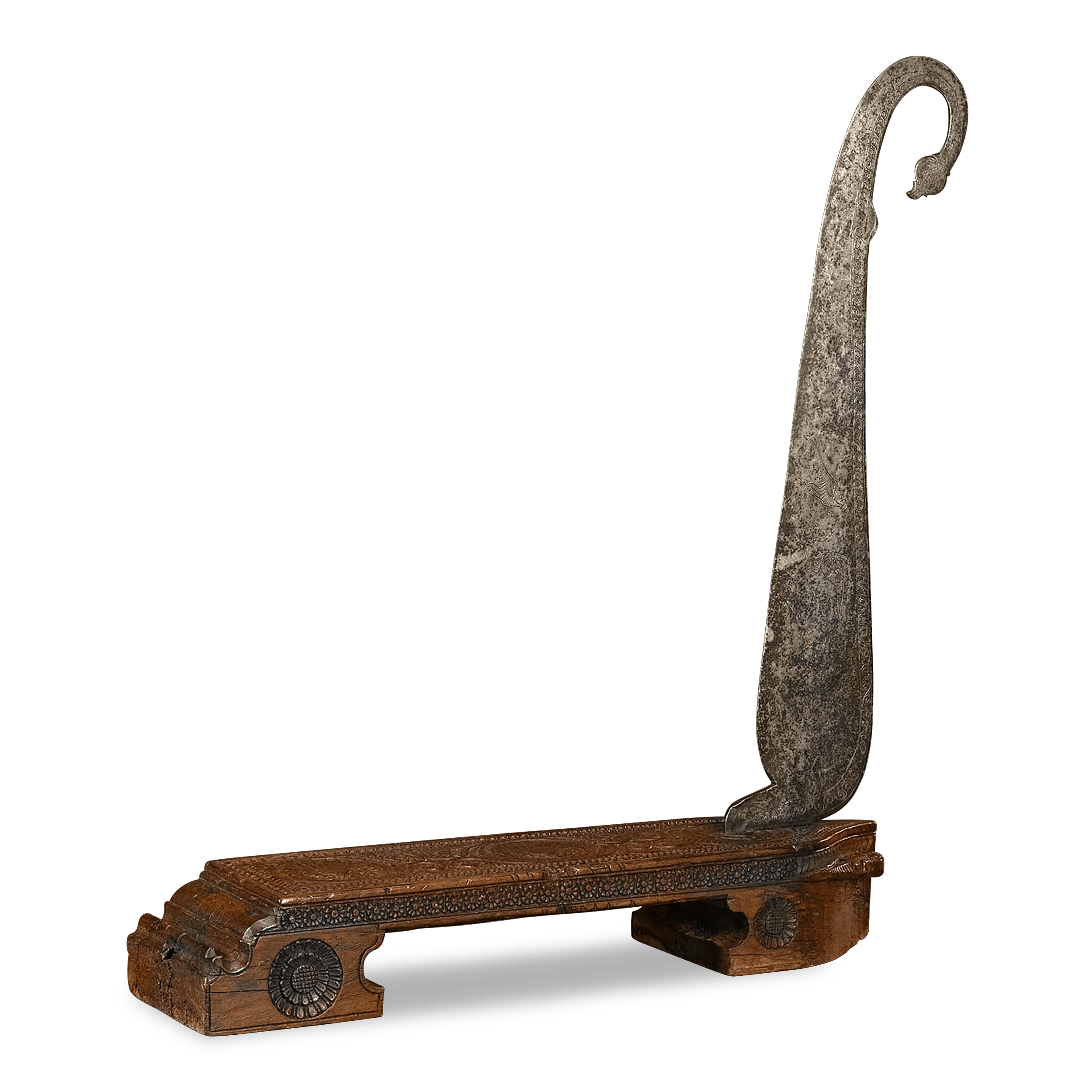
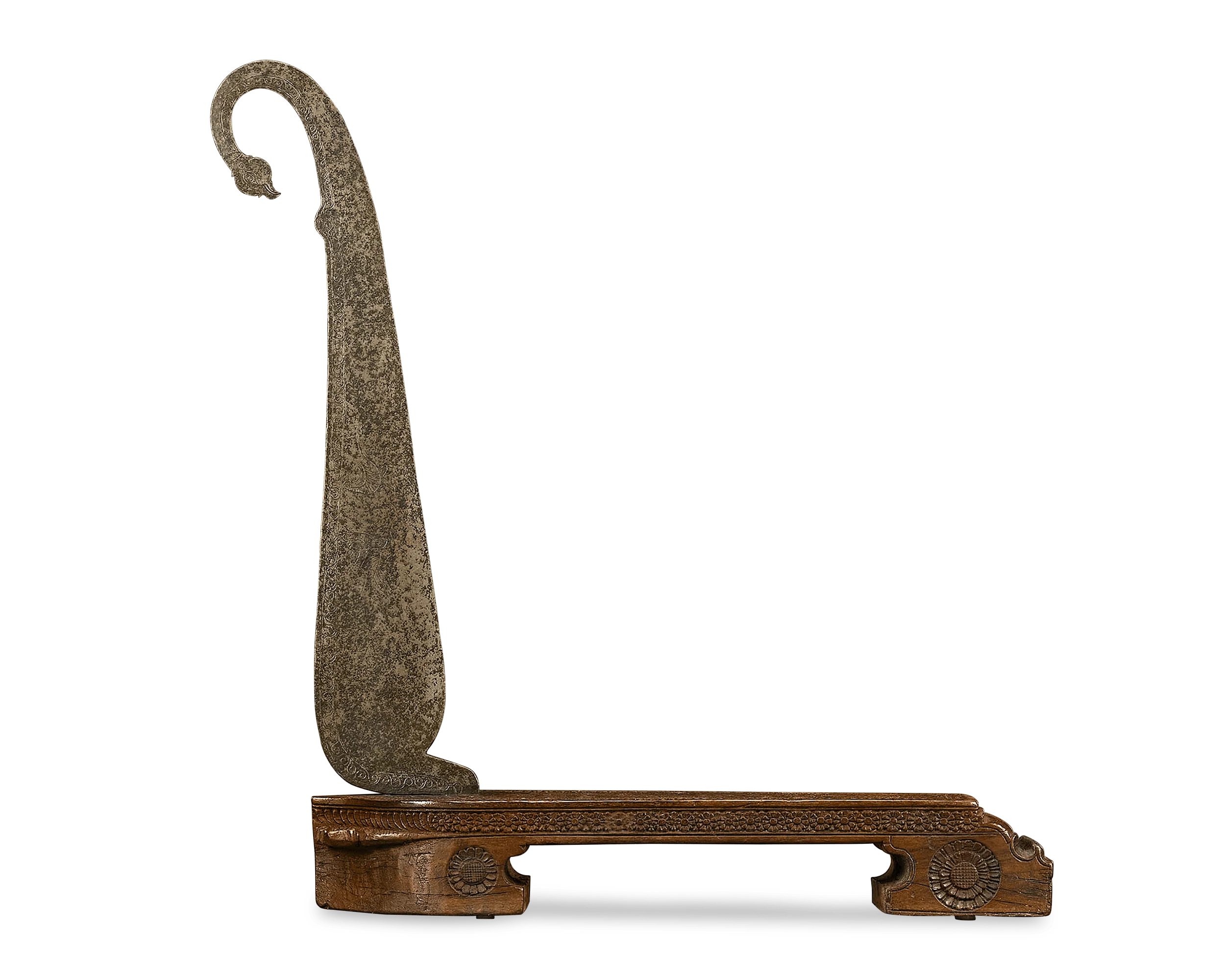
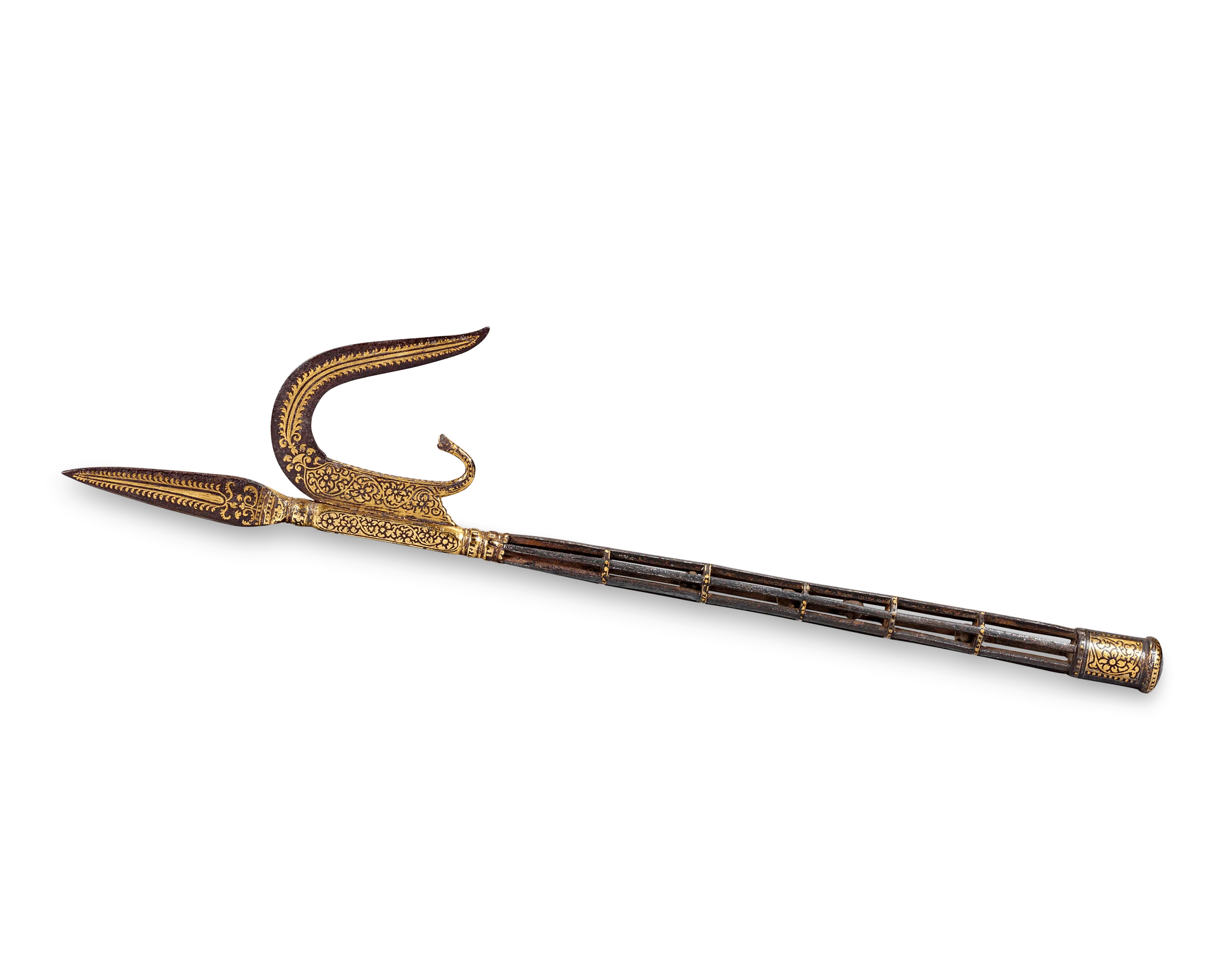
Employed since the fifth or sixth century BCE by mahouts or Indian elephant drivers, the elephant goad is a unique tool that is used to guide elephants. The finest examples were essential in fine armories and temples, integral to religious processions and civic engagements involving elephants. Embellished with engravings and fine materials, this stunning antique goad reflects the beauty of the ceremonies it once accompanied.
This traditional Indian iron elephant goad, commonly referred to as an ankusa or ankus, features a round openwork shaft divided into six sections. Within the shaft, hollow metal jingles are nestled, producing a rolling sound as the tool is wielded. In Hinduism, the sound of a bell is considered auspicious, which welcomes divinity and dispels evil. Additionally, bells are often worn by elephants in training, so the bell sound produced would be recognized by the elephant. Its shaft culminates in a subtly tapering, diamond-shaped section, while the gracefully curved hook of the goad adds to its elegant design. Adorned with inlaid damascened gold using the koftgari technique, the hook and top spike feature intricate flame-like and scrolling flower patterns.
In India, the goad symbolizes royalty, while in Hinduism, it holds significance as one of the eight auspicious objects, known as Astamangala, and is associated with various Hindu deities, including Ganesha. The high degree of ornamentation in this tool suggests its use in ceremonies or as a decorative work of art. Comparable goads with similar hollow shafts featuring bells are housed in the Wallace Collection, in London.
Circa 19th-century
21 1/2" high x 5" wide x 1 1/8" deep
This traditional Indian iron elephant goad, commonly referred to as an ankusa or ankus, features a round openwork shaft divided into six sections. Within the shaft, hollow metal jingles are nestled, producing a rolling sound as the tool is wielded. In Hinduism, the sound of a bell is considered auspicious, which welcomes divinity and dispels evil. Additionally, bells are often worn by elephants in training, so the bell sound produced would be recognized by the elephant. Its shaft culminates in a subtly tapering, diamond-shaped section, while the gracefully curved hook of the goad adds to its elegant design. Adorned with inlaid damascened gold using the koftgari technique, the hook and top spike feature intricate flame-like and scrolling flower patterns.
In India, the goad symbolizes royalty, while in Hinduism, it holds significance as one of the eight auspicious objects, known as Astamangala, and is associated with various Hindu deities, including Ganesha. The high degree of ornamentation in this tool suggests its use in ceremonies or as a decorative work of art. Comparable goads with similar hollow shafts featuring bells are housed in the Wallace Collection, in London.
Circa 19th-century
21 1/2" high x 5" wide x 1 1/8" deep
Employed since the fifth or sixth century BCE by mahouts or Indian elephant drivers, the elephant goad is a unique tool that is used to guide elephants. The finest examples were essential in fine armories and temples, integral to religious processions and civic engagements involving elephants. Embellished with engravings and fine materials, this stunning antique goad reflects the beauty of the ceremonies it once accompanied.
This traditional Indian iron elephant goad, commonly referred to as an ankusa or ankus, features a round openwork shaft divided into six sections. Within the shaft, hollow metal jingles are nestled, producing a rolling sound as the tool is wielded. In Hinduism, the sound of a bell is considered auspicious, which welcomes divinity and dispels evil. Additionally, bells are often worn by elephants in training, so the bell sound produced would be recognized by the elephant. Its shaft culminates in a subtly tapering, diamond-shaped section, while the gracefully curved hook of the goad adds to its elegant design. Adorned with inlaid damascened gold using the koftgari technique, the hook and top spike feature intricate flame-like and scrolling flower patterns.
In India, the goad symbolizes royalty, while in Hinduism, it holds significance as one of the eight auspicious objects, known as Astamangala, and is associated with various Hindu deities, including Ganesha. The high degree of ornamentation in this tool suggests its use in ceremonies or as a decorative work of art. Comparable goads with similar hollow shafts featuring bells are housed in the Wallace Collection, in London.
Circa 19th-century
21 1/2" high x 5" wide x 1 1/8" deep
This traditional Indian iron elephant goad, commonly referred to as an ankusa or ankus, features a round openwork shaft divided into six sections. Within the shaft, hollow metal jingles are nestled, producing a rolling sound as the tool is wielded. In Hinduism, the sound of a bell is considered auspicious, which welcomes divinity and dispels evil. Additionally, bells are often worn by elephants in training, so the bell sound produced would be recognized by the elephant. Its shaft culminates in a subtly tapering, diamond-shaped section, while the gracefully curved hook of the goad adds to its elegant design. Adorned with inlaid damascened gold using the koftgari technique, the hook and top spike feature intricate flame-like and scrolling flower patterns.
In India, the goad symbolizes royalty, while in Hinduism, it holds significance as one of the eight auspicious objects, known as Astamangala, and is associated with various Hindu deities, including Ganesha. The high degree of ornamentation in this tool suggests its use in ceremonies or as a decorative work of art. Comparable goads with similar hollow shafts featuring bells are housed in the Wallace Collection, in London.
Circa 19th-century
21 1/2" high x 5" wide x 1 1/8" deep
$3,097.50
Original: $8,850.00
-65%Indian Elephant goad—
$8,850.00
$3,097.50Description
Employed since the fifth or sixth century BCE by mahouts or Indian elephant drivers, the elephant goad is a unique tool that is used to guide elephants. The finest examples were essential in fine armories and temples, integral to religious processions and civic engagements involving elephants. Embellished with engravings and fine materials, this stunning antique goad reflects the beauty of the ceremonies it once accompanied.
This traditional Indian iron elephant goad, commonly referred to as an ankusa or ankus, features a round openwork shaft divided into six sections. Within the shaft, hollow metal jingles are nestled, producing a rolling sound as the tool is wielded. In Hinduism, the sound of a bell is considered auspicious, which welcomes divinity and dispels evil. Additionally, bells are often worn by elephants in training, so the bell sound produced would be recognized by the elephant. Its shaft culminates in a subtly tapering, diamond-shaped section, while the gracefully curved hook of the goad adds to its elegant design. Adorned with inlaid damascened gold using the koftgari technique, the hook and top spike feature intricate flame-like and scrolling flower patterns.
In India, the goad symbolizes royalty, while in Hinduism, it holds significance as one of the eight auspicious objects, known as Astamangala, and is associated with various Hindu deities, including Ganesha. The high degree of ornamentation in this tool suggests its use in ceremonies or as a decorative work of art. Comparable goads with similar hollow shafts featuring bells are housed in the Wallace Collection, in London.
Circa 19th-century
21 1/2" high x 5" wide x 1 1/8" deep
This traditional Indian iron elephant goad, commonly referred to as an ankusa or ankus, features a round openwork shaft divided into six sections. Within the shaft, hollow metal jingles are nestled, producing a rolling sound as the tool is wielded. In Hinduism, the sound of a bell is considered auspicious, which welcomes divinity and dispels evil. Additionally, bells are often worn by elephants in training, so the bell sound produced would be recognized by the elephant. Its shaft culminates in a subtly tapering, diamond-shaped section, while the gracefully curved hook of the goad adds to its elegant design. Adorned with inlaid damascened gold using the koftgari technique, the hook and top spike feature intricate flame-like and scrolling flower patterns.
In India, the goad symbolizes royalty, while in Hinduism, it holds significance as one of the eight auspicious objects, known as Astamangala, and is associated with various Hindu deities, including Ganesha. The high degree of ornamentation in this tool suggests its use in ceremonies or as a decorative work of art. Comparable goads with similar hollow shafts featuring bells are housed in the Wallace Collection, in London.
Circa 19th-century
21 1/2" high x 5" wide x 1 1/8" deep