1 / 3
Jesus Christ Follis Coin Pendant
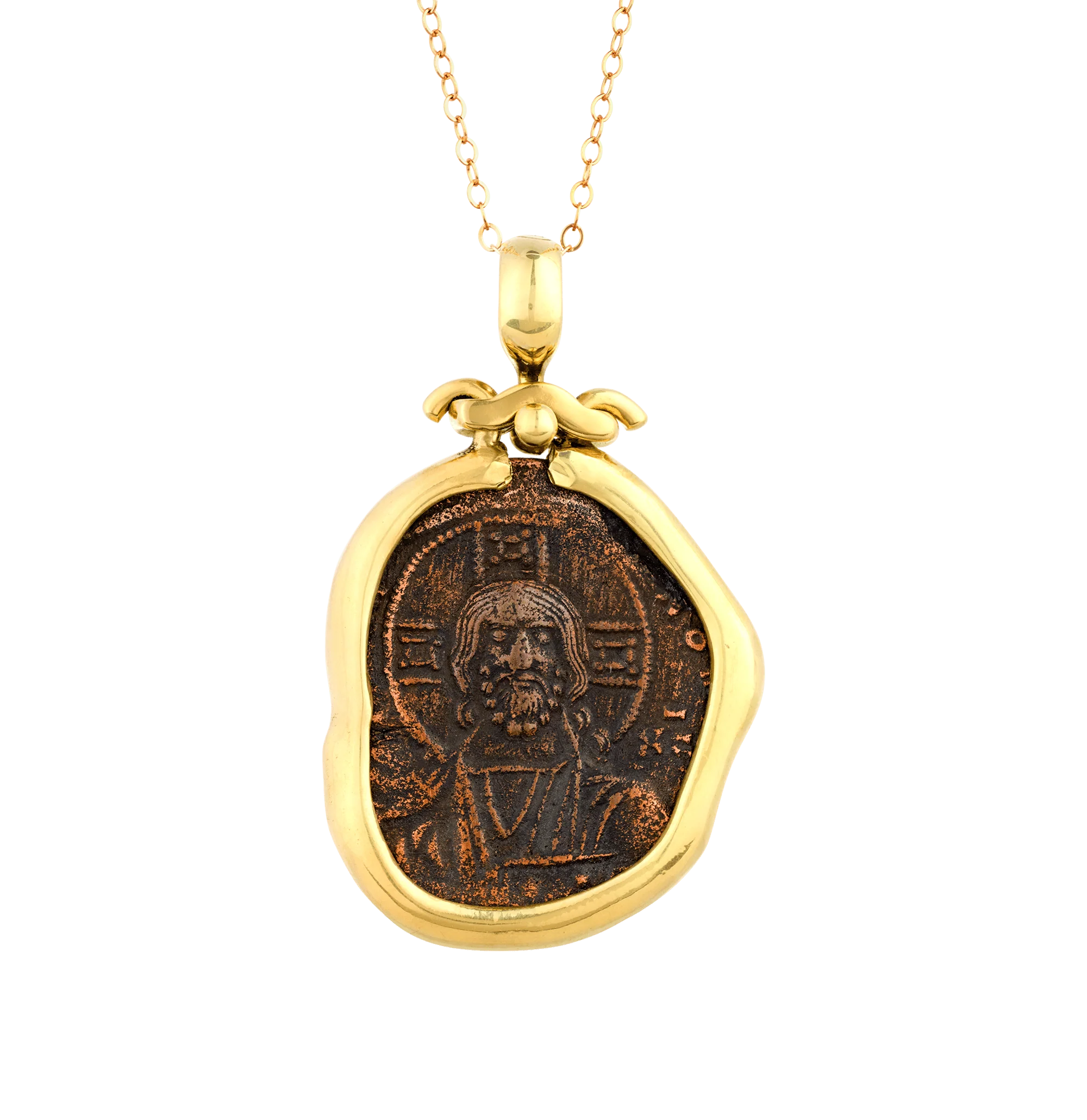
Dating back over 1,000 years, this rare Byzantine coin is set into an 18K yellow gold bezel to become an elegant pendant. The obverse of the coin bears a portrait of Jesus Christ holding a Book of the Gospels with a nimbus cross halo. The reverse features four lines of Greek inscription that read “Jesus Christ, King of Kings.” Both sides feature decorative adornments or borders, enhancing the coin’s ancient beauty.
This coin is part of a grouping called “Anonymous Folles,” a type of coin so named for their lack of specific ruler markings. The Anonymous Folles were struck between the beginning of John I Tzimiskes’s reign in 969 and the monetary reform of Alexios I Komnenos in 1092. Before this period, portraits of Christ were typically reserved for gold coins rather than copper.
Circa 976-1025 CE
This coin is part of a grouping called “Anonymous Folles,” a type of coin so named for their lack of specific ruler markings. The Anonymous Folles were struck between the beginning of John I Tzimiskes’s reign in 969 and the monetary reform of Alexios I Komnenos in 1092. Before this period, portraits of Christ were typically reserved for gold coins rather than copper.
Circa 976-1025 CE
Dating back over 1,000 years, this rare Byzantine coin is set into an 18K yellow gold bezel to become an elegant pendant. The obverse of the coin bears a portrait of Jesus Christ holding a Book of the Gospels with a nimbus cross halo. The reverse features four lines of Greek inscription that read “Jesus Christ, King of Kings.” Both sides feature decorative adornments or borders, enhancing the coin’s ancient beauty.
This coin is part of a grouping called “Anonymous Folles,” a type of coin so named for their lack of specific ruler markings. The Anonymous Folles were struck between the beginning of John I Tzimiskes’s reign in 969 and the monetary reform of Alexios I Komnenos in 1092. Before this period, portraits of Christ were typically reserved for gold coins rather than copper.
Circa 976-1025 CE
This coin is part of a grouping called “Anonymous Folles,” a type of coin so named for their lack of specific ruler markings. The Anonymous Folles were struck between the beginning of John I Tzimiskes’s reign in 969 and the monetary reform of Alexios I Komnenos in 1092. Before this period, portraits of Christ were typically reserved for gold coins rather than copper.
Circa 976-1025 CE
$6,850.00
Jesus Christ Follis Coin Pendant—
$6,850.00
Description
Dating back over 1,000 years, this rare Byzantine coin is set into an 18K yellow gold bezel to become an elegant pendant. The obverse of the coin bears a portrait of Jesus Christ holding a Book of the Gospels with a nimbus cross halo. The reverse features four lines of Greek inscription that read “Jesus Christ, King of Kings.” Both sides feature decorative adornments or borders, enhancing the coin’s ancient beauty.
This coin is part of a grouping called “Anonymous Folles,” a type of coin so named for their lack of specific ruler markings. The Anonymous Folles were struck between the beginning of John I Tzimiskes’s reign in 969 and the monetary reform of Alexios I Komnenos in 1092. Before this period, portraits of Christ were typically reserved for gold coins rather than copper.
Circa 976-1025 CE
This coin is part of a grouping called “Anonymous Folles,” a type of coin so named for their lack of specific ruler markings. The Anonymous Folles were struck between the beginning of John I Tzimiskes’s reign in 969 and the monetary reform of Alexios I Komnenos in 1092. Before this period, portraits of Christ were typically reserved for gold coins rather than copper.
Circa 976-1025 CE