1 / 5
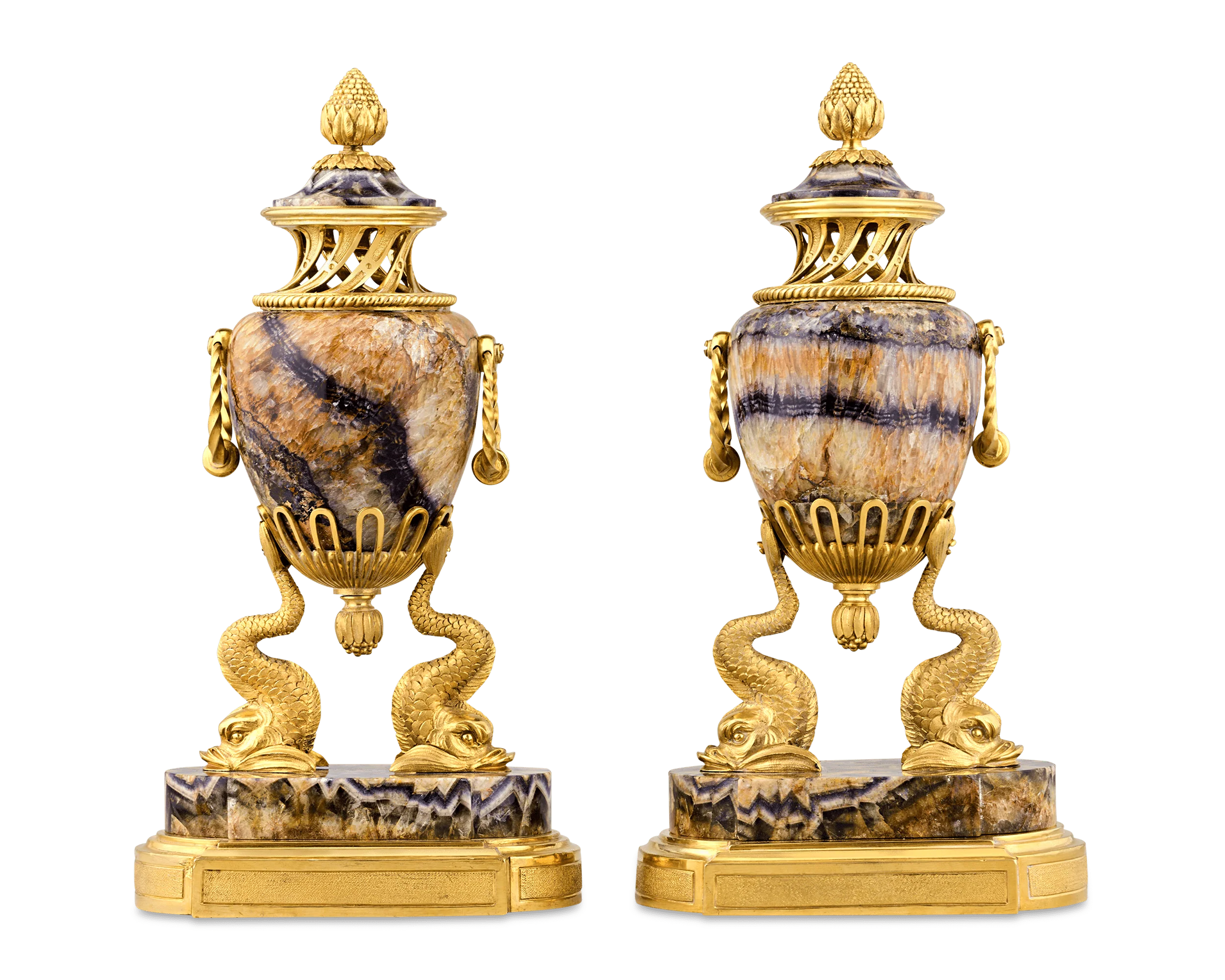
Pair of Blue John and Bronze Cassolettes
Blending natural wonder and artistic prowess, this magnificent pair of cassolettes is a symphony of craftsmanship. The intricate gilt bronze decor, only made possible by the finest craftsmen of the 19th century, is further elevated by the bodies, formed from stunning examples of Blue John. The Blue John specimens are not only remarkable in size but also stunning in the natural patterns of the hardstone. The translucent crystalline layers of the stone radiate outwards in bands of deep blues, rich purples and golden yellows. It embodies all of the best attributes of this highly coveted material. Only the most gifted of artisans were charged with crafting exquisite masterworks such as this, as Blue John demands a great deal of skill in its handling. A soft and brittle stone, it responds very quickly to heat and must be carefully dried to retain its original color.
The term "cassolette" is from the French word cassole, meaning "small container." While the word has other meanings in culinary respects, in the decorative arts, cassolettes are small covered vases meant to hold perfumed substances or incense. Popular during the 18th and 19th centuries, these objets d'art were crafted from all manner of materials, including marble, porcelain and bronze. The most coveted examples were formed from desirable stones such as Blue John, amethyst or chalcedony, as seen in the present pair.
Late 19th century
Each: 11" high x 5 7/8" wide x 4" deep
The term "cassolette" is from the French word cassole, meaning "small container." While the word has other meanings in culinary respects, in the decorative arts, cassolettes are small covered vases meant to hold perfumed substances or incense. Popular during the 18th and 19th centuries, these objets d'art were crafted from all manner of materials, including marble, porcelain and bronze. The most coveted examples were formed from desirable stones such as Blue John, amethyst or chalcedony, as seen in the present pair.
Late 19th century
Each: 11" high x 5 7/8" wide x 4" deep
Blending natural wonder and artistic prowess, this magnificent pair of cassolettes is a symphony of craftsmanship. The intricate gilt bronze decor, only made possible by the finest craftsmen of the 19th century, is further elevated by the bodies, formed from stunning examples of Blue John. The Blue John specimens are not only remarkable in size but also stunning in the natural patterns of the hardstone. The translucent crystalline layers of the stone radiate outwards in bands of deep blues, rich purples and golden yellows. It embodies all of the best attributes of this highly coveted material. Only the most gifted of artisans were charged with crafting exquisite masterworks such as this, as Blue John demands a great deal of skill in its handling. A soft and brittle stone, it responds very quickly to heat and must be carefully dried to retain its original color.
The term "cassolette" is from the French word cassole, meaning "small container." While the word has other meanings in culinary respects, in the decorative arts, cassolettes are small covered vases meant to hold perfumed substances or incense. Popular during the 18th and 19th centuries, these objets d'art were crafted from all manner of materials, including marble, porcelain and bronze. The most coveted examples were formed from desirable stones such as Blue John, amethyst or chalcedony, as seen in the present pair.
Late 19th century
Each: 11" high x 5 7/8" wide x 4" deep
The term "cassolette" is from the French word cassole, meaning "small container." While the word has other meanings in culinary respects, in the decorative arts, cassolettes are small covered vases meant to hold perfumed substances or incense. Popular during the 18th and 19th centuries, these objets d'art were crafted from all manner of materials, including marble, porcelain and bronze. The most coveted examples were formed from desirable stones such as Blue John, amethyst or chalcedony, as seen in the present pair.
Late 19th century
Each: 11" high x 5 7/8" wide x 4" deep
$68,850.00
Pair of Blue John and Bronze Cassolettes—
$68,850.00
Description
Blending natural wonder and artistic prowess, this magnificent pair of cassolettes is a symphony of craftsmanship. The intricate gilt bronze decor, only made possible by the finest craftsmen of the 19th century, is further elevated by the bodies, formed from stunning examples of Blue John. The Blue John specimens are not only remarkable in size but also stunning in the natural patterns of the hardstone. The translucent crystalline layers of the stone radiate outwards in bands of deep blues, rich purples and golden yellows. It embodies all of the best attributes of this highly coveted material. Only the most gifted of artisans were charged with crafting exquisite masterworks such as this, as Blue John demands a great deal of skill in its handling. A soft and brittle stone, it responds very quickly to heat and must be carefully dried to retain its original color.
The term "cassolette" is from the French word cassole, meaning "small container." While the word has other meanings in culinary respects, in the decorative arts, cassolettes are small covered vases meant to hold perfumed substances or incense. Popular during the 18th and 19th centuries, these objets d'art were crafted from all manner of materials, including marble, porcelain and bronze. The most coveted examples were formed from desirable stones such as Blue John, amethyst or chalcedony, as seen in the present pair.
Late 19th century
Each: 11" high x 5 7/8" wide x 4" deep
The term "cassolette" is from the French word cassole, meaning "small container." While the word has other meanings in culinary respects, in the decorative arts, cassolettes are small covered vases meant to hold perfumed substances or incense. Popular during the 18th and 19th centuries, these objets d'art were crafted from all manner of materials, including marble, porcelain and bronze. The most coveted examples were formed from desirable stones such as Blue John, amethyst or chalcedony, as seen in the present pair.
Late 19th century
Each: 11" high x 5 7/8" wide x 4" deep