1 / 5
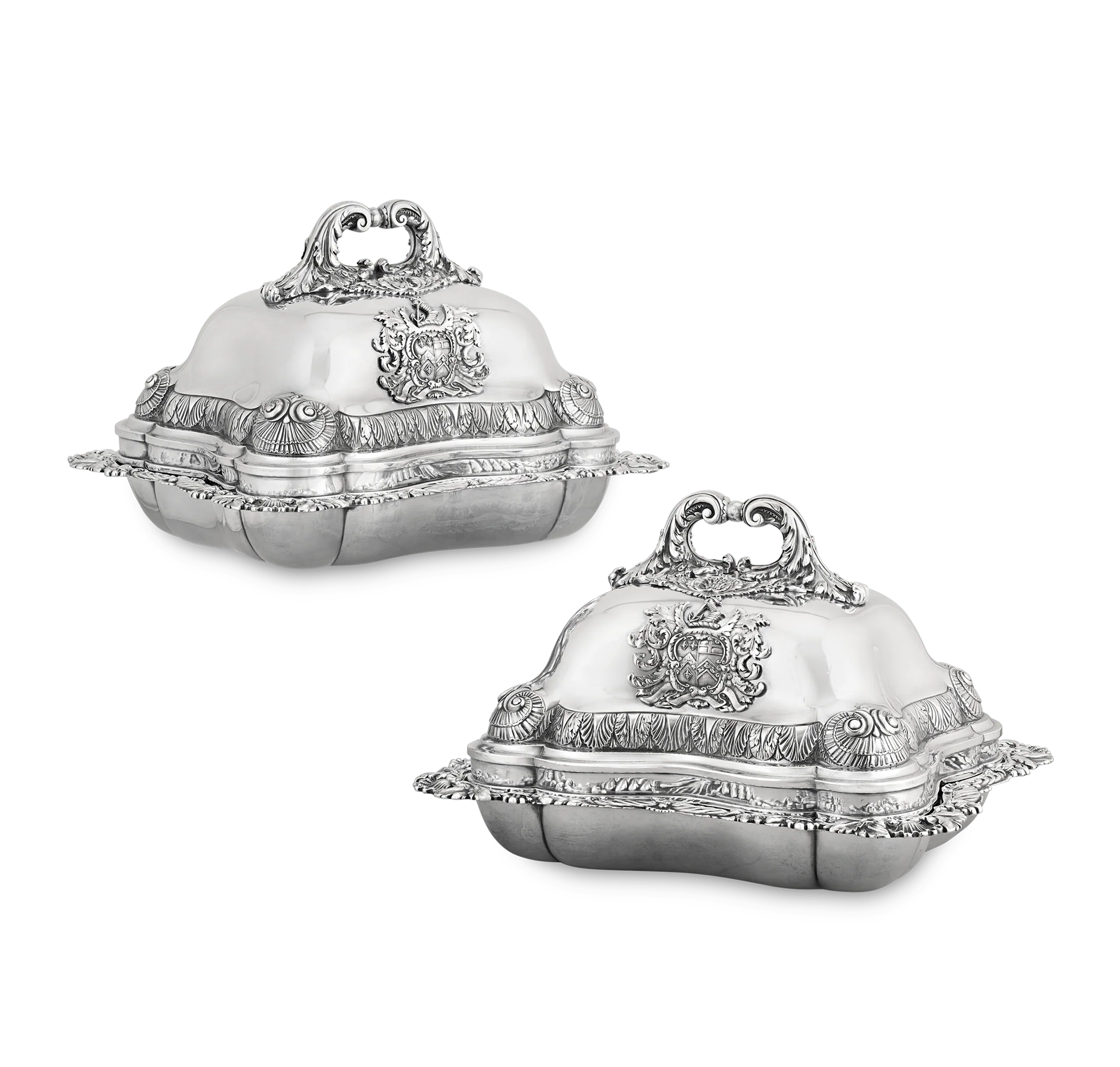
Pair of Silver Entree Dishes by Edward Farrell
Pair of Silver Entree Dishes
Edward Farrell
Hallmarked London, 1821
After the Napoleonic Wars in the early 19th century, Europe enjoyed a period of relative peace, leading to the rise of a middle class eager to adopt aristocratic lifestyles. Fascination with antiquity became paramount, and prestigious patrons commissioned dining accoutrements that reflected their sophistication and embrace of classical themes. These exceptional Regency silver entrée dishes once graced the table of a distinguished family, serving as a centerpiece that showcased their elevated status through grand feasts.
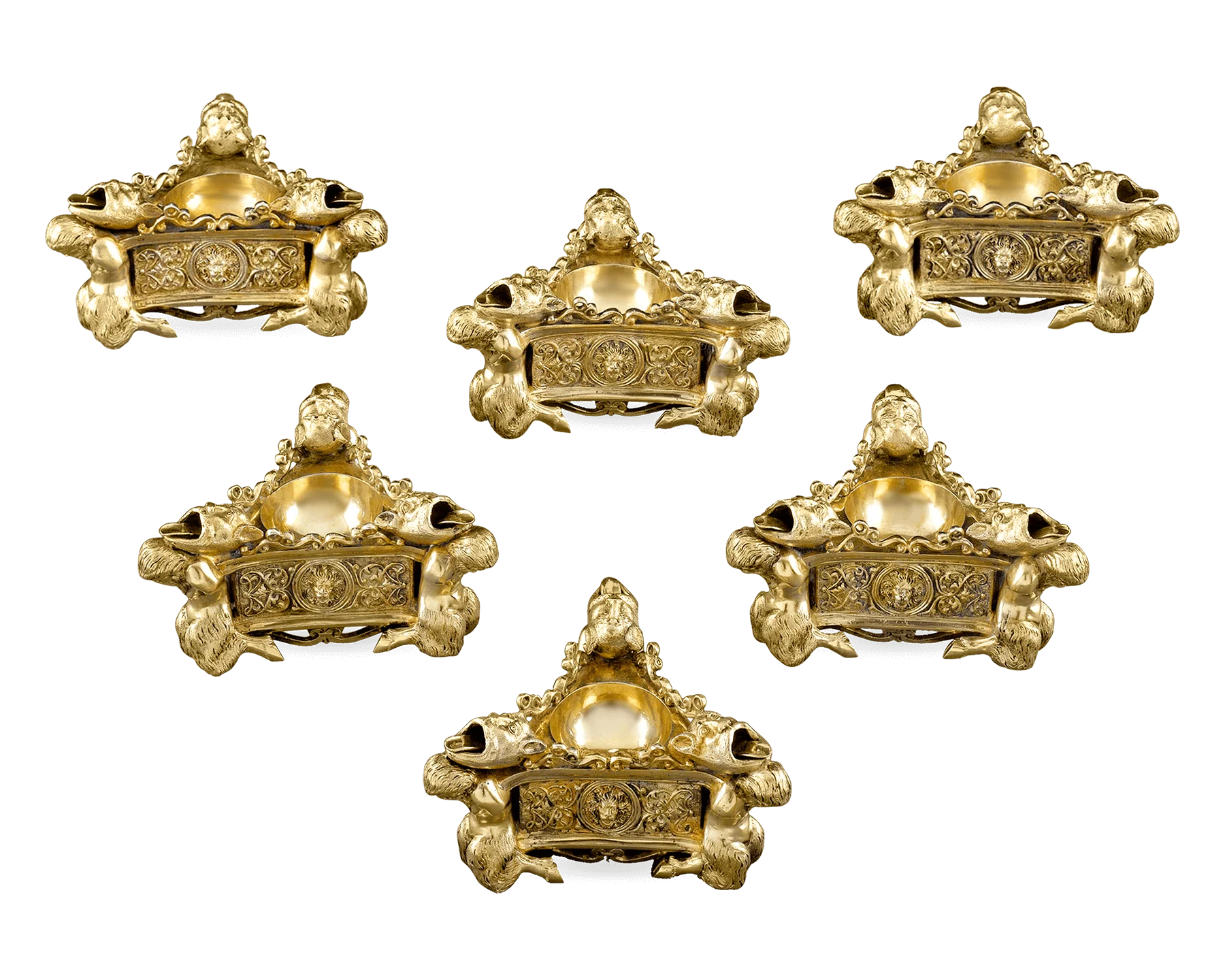
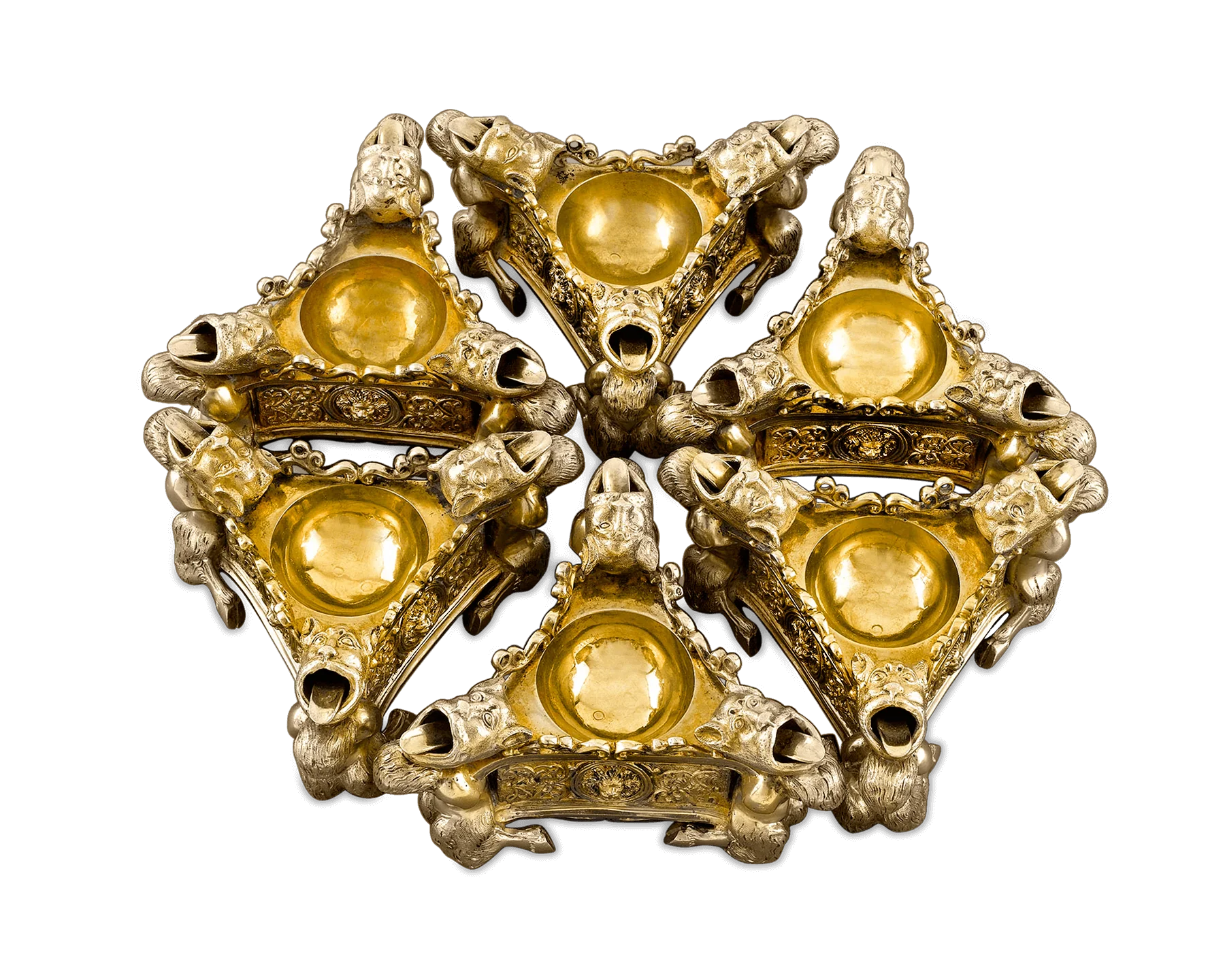
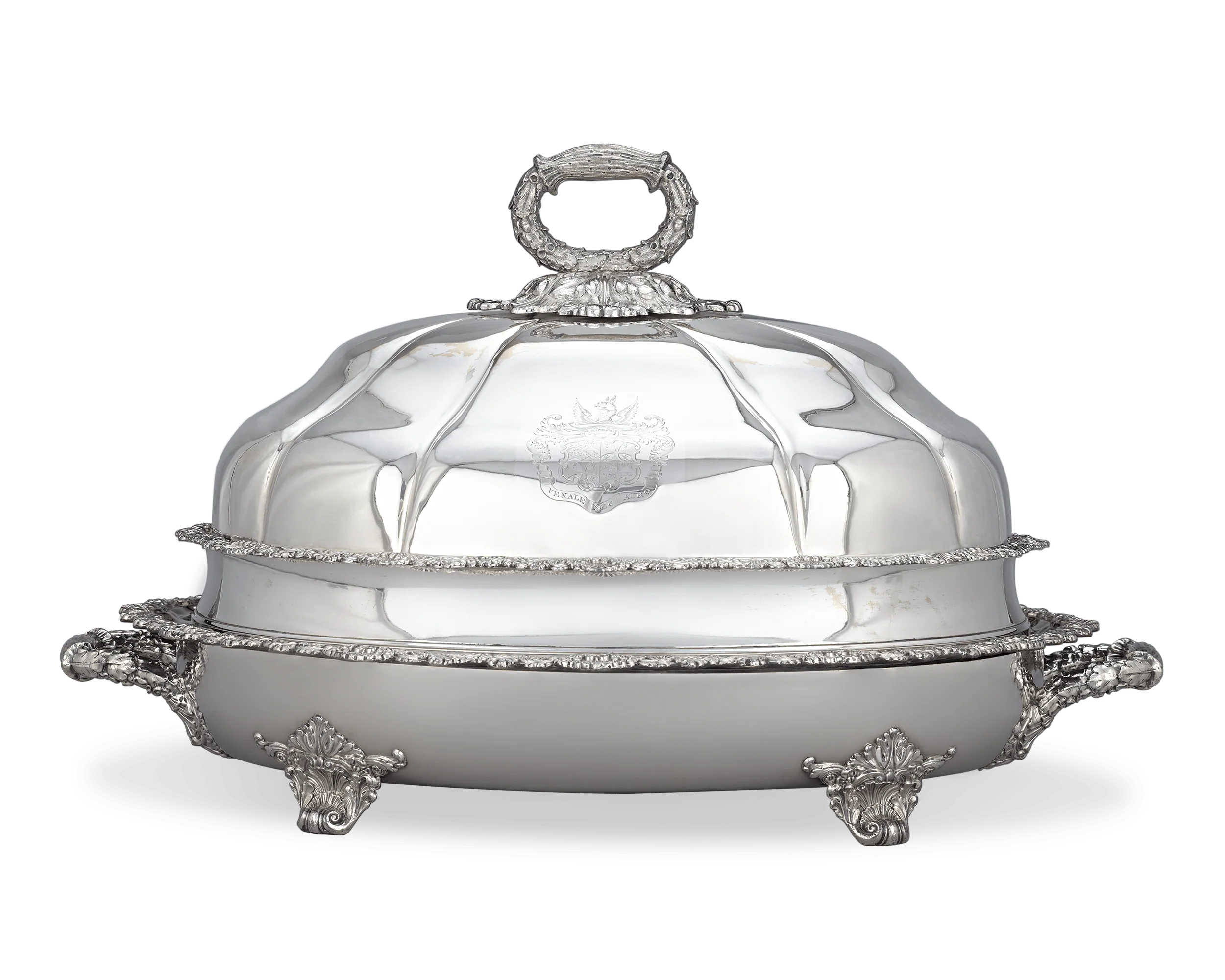
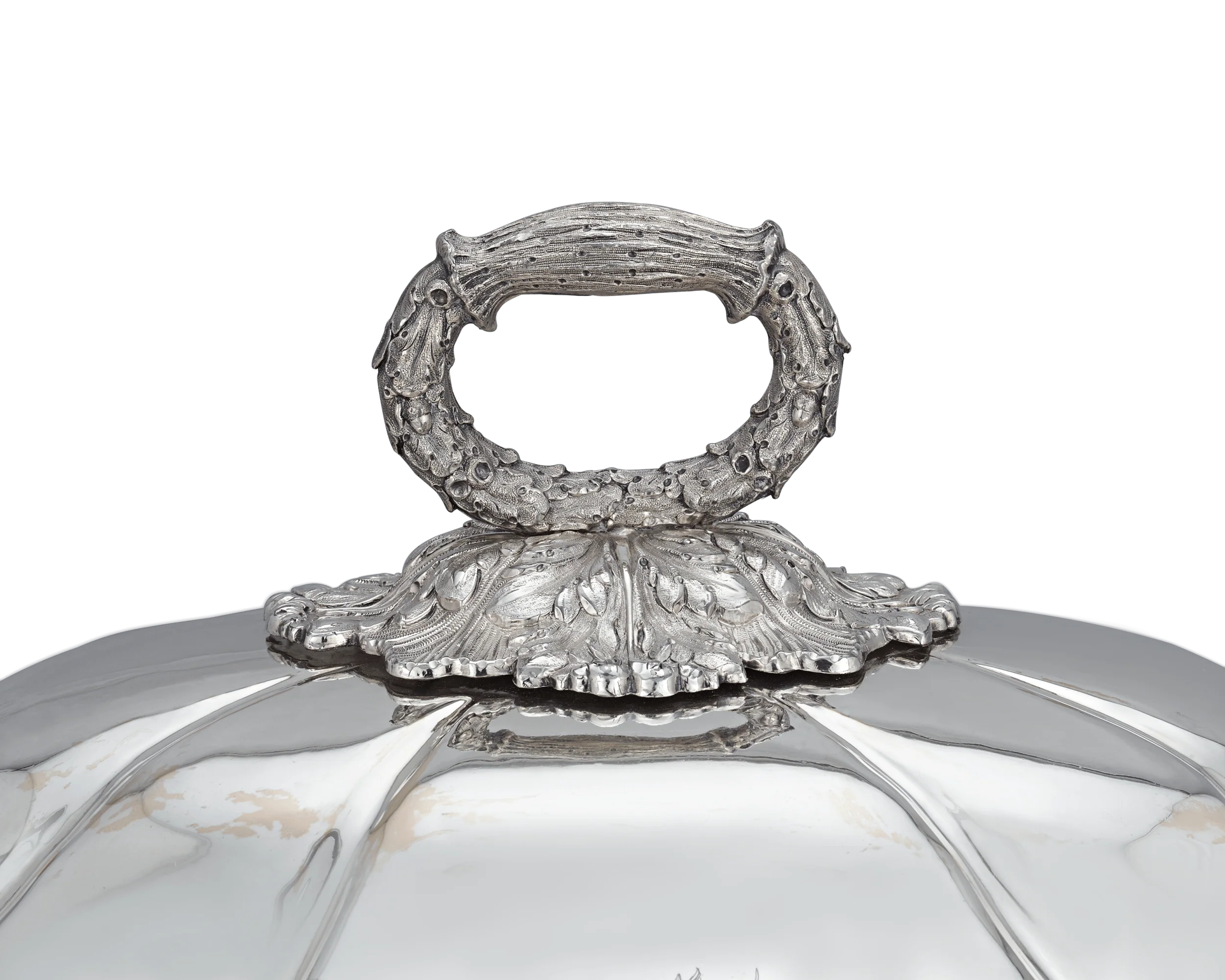
These dishes were crafted by the esteemed Edward Farrell in London during 1821-22, and exemplify the very best motifs of the Regency era. The dishes are heavily decorated with intricate chasing and cast elements, prominently featuring a coat of arms. Perhaps their most distinctive feature is their "pin-cushion" style shape. This unique design became popular in the early 19th century, adding both aesthetic appeal and functional elegance.
Hallmarked shortly after the Prince Regent's ascension to George IV, these substantial dishes reflect the transitional dining customs of the time. During the Regency, it was common for many serving dishes to remain on the table, some covered in a new high-domed style. As the service à la russe became more popular, other dishes were passed by servants.
Edward Farrell was a prominent English silversmith known for his elaborate and intricate designs. His work is highly regarded for its exceptional craftsmanship and artistic detail, making him a significant figure in the history of silverware during the early 19th century.
8 1/4“ high by 12 1/2” wide 10“ deep
Provenance:
M.S. Rau, New Orleans
Red McCombs Collection, Texas
M.S. Rau, New Orleans
Edward Farrell
Hallmarked London, 1821
After the Napoleonic Wars in the early 19th century, Europe enjoyed a period of relative peace, leading to the rise of a middle class eager to adopt aristocratic lifestyles. Fascination with antiquity became paramount, and prestigious patrons commissioned dining accoutrements that reflected their sophistication and embrace of classical themes. These exceptional Regency silver entrée dishes once graced the table of a distinguished family, serving as a centerpiece that showcased their elevated status through grand feasts.
These dishes were crafted by the esteemed Edward Farrell in London during 1821-22, and exemplify the very best motifs of the Regency era. The dishes are heavily decorated with intricate chasing and cast elements, prominently featuring a coat of arms. Perhaps their most distinctive feature is their "pin-cushion" style shape. This unique design became popular in the early 19th century, adding both aesthetic appeal and functional elegance.
Hallmarked shortly after the Prince Regent's ascension to George IV, these substantial dishes reflect the transitional dining customs of the time. During the Regency, it was common for many serving dishes to remain on the table, some covered in a new high-domed style. As the service à la russe became more popular, other dishes were passed by servants.
Edward Farrell was a prominent English silversmith known for his elaborate and intricate designs. His work is highly regarded for its exceptional craftsmanship and artistic detail, making him a significant figure in the history of silverware during the early 19th century.
8 1/4“ high by 12 1/2” wide 10“ deep
Provenance:
M.S. Rau, New Orleans
Red McCombs Collection, Texas
M.S. Rau, New Orleans
Pair of Silver Entree Dishes
Edward Farrell
Hallmarked London, 1821
After the Napoleonic Wars in the early 19th century, Europe enjoyed a period of relative peace, leading to the rise of a middle class eager to adopt aristocratic lifestyles. Fascination with antiquity became paramount, and prestigious patrons commissioned dining accoutrements that reflected their sophistication and embrace of classical themes. These exceptional Regency silver entrée dishes once graced the table of a distinguished family, serving as a centerpiece that showcased their elevated status through grand feasts.
These dishes were crafted by the esteemed Edward Farrell in London during 1821-22, and exemplify the very best motifs of the Regency era. The dishes are heavily decorated with intricate chasing and cast elements, prominently featuring a coat of arms. Perhaps their most distinctive feature is their "pin-cushion" style shape. This unique design became popular in the early 19th century, adding both aesthetic appeal and functional elegance.
Hallmarked shortly after the Prince Regent's ascension to George IV, these substantial dishes reflect the transitional dining customs of the time. During the Regency, it was common for many serving dishes to remain on the table, some covered in a new high-domed style. As the service à la russe became more popular, other dishes were passed by servants.
Edward Farrell was a prominent English silversmith known for his elaborate and intricate designs. His work is highly regarded for its exceptional craftsmanship and artistic detail, making him a significant figure in the history of silverware during the early 19th century.
8 1/4“ high by 12 1/2” wide 10“ deep
Provenance:
M.S. Rau, New Orleans
Red McCombs Collection, Texas
M.S. Rau, New Orleans
Edward Farrell
Hallmarked London, 1821
After the Napoleonic Wars in the early 19th century, Europe enjoyed a period of relative peace, leading to the rise of a middle class eager to adopt aristocratic lifestyles. Fascination with antiquity became paramount, and prestigious patrons commissioned dining accoutrements that reflected their sophistication and embrace of classical themes. These exceptional Regency silver entrée dishes once graced the table of a distinguished family, serving as a centerpiece that showcased their elevated status through grand feasts.
These dishes were crafted by the esteemed Edward Farrell in London during 1821-22, and exemplify the very best motifs of the Regency era. The dishes are heavily decorated with intricate chasing and cast elements, prominently featuring a coat of arms. Perhaps their most distinctive feature is their "pin-cushion" style shape. This unique design became popular in the early 19th century, adding both aesthetic appeal and functional elegance.
Hallmarked shortly after the Prince Regent's ascension to George IV, these substantial dishes reflect the transitional dining customs of the time. During the Regency, it was common for many serving dishes to remain on the table, some covered in a new high-domed style. As the service à la russe became more popular, other dishes were passed by servants.
Edward Farrell was a prominent English silversmith known for his elaborate and intricate designs. His work is highly regarded for its exceptional craftsmanship and artistic detail, making him a significant figure in the history of silverware during the early 19th century.
8 1/4“ high by 12 1/2” wide 10“ deep
Provenance:
M.S. Rau, New Orleans
Red McCombs Collection, Texas
M.S. Rau, New Orleans
$38,500.00
Pair of Silver Entree Dishes by Edward Farrell—
$38,500.00
Description
Pair of Silver Entree Dishes
Edward Farrell
Hallmarked London, 1821
After the Napoleonic Wars in the early 19th century, Europe enjoyed a period of relative peace, leading to the rise of a middle class eager to adopt aristocratic lifestyles. Fascination with antiquity became paramount, and prestigious patrons commissioned dining accoutrements that reflected their sophistication and embrace of classical themes. These exceptional Regency silver entrée dishes once graced the table of a distinguished family, serving as a centerpiece that showcased their elevated status through grand feasts.
These dishes were crafted by the esteemed Edward Farrell in London during 1821-22, and exemplify the very best motifs of the Regency era. The dishes are heavily decorated with intricate chasing and cast elements, prominently featuring a coat of arms. Perhaps their most distinctive feature is their "pin-cushion" style shape. This unique design became popular in the early 19th century, adding both aesthetic appeal and functional elegance.
Hallmarked shortly after the Prince Regent's ascension to George IV, these substantial dishes reflect the transitional dining customs of the time. During the Regency, it was common for many serving dishes to remain on the table, some covered in a new high-domed style. As the service à la russe became more popular, other dishes were passed by servants.
Edward Farrell was a prominent English silversmith known for his elaborate and intricate designs. His work is highly regarded for its exceptional craftsmanship and artistic detail, making him a significant figure in the history of silverware during the early 19th century.
8 1/4“ high by 12 1/2” wide 10“ deep
Provenance:
M.S. Rau, New Orleans
Red McCombs Collection, Texas
M.S. Rau, New Orleans
Edward Farrell
Hallmarked London, 1821
After the Napoleonic Wars in the early 19th century, Europe enjoyed a period of relative peace, leading to the rise of a middle class eager to adopt aristocratic lifestyles. Fascination with antiquity became paramount, and prestigious patrons commissioned dining accoutrements that reflected their sophistication and embrace of classical themes. These exceptional Regency silver entrée dishes once graced the table of a distinguished family, serving as a centerpiece that showcased their elevated status through grand feasts.
These dishes were crafted by the esteemed Edward Farrell in London during 1821-22, and exemplify the very best motifs of the Regency era. The dishes are heavily decorated with intricate chasing and cast elements, prominently featuring a coat of arms. Perhaps their most distinctive feature is their "pin-cushion" style shape. This unique design became popular in the early 19th century, adding both aesthetic appeal and functional elegance.
Hallmarked shortly after the Prince Regent's ascension to George IV, these substantial dishes reflect the transitional dining customs of the time. During the Regency, it was common for many serving dishes to remain on the table, some covered in a new high-domed style. As the service à la russe became more popular, other dishes were passed by servants.
Edward Farrell was a prominent English silversmith known for his elaborate and intricate designs. His work is highly regarded for its exceptional craftsmanship and artistic detail, making him a significant figure in the history of silverware during the early 19th century.
8 1/4“ high by 12 1/2” wide 10“ deep
Provenance:
M.S. Rau, New Orleans
Red McCombs Collection, Texas
M.S. Rau, New Orleans