1 / 13
+8
Paul Storr Abolitionist Silver Trays
Abolitionist Silver Trays
Paul Storr
Each Tray Hallmarked London, 1818
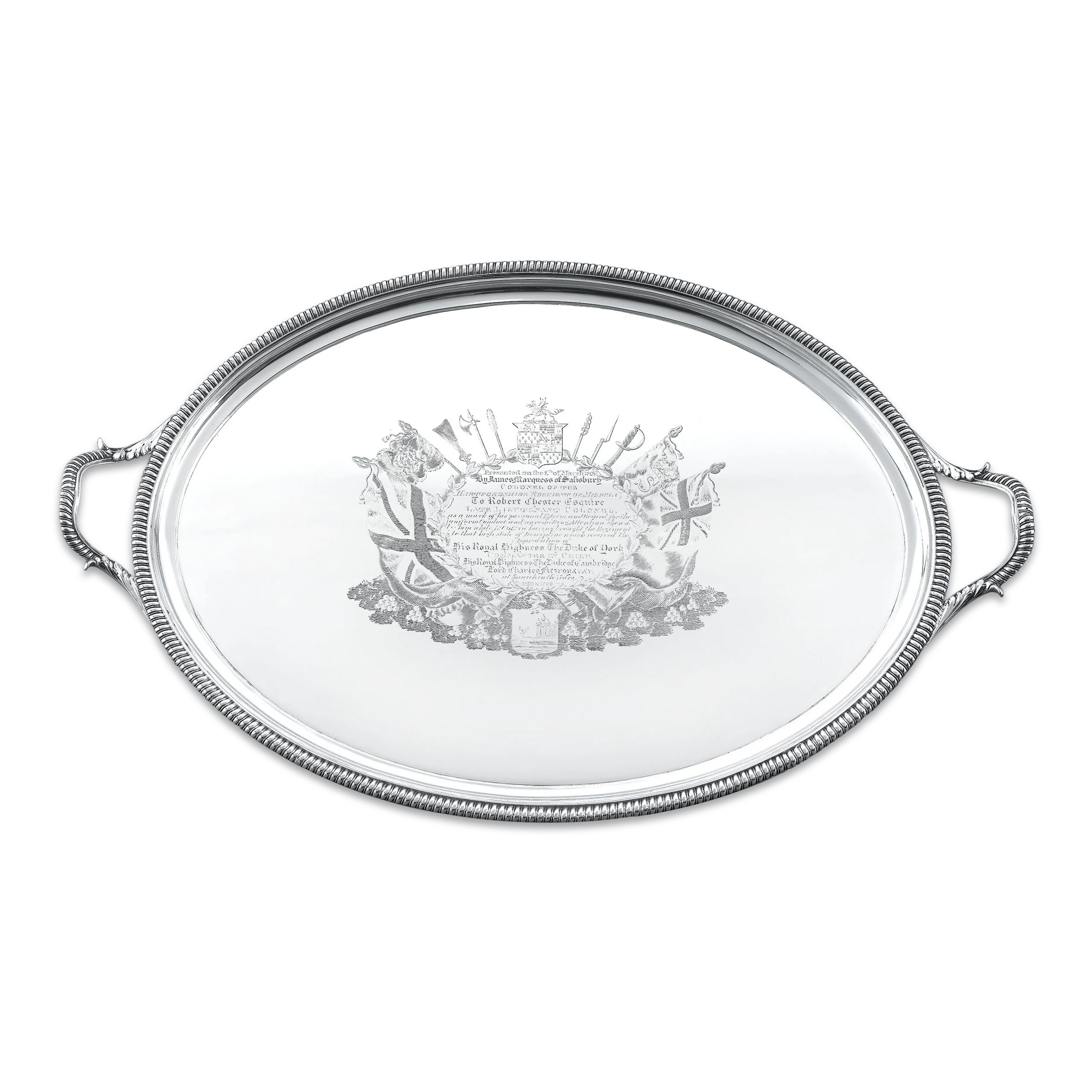
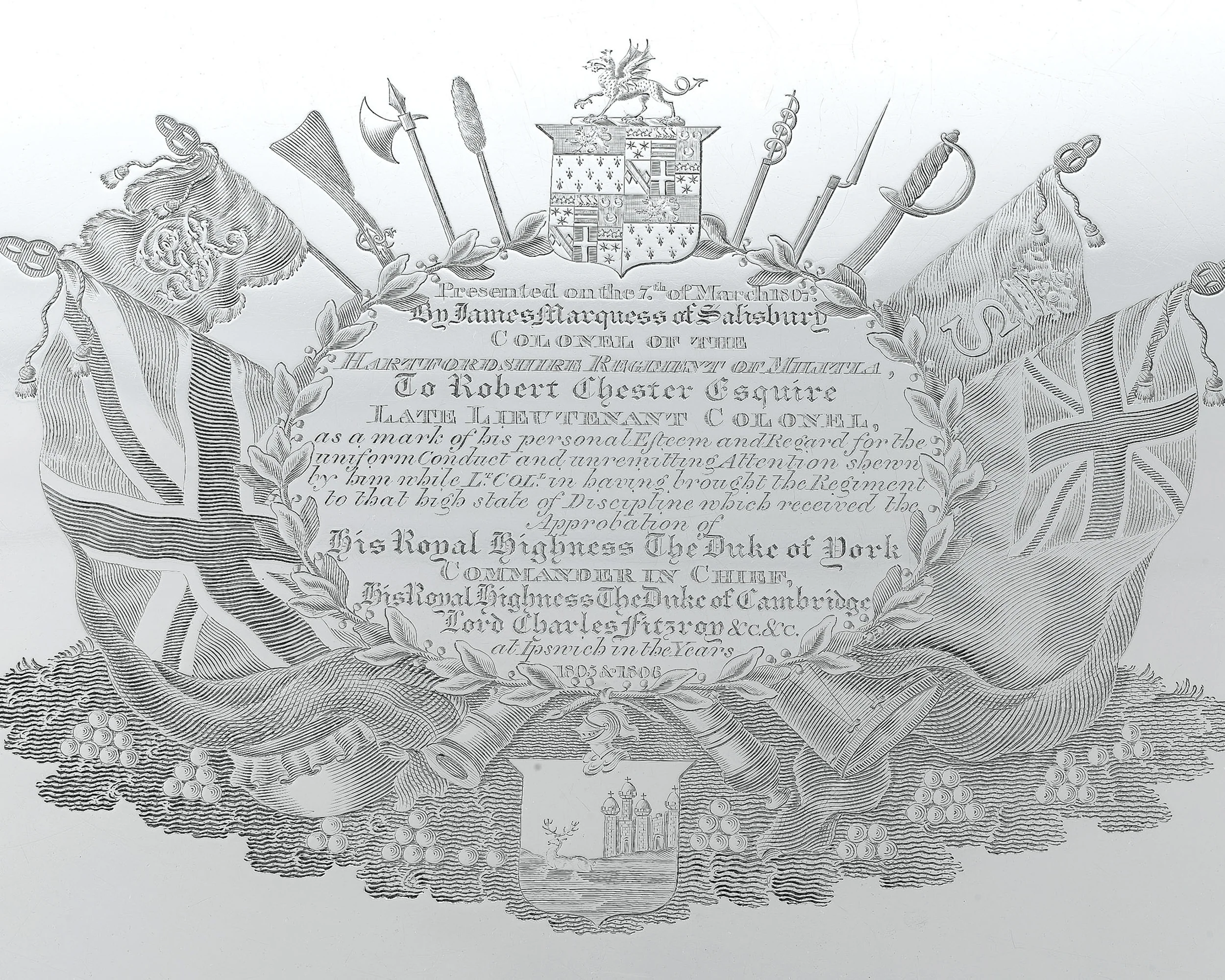
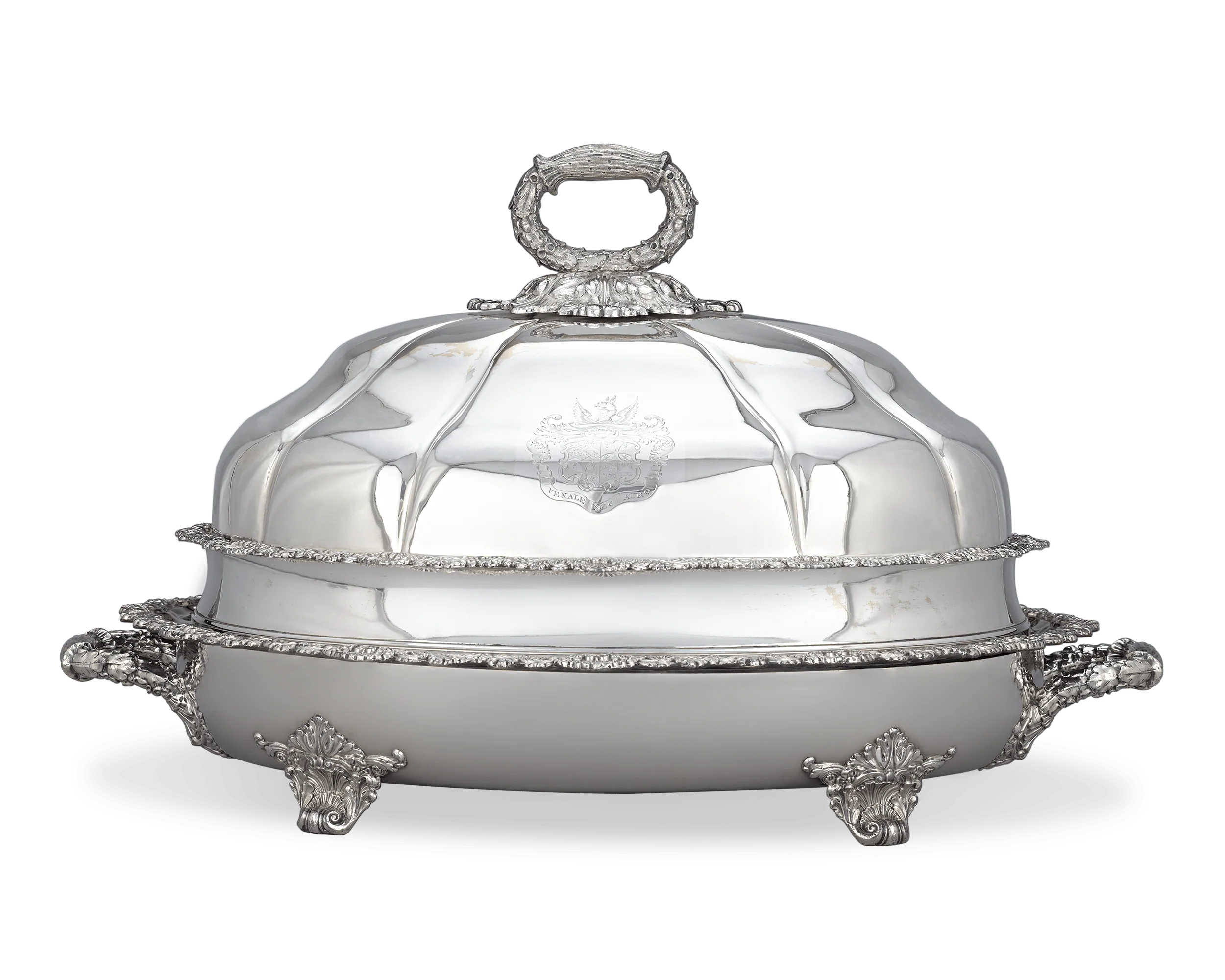
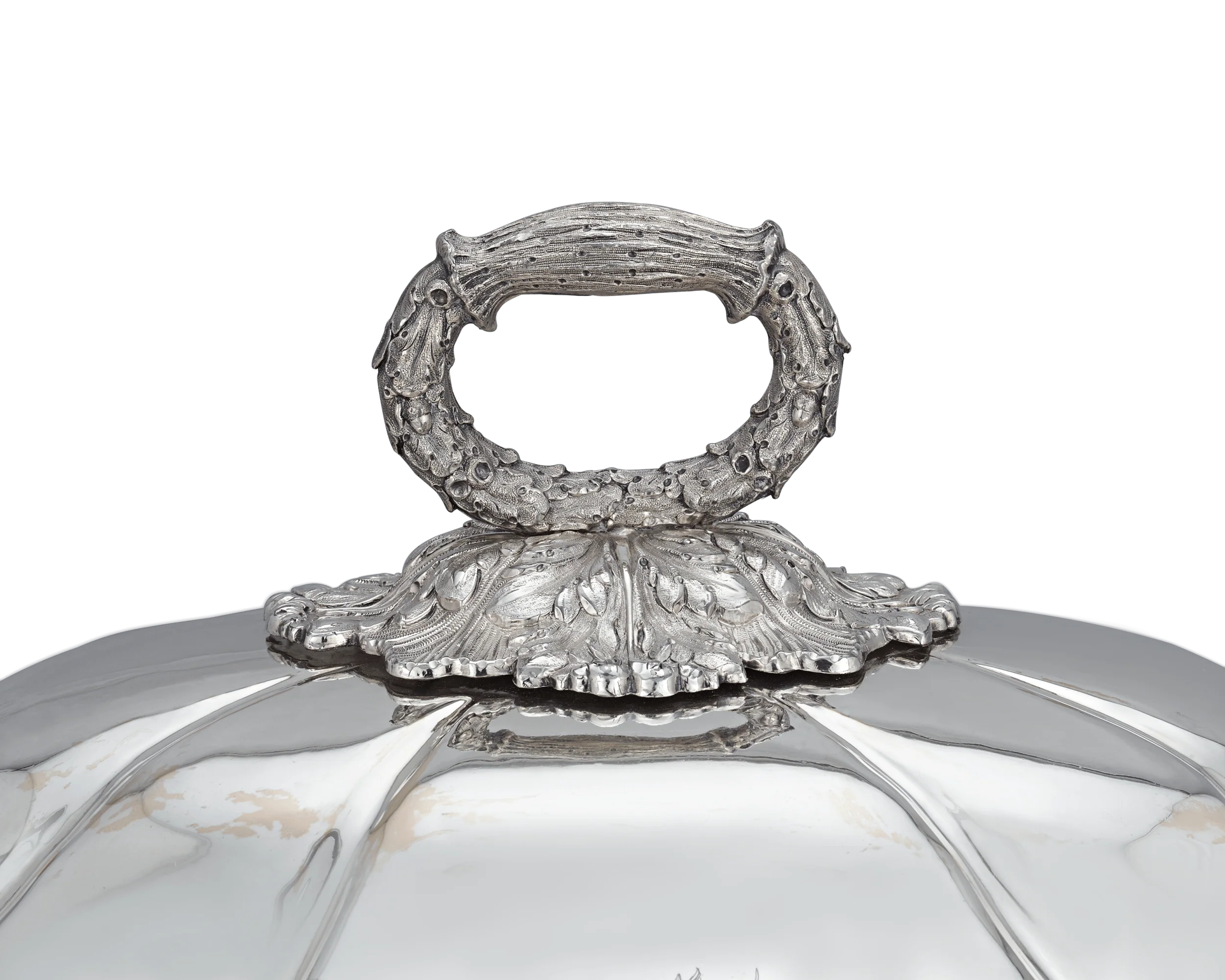
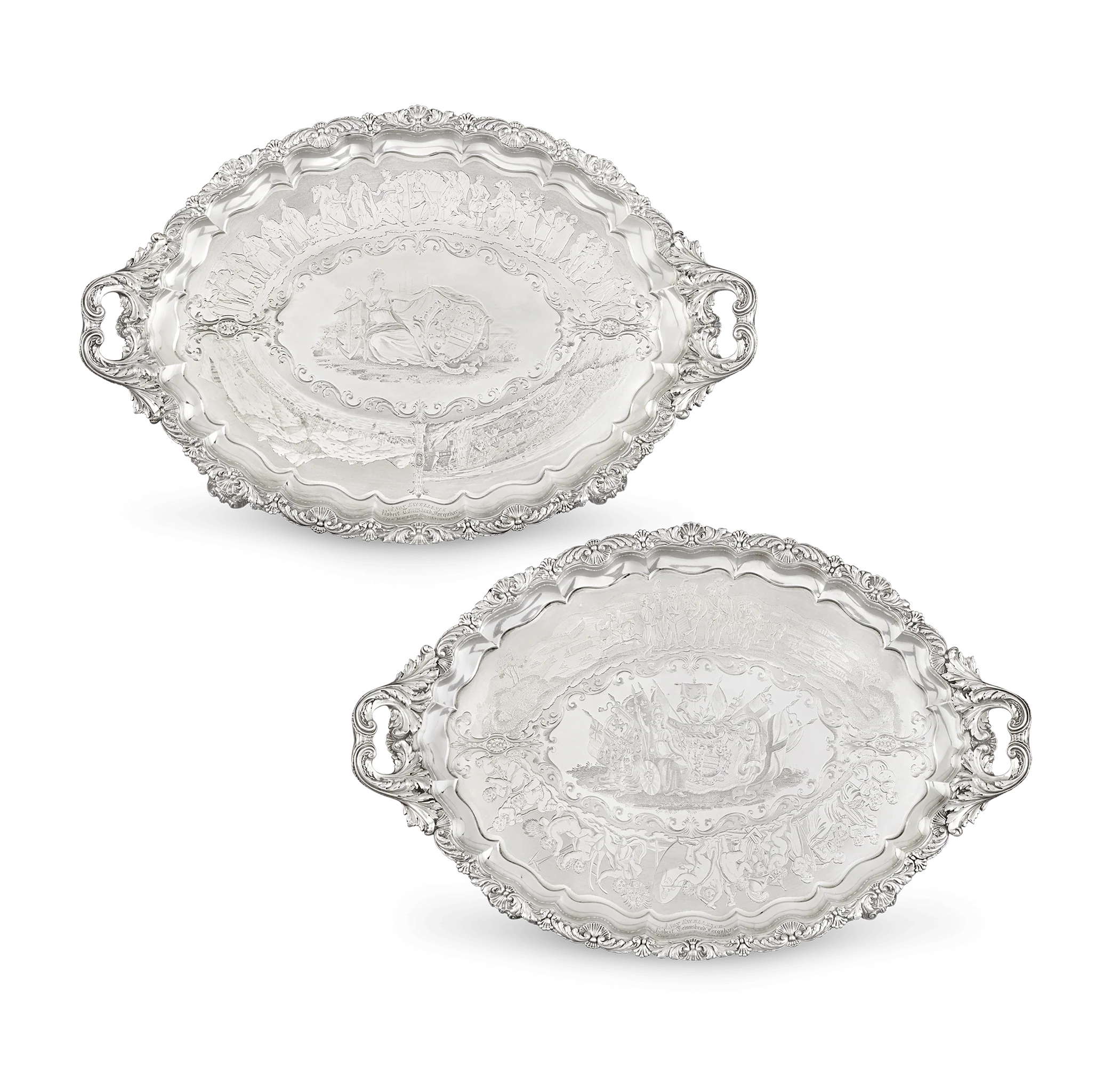
These highly important sterling silver trays by renowned English silversmith Paul Storr were gifted by the Isle of Mauritius to its famed abolitionist leader, Sir Robert Townsend Farquhar. Exceptional in their quality and beauty, the monumental commemorative trays feature highly detailed engravings, inscriptions and elegant scrollwork borders that epitomize Storr's exceptional craftsmanship.
During the Napoleonic Wars, England seized Mauritius from the French and installed Farquhar as its first governor. With Farquhar as leader, the island quickly saw economic and social changes, becoming an important hub of transcontinental cultural and artistic life. His anti-slavery effort was met with resistance from many powerful parties, yet he pushed through with reforms. In 1817 he took a three-year hiatus from the post, and the country was so grateful for his service and hopeful that he would return, they gifted to him these exceptional trays by the most important silversmith in Regency England, Paul Storr.
While the trays feature matching acanthus and shell motif borders and handles, they display two different scenes stunningly engraved at their centers. The first pays homage to Farquhar, and the technological advances brought to the islands by his efforts. Minerva is surrounded by various military standards and seated upon the British lion with Farquhar's coat of arms beside her. Above is the signing of the abolishment of slavery, known as the "Oath of Blood" treaty, between Farquhar's officers and King Radama I of Madagascar. Allegorical images of the advances brought about by the treaty, including military, the arts, education and agriculture are detailed below.
The second tray depicts a classical female figure resting on an anchor, again beside Farquhar’s coat of arms. The creation is further elevated by the sailing ships and a frieze of allegorical figures representing trade with Mauritius, including the stunning phoenix rising from the flames representing hope in the darkness.
Paul Storr is considered the greatest English silversmith of the Regency era, and his beautifully ornate silver reflected the rapidly changing world in which he lived. After the Napoleonic Wars, the British Empire rose to immense power. Increased wealth fueled changes in social customs, which in turn created a great demand for elaborate objects for entertaining in the home. As a result, Storr’s silver was coveted by many affluent patrons, including royalty. King George III and the Prince of Wales were both frequent patrons. Storr’s works are highly sculptural yet perfectly functional, standing as exceptional examples of fine decorative art.
Both trays are inscribed along the bottom rims: "A Son Excellence/ Robert Townshend Farquhar/ L'Ile Maurice Reconnoissant 1818" which translates to "The Isle of Mauritius expresses gratitude to His Excellency Robert Townshend Farquhar 1818"
Each: 18 1/4" high x 27 3/8" wide x 3" deep
Paul Storr
Each Tray Hallmarked London, 1818
These highly important sterling silver trays by renowned English silversmith Paul Storr were gifted by the Isle of Mauritius to its famed abolitionist leader, Sir Robert Townsend Farquhar. Exceptional in their quality and beauty, the monumental commemorative trays feature highly detailed engravings, inscriptions and elegant scrollwork borders that epitomize Storr's exceptional craftsmanship.
During the Napoleonic Wars, England seized Mauritius from the French and installed Farquhar as its first governor. With Farquhar as leader, the island quickly saw economic and social changes, becoming an important hub of transcontinental cultural and artistic life. His anti-slavery effort was met with resistance from many powerful parties, yet he pushed through with reforms. In 1817 he took a three-year hiatus from the post, and the country was so grateful for his service and hopeful that he would return, they gifted to him these exceptional trays by the most important silversmith in Regency England, Paul Storr.
While the trays feature matching acanthus and shell motif borders and handles, they display two different scenes stunningly engraved at their centers. The first pays homage to Farquhar, and the technological advances brought to the islands by his efforts. Minerva is surrounded by various military standards and seated upon the British lion with Farquhar's coat of arms beside her. Above is the signing of the abolishment of slavery, known as the "Oath of Blood" treaty, between Farquhar's officers and King Radama I of Madagascar. Allegorical images of the advances brought about by the treaty, including military, the arts, education and agriculture are detailed below.
The second tray depicts a classical female figure resting on an anchor, again beside Farquhar’s coat of arms. The creation is further elevated by the sailing ships and a frieze of allegorical figures representing trade with Mauritius, including the stunning phoenix rising from the flames representing hope in the darkness.
Paul Storr is considered the greatest English silversmith of the Regency era, and his beautifully ornate silver reflected the rapidly changing world in which he lived. After the Napoleonic Wars, the British Empire rose to immense power. Increased wealth fueled changes in social customs, which in turn created a great demand for elaborate objects for entertaining in the home. As a result, Storr’s silver was coveted by many affluent patrons, including royalty. King George III and the Prince of Wales were both frequent patrons. Storr’s works are highly sculptural yet perfectly functional, standing as exceptional examples of fine decorative art.
Both trays are inscribed along the bottom rims: "A Son Excellence/ Robert Townshend Farquhar/ L'Ile Maurice Reconnoissant 1818" which translates to "The Isle of Mauritius expresses gratitude to His Excellency Robert Townshend Farquhar 1818"
Each: 18 1/4" high x 27 3/8" wide x 3" deep
Abolitionist Silver Trays
Paul Storr
Each Tray Hallmarked London, 1818
These highly important sterling silver trays by renowned English silversmith Paul Storr were gifted by the Isle of Mauritius to its famed abolitionist leader, Sir Robert Townsend Farquhar. Exceptional in their quality and beauty, the monumental commemorative trays feature highly detailed engravings, inscriptions and elegant scrollwork borders that epitomize Storr's exceptional craftsmanship.
During the Napoleonic Wars, England seized Mauritius from the French and installed Farquhar as its first governor. With Farquhar as leader, the island quickly saw economic and social changes, becoming an important hub of transcontinental cultural and artistic life. His anti-slavery effort was met with resistance from many powerful parties, yet he pushed through with reforms. In 1817 he took a three-year hiatus from the post, and the country was so grateful for his service and hopeful that he would return, they gifted to him these exceptional trays by the most important silversmith in Regency England, Paul Storr.
While the trays feature matching acanthus and shell motif borders and handles, they display two different scenes stunningly engraved at their centers. The first pays homage to Farquhar, and the technological advances brought to the islands by his efforts. Minerva is surrounded by various military standards and seated upon the British lion with Farquhar's coat of arms beside her. Above is the signing of the abolishment of slavery, known as the "Oath of Blood" treaty, between Farquhar's officers and King Radama I of Madagascar. Allegorical images of the advances brought about by the treaty, including military, the arts, education and agriculture are detailed below.
The second tray depicts a classical female figure resting on an anchor, again beside Farquhar’s coat of arms. The creation is further elevated by the sailing ships and a frieze of allegorical figures representing trade with Mauritius, including the stunning phoenix rising from the flames representing hope in the darkness.
Paul Storr is considered the greatest English silversmith of the Regency era, and his beautifully ornate silver reflected the rapidly changing world in which he lived. After the Napoleonic Wars, the British Empire rose to immense power. Increased wealth fueled changes in social customs, which in turn created a great demand for elaborate objects for entertaining in the home. As a result, Storr’s silver was coveted by many affluent patrons, including royalty. King George III and the Prince of Wales were both frequent patrons. Storr’s works are highly sculptural yet perfectly functional, standing as exceptional examples of fine decorative art.
Both trays are inscribed along the bottom rims: "A Son Excellence/ Robert Townshend Farquhar/ L'Ile Maurice Reconnoissant 1818" which translates to "The Isle of Mauritius expresses gratitude to His Excellency Robert Townshend Farquhar 1818"
Each: 18 1/4" high x 27 3/8" wide x 3" deep
Paul Storr
Each Tray Hallmarked London, 1818
These highly important sterling silver trays by renowned English silversmith Paul Storr were gifted by the Isle of Mauritius to its famed abolitionist leader, Sir Robert Townsend Farquhar. Exceptional in their quality and beauty, the monumental commemorative trays feature highly detailed engravings, inscriptions and elegant scrollwork borders that epitomize Storr's exceptional craftsmanship.
During the Napoleonic Wars, England seized Mauritius from the French and installed Farquhar as its first governor. With Farquhar as leader, the island quickly saw economic and social changes, becoming an important hub of transcontinental cultural and artistic life. His anti-slavery effort was met with resistance from many powerful parties, yet he pushed through with reforms. In 1817 he took a three-year hiatus from the post, and the country was so grateful for his service and hopeful that he would return, they gifted to him these exceptional trays by the most important silversmith in Regency England, Paul Storr.
While the trays feature matching acanthus and shell motif borders and handles, they display two different scenes stunningly engraved at their centers. The first pays homage to Farquhar, and the technological advances brought to the islands by his efforts. Minerva is surrounded by various military standards and seated upon the British lion with Farquhar's coat of arms beside her. Above is the signing of the abolishment of slavery, known as the "Oath of Blood" treaty, between Farquhar's officers and King Radama I of Madagascar. Allegorical images of the advances brought about by the treaty, including military, the arts, education and agriculture are detailed below.
The second tray depicts a classical female figure resting on an anchor, again beside Farquhar’s coat of arms. The creation is further elevated by the sailing ships and a frieze of allegorical figures representing trade with Mauritius, including the stunning phoenix rising from the flames representing hope in the darkness.
Paul Storr is considered the greatest English silversmith of the Regency era, and his beautifully ornate silver reflected the rapidly changing world in which he lived. After the Napoleonic Wars, the British Empire rose to immense power. Increased wealth fueled changes in social customs, which in turn created a great demand for elaborate objects for entertaining in the home. As a result, Storr’s silver was coveted by many affluent patrons, including royalty. King George III and the Prince of Wales were both frequent patrons. Storr’s works are highly sculptural yet perfectly functional, standing as exceptional examples of fine decorative art.
Both trays are inscribed along the bottom rims: "A Son Excellence/ Robert Townshend Farquhar/ L'Ile Maurice Reconnoissant 1818" which translates to "The Isle of Mauritius expresses gratitude to His Excellency Robert Townshend Farquhar 1818"
Each: 18 1/4" high x 27 3/8" wide x 3" deep
$104,475.00
Original: $298,500.00
-65%Paul Storr Abolitionist Silver Trays—
$298,500.00
$104,475.00Description
Abolitionist Silver Trays
Paul Storr
Each Tray Hallmarked London, 1818
These highly important sterling silver trays by renowned English silversmith Paul Storr were gifted by the Isle of Mauritius to its famed abolitionist leader, Sir Robert Townsend Farquhar. Exceptional in their quality and beauty, the monumental commemorative trays feature highly detailed engravings, inscriptions and elegant scrollwork borders that epitomize Storr's exceptional craftsmanship.
During the Napoleonic Wars, England seized Mauritius from the French and installed Farquhar as its first governor. With Farquhar as leader, the island quickly saw economic and social changes, becoming an important hub of transcontinental cultural and artistic life. His anti-slavery effort was met with resistance from many powerful parties, yet he pushed through with reforms. In 1817 he took a three-year hiatus from the post, and the country was so grateful for his service and hopeful that he would return, they gifted to him these exceptional trays by the most important silversmith in Regency England, Paul Storr.
While the trays feature matching acanthus and shell motif borders and handles, they display two different scenes stunningly engraved at their centers. The first pays homage to Farquhar, and the technological advances brought to the islands by his efforts. Minerva is surrounded by various military standards and seated upon the British lion with Farquhar's coat of arms beside her. Above is the signing of the abolishment of slavery, known as the "Oath of Blood" treaty, between Farquhar's officers and King Radama I of Madagascar. Allegorical images of the advances brought about by the treaty, including military, the arts, education and agriculture are detailed below.
The second tray depicts a classical female figure resting on an anchor, again beside Farquhar’s coat of arms. The creation is further elevated by the sailing ships and a frieze of allegorical figures representing trade with Mauritius, including the stunning phoenix rising from the flames representing hope in the darkness.
Paul Storr is considered the greatest English silversmith of the Regency era, and his beautifully ornate silver reflected the rapidly changing world in which he lived. After the Napoleonic Wars, the British Empire rose to immense power. Increased wealth fueled changes in social customs, which in turn created a great demand for elaborate objects for entertaining in the home. As a result, Storr’s silver was coveted by many affluent patrons, including royalty. King George III and the Prince of Wales were both frequent patrons. Storr’s works are highly sculptural yet perfectly functional, standing as exceptional examples of fine decorative art.
Both trays are inscribed along the bottom rims: "A Son Excellence/ Robert Townshend Farquhar/ L'Ile Maurice Reconnoissant 1818" which translates to "The Isle of Mauritius expresses gratitude to His Excellency Robert Townshend Farquhar 1818"
Each: 18 1/4" high x 27 3/8" wide x 3" deep
Paul Storr
Each Tray Hallmarked London, 1818
These highly important sterling silver trays by renowned English silversmith Paul Storr were gifted by the Isle of Mauritius to its famed abolitionist leader, Sir Robert Townsend Farquhar. Exceptional in their quality and beauty, the monumental commemorative trays feature highly detailed engravings, inscriptions and elegant scrollwork borders that epitomize Storr's exceptional craftsmanship.
During the Napoleonic Wars, England seized Mauritius from the French and installed Farquhar as its first governor. With Farquhar as leader, the island quickly saw economic and social changes, becoming an important hub of transcontinental cultural and artistic life. His anti-slavery effort was met with resistance from many powerful parties, yet he pushed through with reforms. In 1817 he took a three-year hiatus from the post, and the country was so grateful for his service and hopeful that he would return, they gifted to him these exceptional trays by the most important silversmith in Regency England, Paul Storr.
While the trays feature matching acanthus and shell motif borders and handles, they display two different scenes stunningly engraved at their centers. The first pays homage to Farquhar, and the technological advances brought to the islands by his efforts. Minerva is surrounded by various military standards and seated upon the British lion with Farquhar's coat of arms beside her. Above is the signing of the abolishment of slavery, known as the "Oath of Blood" treaty, between Farquhar's officers and King Radama I of Madagascar. Allegorical images of the advances brought about by the treaty, including military, the arts, education and agriculture are detailed below.
The second tray depicts a classical female figure resting on an anchor, again beside Farquhar’s coat of arms. The creation is further elevated by the sailing ships and a frieze of allegorical figures representing trade with Mauritius, including the stunning phoenix rising from the flames representing hope in the darkness.
Paul Storr is considered the greatest English silversmith of the Regency era, and his beautifully ornate silver reflected the rapidly changing world in which he lived. After the Napoleonic Wars, the British Empire rose to immense power. Increased wealth fueled changes in social customs, which in turn created a great demand for elaborate objects for entertaining in the home. As a result, Storr’s silver was coveted by many affluent patrons, including royalty. King George III and the Prince of Wales were both frequent patrons. Storr’s works are highly sculptural yet perfectly functional, standing as exceptional examples of fine decorative art.
Both trays are inscribed along the bottom rims: "A Son Excellence/ Robert Townshend Farquhar/ L'Ile Maurice Reconnoissant 1818" which translates to "The Isle of Mauritius expresses gratitude to His Excellency Robert Townshend Farquhar 1818"
Each: 18 1/4" high x 27 3/8" wide x 3" deep