
1 / 5
Plique-à-jour Enamel and Glass Box
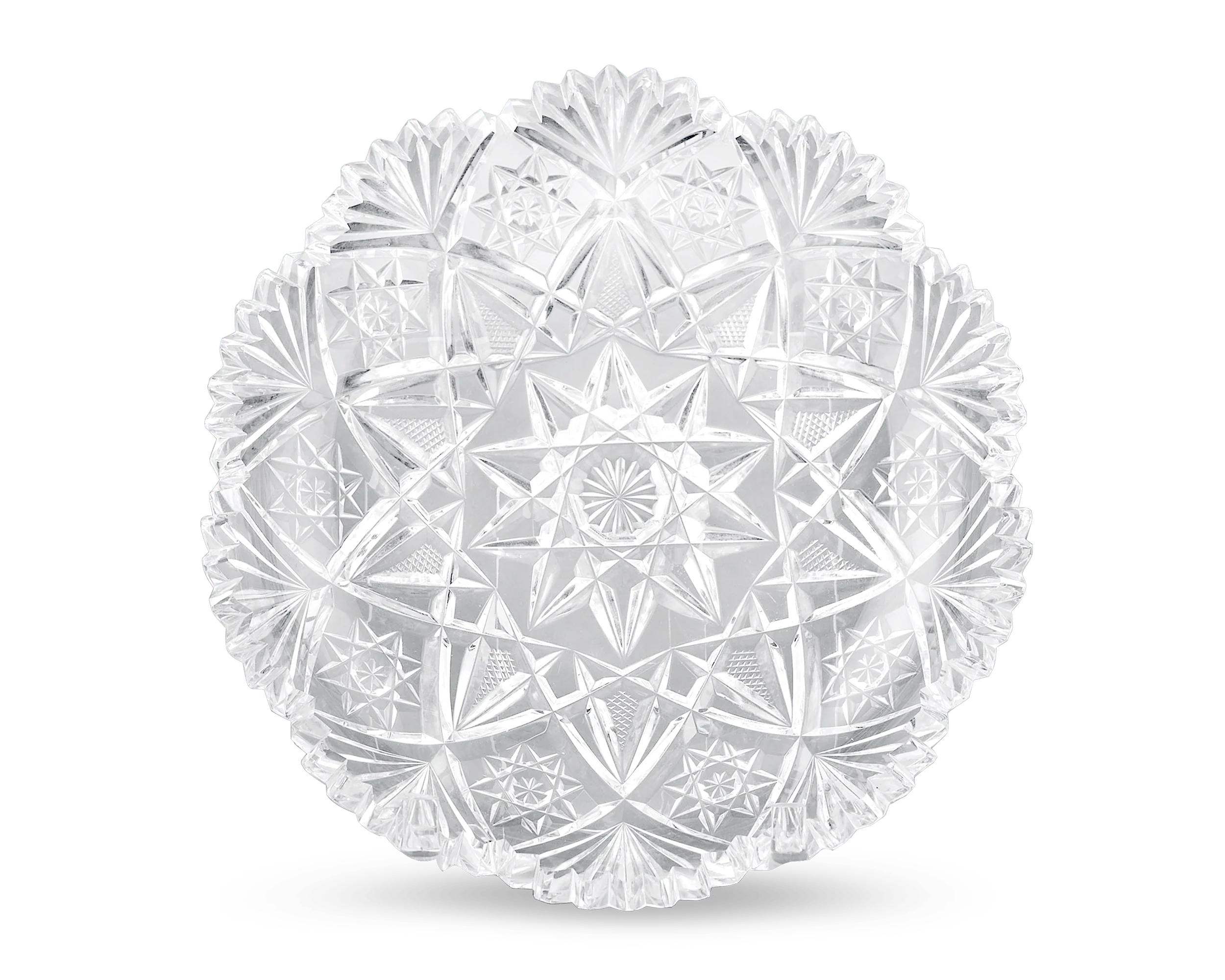
Crafted entirely with an exceptionally detailed enamel technique known as plique-à-jour, this French box is a luxurious objet d'art. Exhibiting a subtle translucence like that of stained glass, a floral border surrounds a delightful bouquet. Not to be outdone by its lid, the glass box also features a marvelous cut glass pattern to match its ornate top. Both geometric and organic, this treasure is a quintessential and luxurious example of Art Nouveau craftsmanship at its finest.
Plique-à-jour achieved great popularity during the Art Nouveau period and was utilized by master jewelers throughout Europe and the United States, including artisans employed by Fabergé to Tiffany Studios. The technique is similar to cloisonné in which viscous enamels are applied in cells. In plique-à-jour, however, there is no backing to the cell, so light can transmit through the translucent enamel, giving the finished piece an exceptional radiance.
Circa 1890
1 3/8" high x 2" diameter
Plique-à-jour achieved great popularity during the Art Nouveau period and was utilized by master jewelers throughout Europe and the United States, including artisans employed by Fabergé to Tiffany Studios. The technique is similar to cloisonné in which viscous enamels are applied in cells. In plique-à-jour, however, there is no backing to the cell, so light can transmit through the translucent enamel, giving the finished piece an exceptional radiance.
Circa 1890
1 3/8" high x 2" diameter
Crafted entirely with an exceptionally detailed enamel technique known as plique-à-jour, this French box is a luxurious objet d'art. Exhibiting a subtle translucence like that of stained glass, a floral border surrounds a delightful bouquet. Not to be outdone by its lid, the glass box also features a marvelous cut glass pattern to match its ornate top. Both geometric and organic, this treasure is a quintessential and luxurious example of Art Nouveau craftsmanship at its finest.
Plique-à-jour achieved great popularity during the Art Nouveau period and was utilized by master jewelers throughout Europe and the United States, including artisans employed by Fabergé to Tiffany Studios. The technique is similar to cloisonné in which viscous enamels are applied in cells. In plique-à-jour, however, there is no backing to the cell, so light can transmit through the translucent enamel, giving the finished piece an exceptional radiance.
Circa 1890
1 3/8" high x 2" diameter
Plique-à-jour achieved great popularity during the Art Nouveau period and was utilized by master jewelers throughout Europe and the United States, including artisans employed by Fabergé to Tiffany Studios. The technique is similar to cloisonné in which viscous enamels are applied in cells. In plique-à-jour, however, there is no backing to the cell, so light can transmit through the translucent enamel, giving the finished piece an exceptional radiance.
Circa 1890
1 3/8" high x 2" diameter
$4,497.50
Original: $12,850.00
-65%Plique-à-jour Enamel and Glass Box—
$12,850.00
$4,497.50Description
Crafted entirely with an exceptionally detailed enamel technique known as plique-à-jour, this French box is a luxurious objet d'art. Exhibiting a subtle translucence like that of stained glass, a floral border surrounds a delightful bouquet. Not to be outdone by its lid, the glass box also features a marvelous cut glass pattern to match its ornate top. Both geometric and organic, this treasure is a quintessential and luxurious example of Art Nouveau craftsmanship at its finest.
Plique-à-jour achieved great popularity during the Art Nouveau period and was utilized by master jewelers throughout Europe and the United States, including artisans employed by Fabergé to Tiffany Studios. The technique is similar to cloisonné in which viscous enamels are applied in cells. In plique-à-jour, however, there is no backing to the cell, so light can transmit through the translucent enamel, giving the finished piece an exceptional radiance.
Circa 1890
1 3/8" high x 2" diameter
Plique-à-jour achieved great popularity during the Art Nouveau period and was utilized by master jewelers throughout Europe and the United States, including artisans employed by Fabergé to Tiffany Studios. The technique is similar to cloisonné in which viscous enamels are applied in cells. In plique-à-jour, however, there is no backing to the cell, so light can transmit through the translucent enamel, giving the finished piece an exceptional radiance.
Circa 1890
1 3/8" high x 2" diameter