1 / 5
Portrait of Francis Bennett by Thomas Gainsborough
Thomas Gainsborough
1727–1788 | English
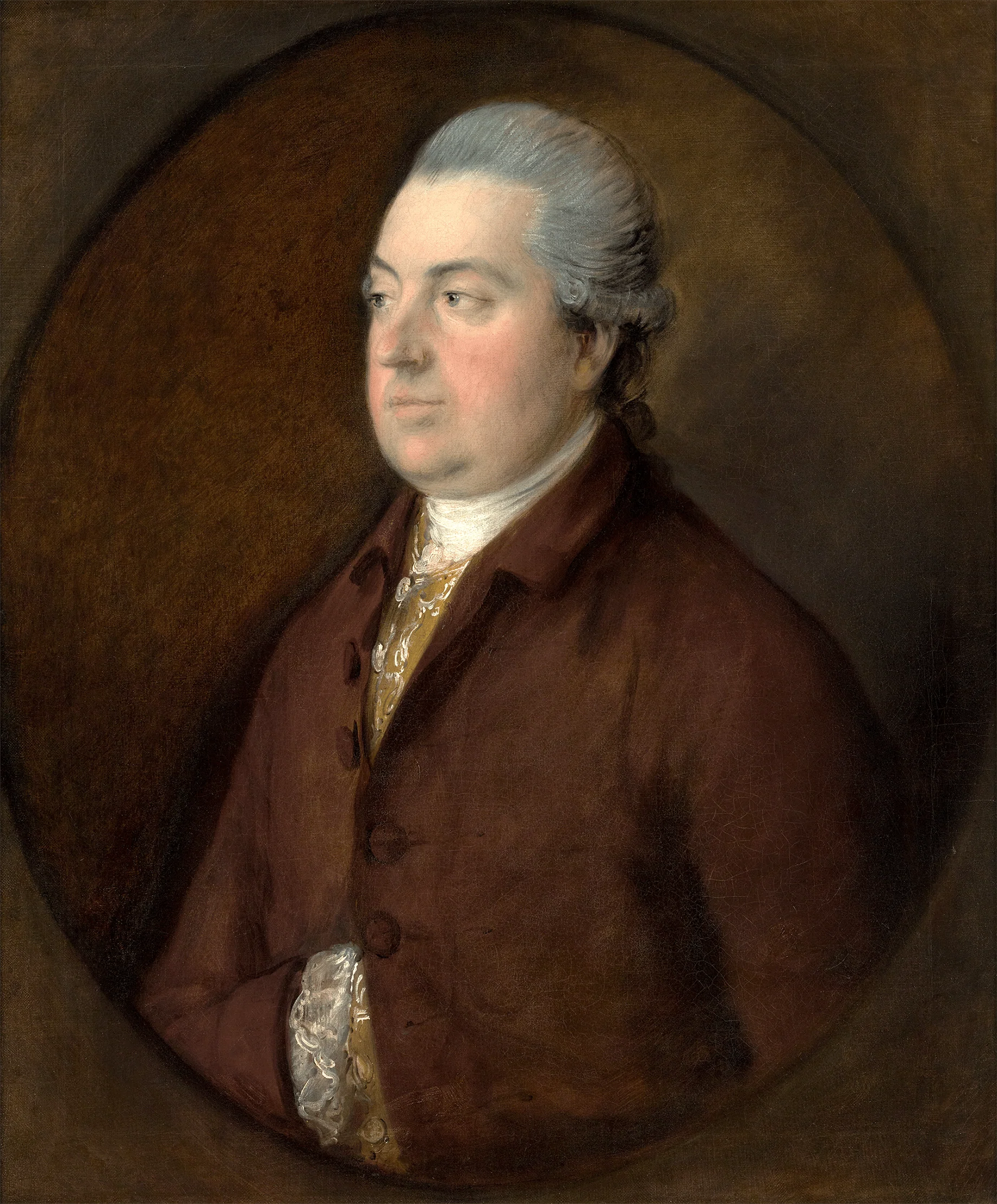
Portrait of Francis Bennett (1712-1790)
Oil on canvas
This exceptionally rare portrait was composed by renowned British painter Thomas Gainsborough, one of the most recognizable names in 18th-century art. This masterwork was painted in Bath in 1766, during one of the most significant artistic periods of Gainsborough's career. Just three years later, in 1769, he was invited to become a founding member of the Royal Academy, one of the highest honors a British painter could achieve. With its fluidity of line and boldness of color, Portrait of Francis Bennett (1712-1790) reveals the artist's shift away from the more realistic style of his early output toward the elegant grandeur that characterizes his later oeuvre.
Francis Bennett, like Gainsborough himself, prospered thanks to the huge expansion of Bath as a spa town in the 18th century. Born in Bath in 1712, he established himself as a linen and wool draper who counted the elite of the town—including Gainsborough himself—among his clientele. A slightly earlier portrait of Bennett in a blue waistcoat was formerly in the collection of the late Viscount Cowdray at Cowdray Park.
Born in 1727 in Suffolk, Gainsborough was the leading portrait painter of the 18th century, alongside Sir Joshua Reynolds, his main rival. Though Gainsborough originally set up his studio in Ipswich in 1752, he later moved to Bath, where he achieved considerable success. A favorite of the aristocracy as a portrait painter, Gainsborough was equally at home painting landscapes and pastoral idylls, presenting nobility, the working class and nature with the same extraordinary technical precision. Gainsborough’s ability to capture his subjects’ personalities, imbuing them with an emotive poetry, set him apart from his contemporaries. His portraits belong to the world's most prestigious museums, including the Louvre, the National Gallery in London, the Metropolitan Museum of Art and many more.
This painting will be included in the forthcoming catalogue raisonné of the portraits of Thomas Gainsborough currently being prepared by Dr. Hugh Belsey.
Circa 1766
Canvas: 30 1/8” high x 25” wide (76.52 x 63.50 cm)
Frame: 36 3/4” high x 32” wide x 3" deep (93.35 x 81.28 x 7.62 cm)
Provenance:
Thomas Agnew & Sons, London, by 1899
Jointly owned by Agnew’s and Wallis & Son, 1903
Agnew’s half share sold to Wallis & Son on June 2, 1910
Galerie D Heinemann, Munich, 1918 and 1928
Private collection, Amsterdam, 1995-2005
M.S. Rau, New Orleans, 2009
Private collection, Los Angeles, 2012
M.S. Rau, New Orleans, 2016
Private collection, United States
M.S. Rau, New Orleans
Literature:
Walter Armstrong, Gainsborough and His Place in English Art, 1904, p. 258
Exhibited:
French Gallery, 1913, no. 17
Galerie D Heinemann, Munich, 1918 and 1928
1727–1788 | English
Portrait of Francis Bennett (1712-1790)
Oil on canvas
This exceptionally rare portrait was composed by renowned British painter Thomas Gainsborough, one of the most recognizable names in 18th-century art. This masterwork was painted in Bath in 1766, during one of the most significant artistic periods of Gainsborough's career. Just three years later, in 1769, he was invited to become a founding member of the Royal Academy, one of the highest honors a British painter could achieve. With its fluidity of line and boldness of color, Portrait of Francis Bennett (1712-1790) reveals the artist's shift away from the more realistic style of his early output toward the elegant grandeur that characterizes his later oeuvre.
Francis Bennett, like Gainsborough himself, prospered thanks to the huge expansion of Bath as a spa town in the 18th century. Born in Bath in 1712, he established himself as a linen and wool draper who counted the elite of the town—including Gainsborough himself—among his clientele. A slightly earlier portrait of Bennett in a blue waistcoat was formerly in the collection of the late Viscount Cowdray at Cowdray Park.
Born in 1727 in Suffolk, Gainsborough was the leading portrait painter of the 18th century, alongside Sir Joshua Reynolds, his main rival. Though Gainsborough originally set up his studio in Ipswich in 1752, he later moved to Bath, where he achieved considerable success. A favorite of the aristocracy as a portrait painter, Gainsborough was equally at home painting landscapes and pastoral idylls, presenting nobility, the working class and nature with the same extraordinary technical precision. Gainsborough’s ability to capture his subjects’ personalities, imbuing them with an emotive poetry, set him apart from his contemporaries. His portraits belong to the world's most prestigious museums, including the Louvre, the National Gallery in London, the Metropolitan Museum of Art and many more.
This painting will be included in the forthcoming catalogue raisonné of the portraits of Thomas Gainsborough currently being prepared by Dr. Hugh Belsey.
Circa 1766
Canvas: 30 1/8” high x 25” wide (76.52 x 63.50 cm)
Frame: 36 3/4” high x 32” wide x 3" deep (93.35 x 81.28 x 7.62 cm)
Provenance:
Thomas Agnew & Sons, London, by 1899
Jointly owned by Agnew’s and Wallis & Son, 1903
Agnew’s half share sold to Wallis & Son on June 2, 1910
Galerie D Heinemann, Munich, 1918 and 1928
Private collection, Amsterdam, 1995-2005
M.S. Rau, New Orleans, 2009
Private collection, Los Angeles, 2012
M.S. Rau, New Orleans, 2016
Private collection, United States
M.S. Rau, New Orleans
Literature:
Walter Armstrong, Gainsborough and His Place in English Art, 1904, p. 258
Exhibited:
French Gallery, 1913, no. 17
Galerie D Heinemann, Munich, 1918 and 1928
Thomas Gainsborough
1727–1788 | English
Portrait of Francis Bennett (1712-1790)
Oil on canvas
This exceptionally rare portrait was composed by renowned British painter Thomas Gainsborough, one of the most recognizable names in 18th-century art. This masterwork was painted in Bath in 1766, during one of the most significant artistic periods of Gainsborough's career. Just three years later, in 1769, he was invited to become a founding member of the Royal Academy, one of the highest honors a British painter could achieve. With its fluidity of line and boldness of color, Portrait of Francis Bennett (1712-1790) reveals the artist's shift away from the more realistic style of his early output toward the elegant grandeur that characterizes his later oeuvre.
Francis Bennett, like Gainsborough himself, prospered thanks to the huge expansion of Bath as a spa town in the 18th century. Born in Bath in 1712, he established himself as a linen and wool draper who counted the elite of the town—including Gainsborough himself—among his clientele. A slightly earlier portrait of Bennett in a blue waistcoat was formerly in the collection of the late Viscount Cowdray at Cowdray Park.
Born in 1727 in Suffolk, Gainsborough was the leading portrait painter of the 18th century, alongside Sir Joshua Reynolds, his main rival. Though Gainsborough originally set up his studio in Ipswich in 1752, he later moved to Bath, where he achieved considerable success. A favorite of the aristocracy as a portrait painter, Gainsborough was equally at home painting landscapes and pastoral idylls, presenting nobility, the working class and nature with the same extraordinary technical precision. Gainsborough’s ability to capture his subjects’ personalities, imbuing them with an emotive poetry, set him apart from his contemporaries. His portraits belong to the world's most prestigious museums, including the Louvre, the National Gallery in London, the Metropolitan Museum of Art and many more.
This painting will be included in the forthcoming catalogue raisonné of the portraits of Thomas Gainsborough currently being prepared by Dr. Hugh Belsey.
Circa 1766
Canvas: 30 1/8” high x 25” wide (76.52 x 63.50 cm)
Frame: 36 3/4” high x 32” wide x 3" deep (93.35 x 81.28 x 7.62 cm)
Provenance:
Thomas Agnew & Sons, London, by 1899
Jointly owned by Agnew’s and Wallis & Son, 1903
Agnew’s half share sold to Wallis & Son on June 2, 1910
Galerie D Heinemann, Munich, 1918 and 1928
Private collection, Amsterdam, 1995-2005
M.S. Rau, New Orleans, 2009
Private collection, Los Angeles, 2012
M.S. Rau, New Orleans, 2016
Private collection, United States
M.S. Rau, New Orleans
Literature:
Walter Armstrong, Gainsborough and His Place in English Art, 1904, p. 258
Exhibited:
French Gallery, 1913, no. 17
Galerie D Heinemann, Munich, 1918 and 1928
1727–1788 | English
Portrait of Francis Bennett (1712-1790)
Oil on canvas
This exceptionally rare portrait was composed by renowned British painter Thomas Gainsborough, one of the most recognizable names in 18th-century art. This masterwork was painted in Bath in 1766, during one of the most significant artistic periods of Gainsborough's career. Just three years later, in 1769, he was invited to become a founding member of the Royal Academy, one of the highest honors a British painter could achieve. With its fluidity of line and boldness of color, Portrait of Francis Bennett (1712-1790) reveals the artist's shift away from the more realistic style of his early output toward the elegant grandeur that characterizes his later oeuvre.
Francis Bennett, like Gainsborough himself, prospered thanks to the huge expansion of Bath as a spa town in the 18th century. Born in Bath in 1712, he established himself as a linen and wool draper who counted the elite of the town—including Gainsborough himself—among his clientele. A slightly earlier portrait of Bennett in a blue waistcoat was formerly in the collection of the late Viscount Cowdray at Cowdray Park.
Born in 1727 in Suffolk, Gainsborough was the leading portrait painter of the 18th century, alongside Sir Joshua Reynolds, his main rival. Though Gainsborough originally set up his studio in Ipswich in 1752, he later moved to Bath, where he achieved considerable success. A favorite of the aristocracy as a portrait painter, Gainsborough was equally at home painting landscapes and pastoral idylls, presenting nobility, the working class and nature with the same extraordinary technical precision. Gainsborough’s ability to capture his subjects’ personalities, imbuing them with an emotive poetry, set him apart from his contemporaries. His portraits belong to the world's most prestigious museums, including the Louvre, the National Gallery in London, the Metropolitan Museum of Art and many more.
This painting will be included in the forthcoming catalogue raisonné of the portraits of Thomas Gainsborough currently being prepared by Dr. Hugh Belsey.
Circa 1766
Canvas: 30 1/8” high x 25” wide (76.52 x 63.50 cm)
Frame: 36 3/4” high x 32” wide x 3" deep (93.35 x 81.28 x 7.62 cm)
Provenance:
Thomas Agnew & Sons, London, by 1899
Jointly owned by Agnew’s and Wallis & Son, 1903
Agnew’s half share sold to Wallis & Son on June 2, 1910
Galerie D Heinemann, Munich, 1918 and 1928
Private collection, Amsterdam, 1995-2005
M.S. Rau, New Orleans, 2009
Private collection, Los Angeles, 2012
M.S. Rau, New Orleans, 2016
Private collection, United States
M.S. Rau, New Orleans
Literature:
Walter Armstrong, Gainsborough and His Place in English Art, 1904, p. 258
Exhibited:
French Gallery, 1913, no. 17
Galerie D Heinemann, Munich, 1918 and 1928
$51,975.00
Original: $148,500.00
-65%Portrait of Francis Bennett by Thomas Gainsborough—
$148,500.00
$51,975.00Description
Thomas Gainsborough
1727–1788 | English
Portrait of Francis Bennett (1712-1790)
Oil on canvas
This exceptionally rare portrait was composed by renowned British painter Thomas Gainsborough, one of the most recognizable names in 18th-century art. This masterwork was painted in Bath in 1766, during one of the most significant artistic periods of Gainsborough's career. Just three years later, in 1769, he was invited to become a founding member of the Royal Academy, one of the highest honors a British painter could achieve. With its fluidity of line and boldness of color, Portrait of Francis Bennett (1712-1790) reveals the artist's shift away from the more realistic style of his early output toward the elegant grandeur that characterizes his later oeuvre.
Francis Bennett, like Gainsborough himself, prospered thanks to the huge expansion of Bath as a spa town in the 18th century. Born in Bath in 1712, he established himself as a linen and wool draper who counted the elite of the town—including Gainsborough himself—among his clientele. A slightly earlier portrait of Bennett in a blue waistcoat was formerly in the collection of the late Viscount Cowdray at Cowdray Park.
Born in 1727 in Suffolk, Gainsborough was the leading portrait painter of the 18th century, alongside Sir Joshua Reynolds, his main rival. Though Gainsborough originally set up his studio in Ipswich in 1752, he later moved to Bath, where he achieved considerable success. A favorite of the aristocracy as a portrait painter, Gainsborough was equally at home painting landscapes and pastoral idylls, presenting nobility, the working class and nature with the same extraordinary technical precision. Gainsborough’s ability to capture his subjects’ personalities, imbuing them with an emotive poetry, set him apart from his contemporaries. His portraits belong to the world's most prestigious museums, including the Louvre, the National Gallery in London, the Metropolitan Museum of Art and many more.
This painting will be included in the forthcoming catalogue raisonné of the portraits of Thomas Gainsborough currently being prepared by Dr. Hugh Belsey.
Circa 1766
Canvas: 30 1/8” high x 25” wide (76.52 x 63.50 cm)
Frame: 36 3/4” high x 32” wide x 3" deep (93.35 x 81.28 x 7.62 cm)
Provenance:
Thomas Agnew & Sons, London, by 1899
Jointly owned by Agnew’s and Wallis & Son, 1903
Agnew’s half share sold to Wallis & Son on June 2, 1910
Galerie D Heinemann, Munich, 1918 and 1928
Private collection, Amsterdam, 1995-2005
M.S. Rau, New Orleans, 2009
Private collection, Los Angeles, 2012
M.S. Rau, New Orleans, 2016
Private collection, United States
M.S. Rau, New Orleans
Literature:
Walter Armstrong, Gainsborough and His Place in English Art, 1904, p. 258
Exhibited:
French Gallery, 1913, no. 17
Galerie D Heinemann, Munich, 1918 and 1928
1727–1788 | English
Portrait of Francis Bennett (1712-1790)
Oil on canvas
This exceptionally rare portrait was composed by renowned British painter Thomas Gainsborough, one of the most recognizable names in 18th-century art. This masterwork was painted in Bath in 1766, during one of the most significant artistic periods of Gainsborough's career. Just three years later, in 1769, he was invited to become a founding member of the Royal Academy, one of the highest honors a British painter could achieve. With its fluidity of line and boldness of color, Portrait of Francis Bennett (1712-1790) reveals the artist's shift away from the more realistic style of his early output toward the elegant grandeur that characterizes his later oeuvre.
Francis Bennett, like Gainsborough himself, prospered thanks to the huge expansion of Bath as a spa town in the 18th century. Born in Bath in 1712, he established himself as a linen and wool draper who counted the elite of the town—including Gainsborough himself—among his clientele. A slightly earlier portrait of Bennett in a blue waistcoat was formerly in the collection of the late Viscount Cowdray at Cowdray Park.
Born in 1727 in Suffolk, Gainsborough was the leading portrait painter of the 18th century, alongside Sir Joshua Reynolds, his main rival. Though Gainsborough originally set up his studio in Ipswich in 1752, he later moved to Bath, where he achieved considerable success. A favorite of the aristocracy as a portrait painter, Gainsborough was equally at home painting landscapes and pastoral idylls, presenting nobility, the working class and nature with the same extraordinary technical precision. Gainsborough’s ability to capture his subjects’ personalities, imbuing them with an emotive poetry, set him apart from his contemporaries. His portraits belong to the world's most prestigious museums, including the Louvre, the National Gallery in London, the Metropolitan Museum of Art and many more.
This painting will be included in the forthcoming catalogue raisonné of the portraits of Thomas Gainsborough currently being prepared by Dr. Hugh Belsey.
Circa 1766
Canvas: 30 1/8” high x 25” wide (76.52 x 63.50 cm)
Frame: 36 3/4” high x 32” wide x 3" deep (93.35 x 81.28 x 7.62 cm)
Provenance:
Thomas Agnew & Sons, London, by 1899
Jointly owned by Agnew’s and Wallis & Son, 1903
Agnew’s half share sold to Wallis & Son on June 2, 1910
Galerie D Heinemann, Munich, 1918 and 1928
Private collection, Amsterdam, 1995-2005
M.S. Rau, New Orleans, 2009
Private collection, Los Angeles, 2012
M.S. Rau, New Orleans, 2016
Private collection, United States
M.S. Rau, New Orleans
Literature:
Walter Armstrong, Gainsborough and His Place in English Art, 1904, p. 258
Exhibited:
French Gallery, 1913, no. 17
Galerie D Heinemann, Munich, 1918 and 1928