1 / 4
Rounded Papillion Vase by Loetz
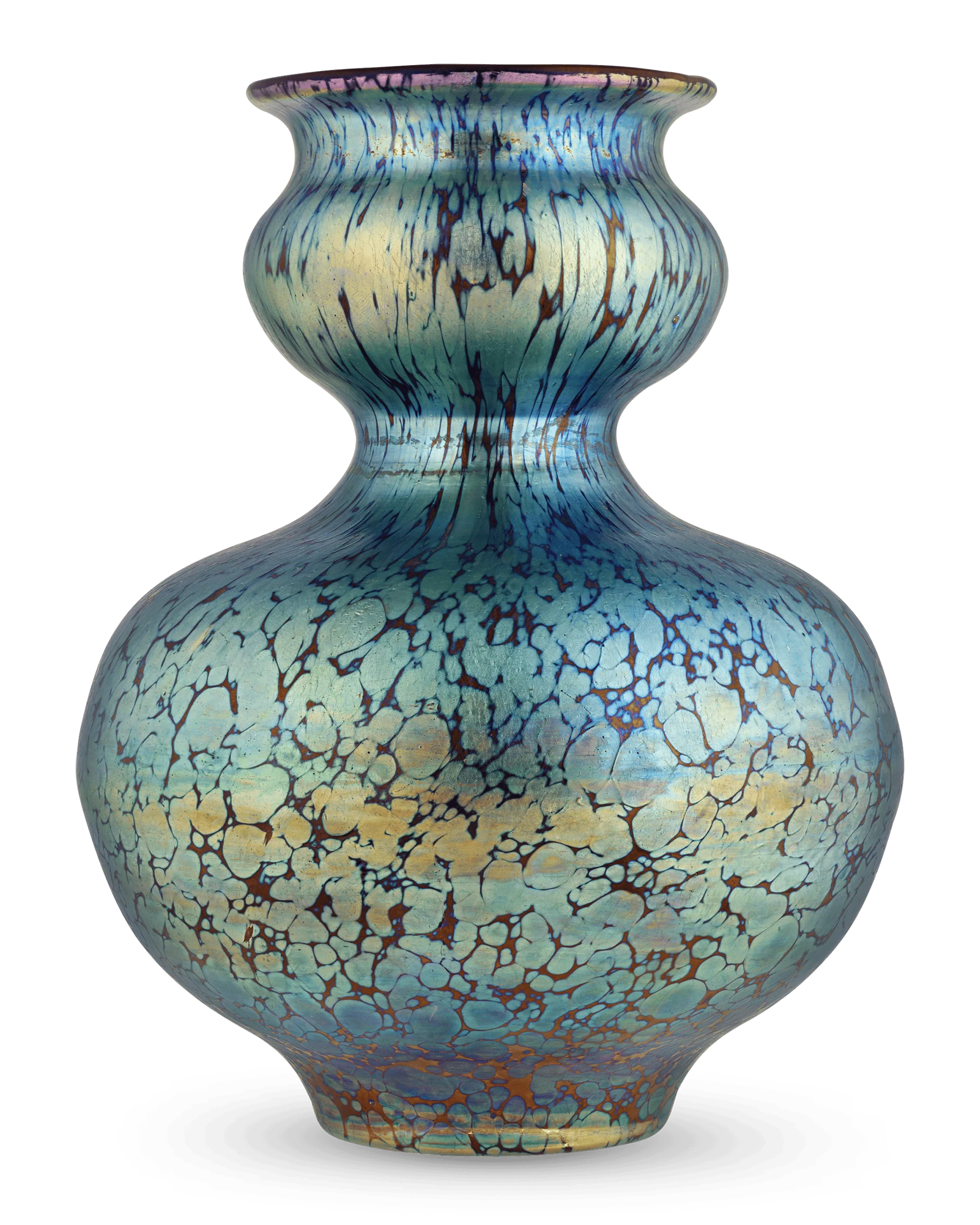
This exquisite vase belongs to Loetz's prestigious Papillon collection and is identified as the 7724 form. Renowned for its captivating color palette, this piece showcases a striking blend of blue, green and purple hues, producing an iridescent shimmer. The design of the vase is characterized by two circular segments, elegantly arranged in a stacked fashion. This design, both naturalistic and avant garde, encapsulates the Art Nouveau movement's preference for organic, fluid shapes, a signature feature of Loetz's celebrated glassware. This vase was also featured in the Musée du Verre de Conches' 2018 exhibition titled Loetz 1900 Verre de Boheme.
Loetz, a leading producer of exceptional art glass in the Art Nouveau style, is celebrated for its pioneering work with iridescent glass, a field in which it is paralleled chiefly by the esteemed Tiffany Studios. Loetz revitalized an ancient glassmaking technique to produce an iridescent and marble-like texture.
Circa 1898
8 1/4” high x 6 1/2“ diameter
Loetz, a leading producer of exceptional art glass in the Art Nouveau style, is celebrated for its pioneering work with iridescent glass, a field in which it is paralleled chiefly by the esteemed Tiffany Studios. Loetz revitalized an ancient glassmaking technique to produce an iridescent and marble-like texture.
Circa 1898
8 1/4” high x 6 1/2“ diameter
This exquisite vase belongs to Loetz's prestigious Papillon collection and is identified as the 7724 form. Renowned for its captivating color palette, this piece showcases a striking blend of blue, green and purple hues, producing an iridescent shimmer. The design of the vase is characterized by two circular segments, elegantly arranged in a stacked fashion. This design, both naturalistic and avant garde, encapsulates the Art Nouveau movement's preference for organic, fluid shapes, a signature feature of Loetz's celebrated glassware. This vase was also featured in the Musée du Verre de Conches' 2018 exhibition titled Loetz 1900 Verre de Boheme.
Loetz, a leading producer of exceptional art glass in the Art Nouveau style, is celebrated for its pioneering work with iridescent glass, a field in which it is paralleled chiefly by the esteemed Tiffany Studios. Loetz revitalized an ancient glassmaking technique to produce an iridescent and marble-like texture.
Circa 1898
8 1/4” high x 6 1/2“ diameter
Loetz, a leading producer of exceptional art glass in the Art Nouveau style, is celebrated for its pioneering work with iridescent glass, a field in which it is paralleled chiefly by the esteemed Tiffany Studios. Loetz revitalized an ancient glassmaking technique to produce an iridescent and marble-like texture.
Circa 1898
8 1/4” high x 6 1/2“ diameter
$2,747.50
Original: $7,850.00
-65%Rounded Papillion Vase by Loetz—
$7,850.00
$2,747.50Description
This exquisite vase belongs to Loetz's prestigious Papillon collection and is identified as the 7724 form. Renowned for its captivating color palette, this piece showcases a striking blend of blue, green and purple hues, producing an iridescent shimmer. The design of the vase is characterized by two circular segments, elegantly arranged in a stacked fashion. This design, both naturalistic and avant garde, encapsulates the Art Nouveau movement's preference for organic, fluid shapes, a signature feature of Loetz's celebrated glassware. This vase was also featured in the Musée du Verre de Conches' 2018 exhibition titled Loetz 1900 Verre de Boheme.
Loetz, a leading producer of exceptional art glass in the Art Nouveau style, is celebrated for its pioneering work with iridescent glass, a field in which it is paralleled chiefly by the esteemed Tiffany Studios. Loetz revitalized an ancient glassmaking technique to produce an iridescent and marble-like texture.
Circa 1898
8 1/4” high x 6 1/2“ diameter
Loetz, a leading producer of exceptional art glass in the Art Nouveau style, is celebrated for its pioneering work with iridescent glass, a field in which it is paralleled chiefly by the esteemed Tiffany Studios. Loetz revitalized an ancient glassmaking technique to produce an iridescent and marble-like texture.
Circa 1898
8 1/4” high x 6 1/2“ diameter