1 / 3
Satsuma Vase with Buddhist Monks and Dragons
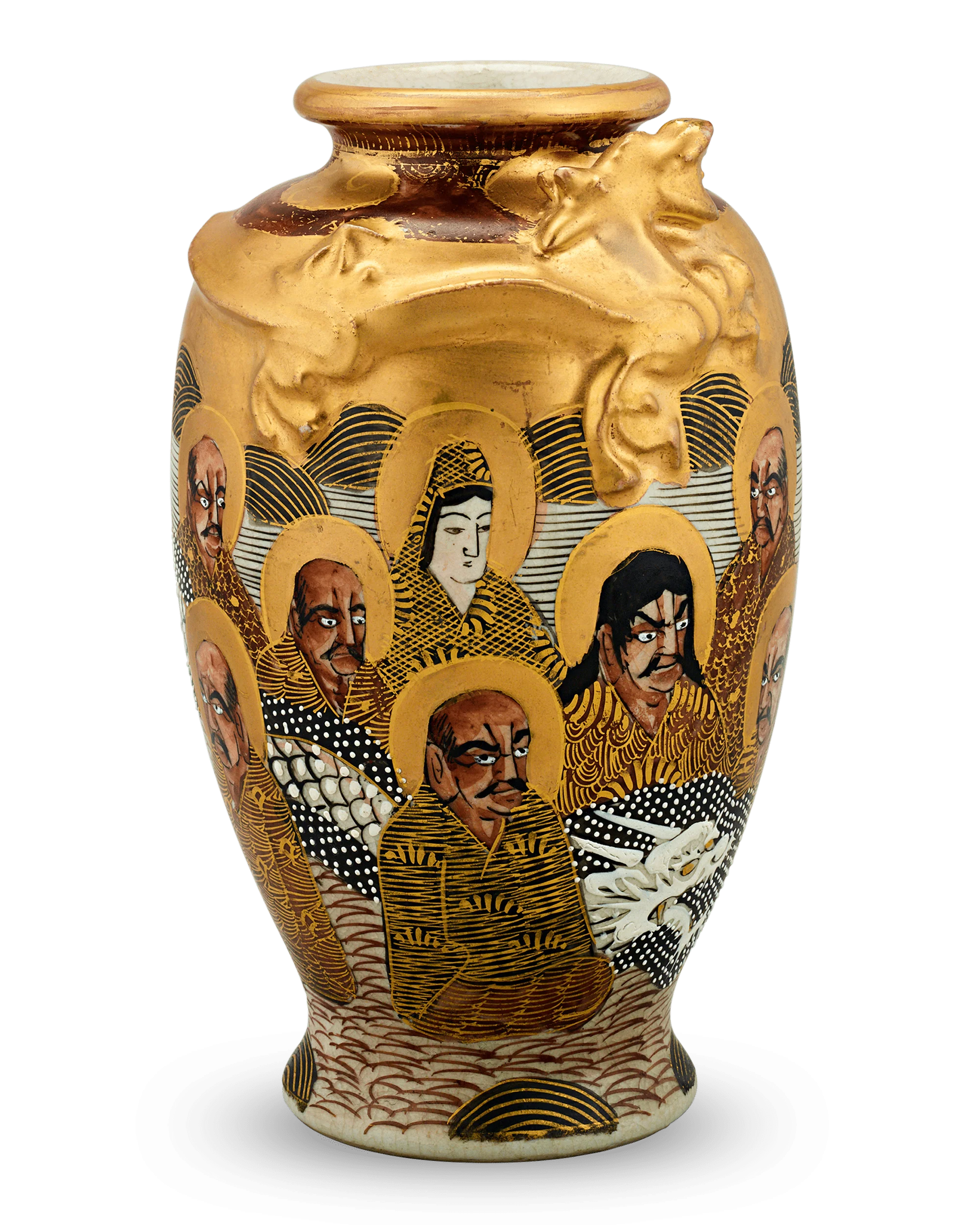
This extraordinary Satsuma vase, adorned with a striking relief dragon encircling its form, features intricately detailed paintings of Buddhist monks with gilded halos, dragons and geometric patterns. The vessel stands as a testament to the pinnacle of Japanese ceramic artistry.
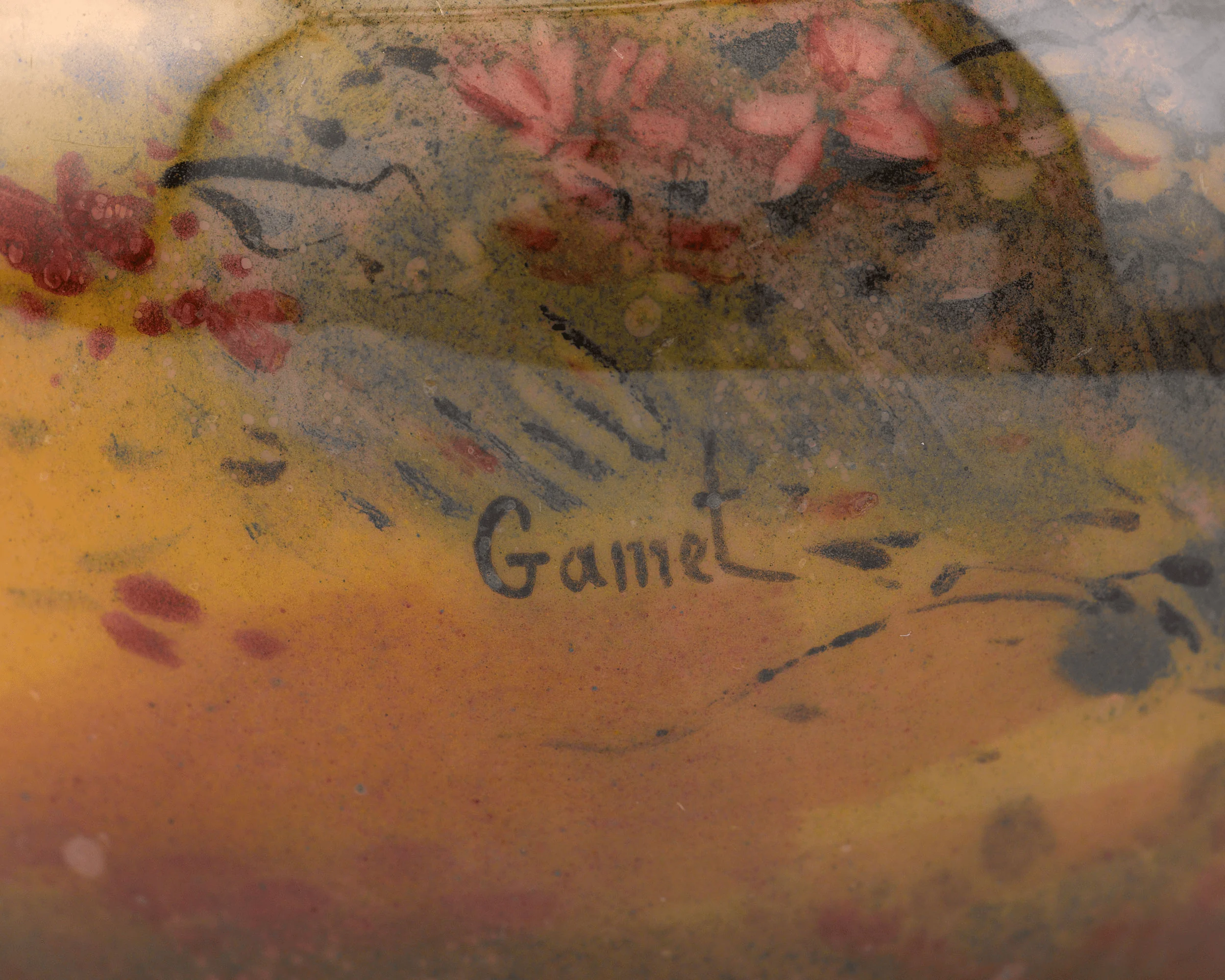
Signed “Kitamura” for Kitamura Yaichiro. Kitamura visited Limoges and Sevres during his trip to France in 1902. He was employed by Shofu Toki Goshi Gaisha in Kyoto in 1917 and became the technical advisor of the company. Kitamura specialized not only in ceramics but also in glass, tiles and cement. Kitamura also studied engineering.
It is also marked with the Shimazu family crest, or mon indicating their origin from the Satsuma region.
Satsuma ware, a quintessential example of artistic brilliance from Japan's Meiji period, has captivated collectors worldwide for over 150 years. Celebrated for its distinctive style, marked by intricate overglaze enamel and delicate gilding, Satsuma ware beautifully showcases nature through exquisite floral and fauna motifs. Originating near Kagoshima Prefecture on Kyushu Island, this esteemed ceramic tradition initially catered to local elites and was meticulously crafted by skilled Korean artisans. Its renown surged following the 1867 Exposition Universelle in Paris, propelling it to international acclaim. Today, Satsuma ware remains a revered art form, treasured in major Japanese cities and highly sought after by collectors globally.
Signed “Kitamura” with the Shimazu family crest
Meiji period (1868-1912)
Signed “Kitamura” for Kitamura Yaichiro. Kitamura visited Limoges and Sevres during his trip to France in 1902. He was employed by Shofu Toki Goshi Gaisha in Kyoto in 1917 and became the technical advisor of the company. Kitamura specialized not only in ceramics but also in glass, tiles and cement. Kitamura also studied engineering.
It is also marked with the Shimazu family crest, or mon indicating their origin from the Satsuma region.
Satsuma ware, a quintessential example of artistic brilliance from Japan's Meiji period, has captivated collectors worldwide for over 150 years. Celebrated for its distinctive style, marked by intricate overglaze enamel and delicate gilding, Satsuma ware beautifully showcases nature through exquisite floral and fauna motifs. Originating near Kagoshima Prefecture on Kyushu Island, this esteemed ceramic tradition initially catered to local elites and was meticulously crafted by skilled Korean artisans. Its renown surged following the 1867 Exposition Universelle in Paris, propelling it to international acclaim. Today, Satsuma ware remains a revered art form, treasured in major Japanese cities and highly sought after by collectors globally.
Signed “Kitamura” with the Shimazu family crest
Meiji period (1868-1912)
This extraordinary Satsuma vase, adorned with a striking relief dragon encircling its form, features intricately detailed paintings of Buddhist monks with gilded halos, dragons and geometric patterns. The vessel stands as a testament to the pinnacle of Japanese ceramic artistry.
Signed “Kitamura” for Kitamura Yaichiro. Kitamura visited Limoges and Sevres during his trip to France in 1902. He was employed by Shofu Toki Goshi Gaisha in Kyoto in 1917 and became the technical advisor of the company. Kitamura specialized not only in ceramics but also in glass, tiles and cement. Kitamura also studied engineering.
It is also marked with the Shimazu family crest, or mon indicating their origin from the Satsuma region.
Satsuma ware, a quintessential example of artistic brilliance from Japan's Meiji period, has captivated collectors worldwide for over 150 years. Celebrated for its distinctive style, marked by intricate overglaze enamel and delicate gilding, Satsuma ware beautifully showcases nature through exquisite floral and fauna motifs. Originating near Kagoshima Prefecture on Kyushu Island, this esteemed ceramic tradition initially catered to local elites and was meticulously crafted by skilled Korean artisans. Its renown surged following the 1867 Exposition Universelle in Paris, propelling it to international acclaim. Today, Satsuma ware remains a revered art form, treasured in major Japanese cities and highly sought after by collectors globally.
Signed “Kitamura” with the Shimazu family crest
Meiji period (1868-1912)
Signed “Kitamura” for Kitamura Yaichiro. Kitamura visited Limoges and Sevres during his trip to France in 1902. He was employed by Shofu Toki Goshi Gaisha in Kyoto in 1917 and became the technical advisor of the company. Kitamura specialized not only in ceramics but also in glass, tiles and cement. Kitamura also studied engineering.
It is also marked with the Shimazu family crest, or mon indicating their origin from the Satsuma region.
Satsuma ware, a quintessential example of artistic brilliance from Japan's Meiji period, has captivated collectors worldwide for over 150 years. Celebrated for its distinctive style, marked by intricate overglaze enamel and delicate gilding, Satsuma ware beautifully showcases nature through exquisite floral and fauna motifs. Originating near Kagoshima Prefecture on Kyushu Island, this esteemed ceramic tradition initially catered to local elites and was meticulously crafted by skilled Korean artisans. Its renown surged following the 1867 Exposition Universelle in Paris, propelling it to international acclaim. Today, Satsuma ware remains a revered art form, treasured in major Japanese cities and highly sought after by collectors globally.
Signed “Kitamura” with the Shimazu family crest
Meiji period (1868-1912)
$344.75
Original: $985.00
-65%Satsuma Vase with Buddhist Monks and Dragons—
$985.00
$344.75Description
This extraordinary Satsuma vase, adorned with a striking relief dragon encircling its form, features intricately detailed paintings of Buddhist monks with gilded halos, dragons and geometric patterns. The vessel stands as a testament to the pinnacle of Japanese ceramic artistry.
Signed “Kitamura” for Kitamura Yaichiro. Kitamura visited Limoges and Sevres during his trip to France in 1902. He was employed by Shofu Toki Goshi Gaisha in Kyoto in 1917 and became the technical advisor of the company. Kitamura specialized not only in ceramics but also in glass, tiles and cement. Kitamura also studied engineering.
It is also marked with the Shimazu family crest, or mon indicating their origin from the Satsuma region.
Satsuma ware, a quintessential example of artistic brilliance from Japan's Meiji period, has captivated collectors worldwide for over 150 years. Celebrated for its distinctive style, marked by intricate overglaze enamel and delicate gilding, Satsuma ware beautifully showcases nature through exquisite floral and fauna motifs. Originating near Kagoshima Prefecture on Kyushu Island, this esteemed ceramic tradition initially catered to local elites and was meticulously crafted by skilled Korean artisans. Its renown surged following the 1867 Exposition Universelle in Paris, propelling it to international acclaim. Today, Satsuma ware remains a revered art form, treasured in major Japanese cities and highly sought after by collectors globally.
Signed “Kitamura” with the Shimazu family crest
Meiji period (1868-1912)
Signed “Kitamura” for Kitamura Yaichiro. Kitamura visited Limoges and Sevres during his trip to France in 1902. He was employed by Shofu Toki Goshi Gaisha in Kyoto in 1917 and became the technical advisor of the company. Kitamura specialized not only in ceramics but also in glass, tiles and cement. Kitamura also studied engineering.
It is also marked with the Shimazu family crest, or mon indicating their origin from the Satsuma region.
Satsuma ware, a quintessential example of artistic brilliance from Japan's Meiji period, has captivated collectors worldwide for over 150 years. Celebrated for its distinctive style, marked by intricate overglaze enamel and delicate gilding, Satsuma ware beautifully showcases nature through exquisite floral and fauna motifs. Originating near Kagoshima Prefecture on Kyushu Island, this esteemed ceramic tradition initially catered to local elites and was meticulously crafted by skilled Korean artisans. Its renown surged following the 1867 Exposition Universelle in Paris, propelling it to international acclaim. Today, Satsuma ware remains a revered art form, treasured in major Japanese cities and highly sought after by collectors globally.
Signed “Kitamura” with the Shimazu family crest
Meiji period (1868-1912)