1 / 3
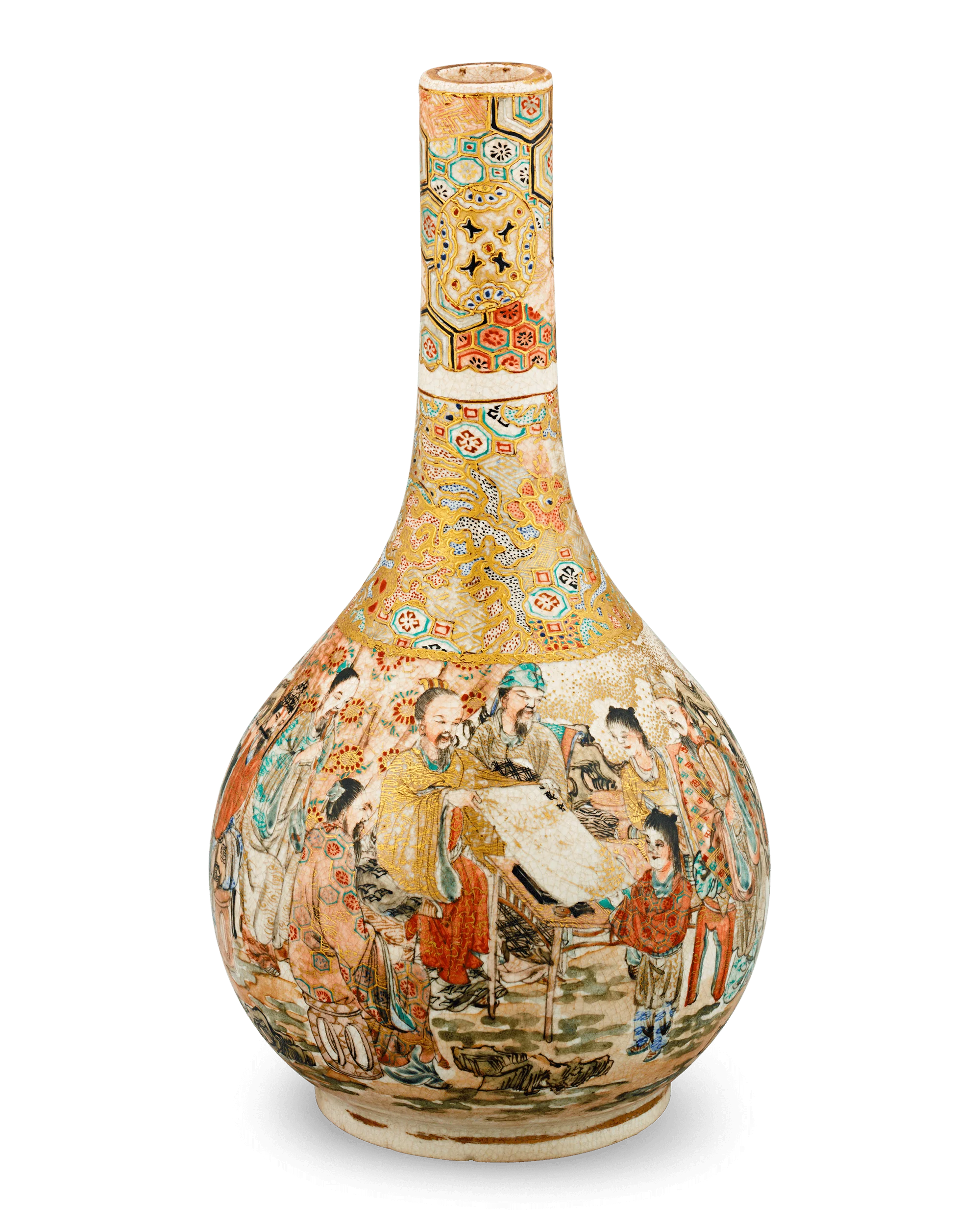
Satsuma Vase with Figures
This Japanese Satsuma vase is intricately decorated with geometric patterns and lively scenes of leisure activities including calligraphy and a friendly game of Go. The vase presents the ideal cream-colored background with gold gilding and the figures are expertly rendered with very high levels of detail. Their clothing is beautifully patterned with vivid colors. Legend holds that the finest Satsuma painters would go blind due to the extreme intricacy of their work, a testament to the meticulous detail exhibited in this pottery.
Satsuma earthenware, an iconic art form of the Meiji period, has fascinated collectors for over 150 years. Originally crafted in the 17th century, it reached its distinctive style—characterized by overglaze enamel and gilded details—by around 1790. Early designs prominently featured nature themes, especially floral and animal motifs, with human and architectural elements becoming more common in the 19th century.
Satsuma ware originated near Kagoshima Prefecture on Kyushu Island, created initially by Korean potters for the Shimazu family and local residents. Its popularity skyrocketed after being displayed at the 1867 Exposition Universelle in Paris. This international exposure spurred demand from Western markets, leading to production expansions in major Japanese cities such as Kyoto, Osaka, Tokyo and Yokohama. The ongoing support of the Shimazu family played a significant role in solidifying Satsuma ware's global appeal and success.
Meiji period (1868-1912)
7" high x 4" diameter
Satsuma earthenware, an iconic art form of the Meiji period, has fascinated collectors for over 150 years. Originally crafted in the 17th century, it reached its distinctive style—characterized by overglaze enamel and gilded details—by around 1790. Early designs prominently featured nature themes, especially floral and animal motifs, with human and architectural elements becoming more common in the 19th century.
Satsuma ware originated near Kagoshima Prefecture on Kyushu Island, created initially by Korean potters for the Shimazu family and local residents. Its popularity skyrocketed after being displayed at the 1867 Exposition Universelle in Paris. This international exposure spurred demand from Western markets, leading to production expansions in major Japanese cities such as Kyoto, Osaka, Tokyo and Yokohama. The ongoing support of the Shimazu family played a significant role in solidifying Satsuma ware's global appeal and success.
Meiji period (1868-1912)
7" high x 4" diameter
This Japanese Satsuma vase is intricately decorated with geometric patterns and lively scenes of leisure activities including calligraphy and a friendly game of Go. The vase presents the ideal cream-colored background with gold gilding and the figures are expertly rendered with very high levels of detail. Their clothing is beautifully patterned with vivid colors. Legend holds that the finest Satsuma painters would go blind due to the extreme intricacy of their work, a testament to the meticulous detail exhibited in this pottery.
Satsuma earthenware, an iconic art form of the Meiji period, has fascinated collectors for over 150 years. Originally crafted in the 17th century, it reached its distinctive style—characterized by overglaze enamel and gilded details—by around 1790. Early designs prominently featured nature themes, especially floral and animal motifs, with human and architectural elements becoming more common in the 19th century.
Satsuma ware originated near Kagoshima Prefecture on Kyushu Island, created initially by Korean potters for the Shimazu family and local residents. Its popularity skyrocketed after being displayed at the 1867 Exposition Universelle in Paris. This international exposure spurred demand from Western markets, leading to production expansions in major Japanese cities such as Kyoto, Osaka, Tokyo and Yokohama. The ongoing support of the Shimazu family played a significant role in solidifying Satsuma ware's global appeal and success.
Meiji period (1868-1912)
7" high x 4" diameter
Satsuma earthenware, an iconic art form of the Meiji period, has fascinated collectors for over 150 years. Originally crafted in the 17th century, it reached its distinctive style—characterized by overglaze enamel and gilded details—by around 1790. Early designs prominently featured nature themes, especially floral and animal motifs, with human and architectural elements becoming more common in the 19th century.
Satsuma ware originated near Kagoshima Prefecture on Kyushu Island, created initially by Korean potters for the Shimazu family and local residents. Its popularity skyrocketed after being displayed at the 1867 Exposition Universelle in Paris. This international exposure spurred demand from Western markets, leading to production expansions in major Japanese cities such as Kyoto, Osaka, Tokyo and Yokohama. The ongoing support of the Shimazu family played a significant role in solidifying Satsuma ware's global appeal and success.
Meiji period (1868-1912)
7" high x 4" diameter
$659.75
Original: $1,885.00
-65%Satsuma Vase with Figures—
$1,885.00
$659.75Description
This Japanese Satsuma vase is intricately decorated with geometric patterns and lively scenes of leisure activities including calligraphy and a friendly game of Go. The vase presents the ideal cream-colored background with gold gilding and the figures are expertly rendered with very high levels of detail. Their clothing is beautifully patterned with vivid colors. Legend holds that the finest Satsuma painters would go blind due to the extreme intricacy of their work, a testament to the meticulous detail exhibited in this pottery.
Satsuma earthenware, an iconic art form of the Meiji period, has fascinated collectors for over 150 years. Originally crafted in the 17th century, it reached its distinctive style—characterized by overglaze enamel and gilded details—by around 1790. Early designs prominently featured nature themes, especially floral and animal motifs, with human and architectural elements becoming more common in the 19th century.
Satsuma ware originated near Kagoshima Prefecture on Kyushu Island, created initially by Korean potters for the Shimazu family and local residents. Its popularity skyrocketed after being displayed at the 1867 Exposition Universelle in Paris. This international exposure spurred demand from Western markets, leading to production expansions in major Japanese cities such as Kyoto, Osaka, Tokyo and Yokohama. The ongoing support of the Shimazu family played a significant role in solidifying Satsuma ware's global appeal and success.
Meiji period (1868-1912)
7" high x 4" diameter
Satsuma earthenware, an iconic art form of the Meiji period, has fascinated collectors for over 150 years. Originally crafted in the 17th century, it reached its distinctive style—characterized by overglaze enamel and gilded details—by around 1790. Early designs prominently featured nature themes, especially floral and animal motifs, with human and architectural elements becoming more common in the 19th century.
Satsuma ware originated near Kagoshima Prefecture on Kyushu Island, created initially by Korean potters for the Shimazu family and local residents. Its popularity skyrocketed after being displayed at the 1867 Exposition Universelle in Paris. This international exposure spurred demand from Western markets, leading to production expansions in major Japanese cities such as Kyoto, Osaka, Tokyo and Yokohama. The ongoing support of the Shimazu family played a significant role in solidifying Satsuma ware's global appeal and success.
Meiji period (1868-1912)
7" high x 4" diameter