1 / 3
Satsuma Vase with Pinhole Top
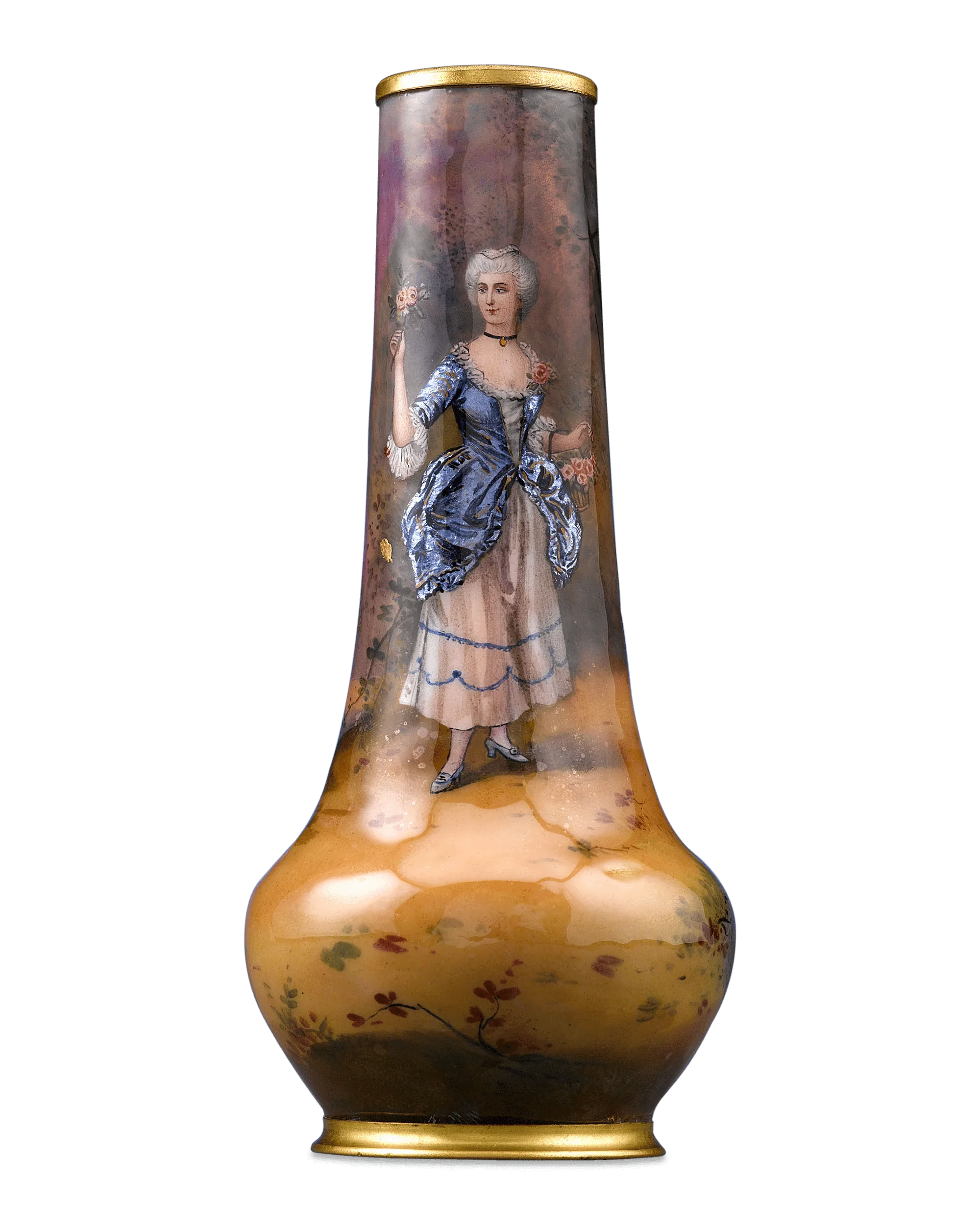
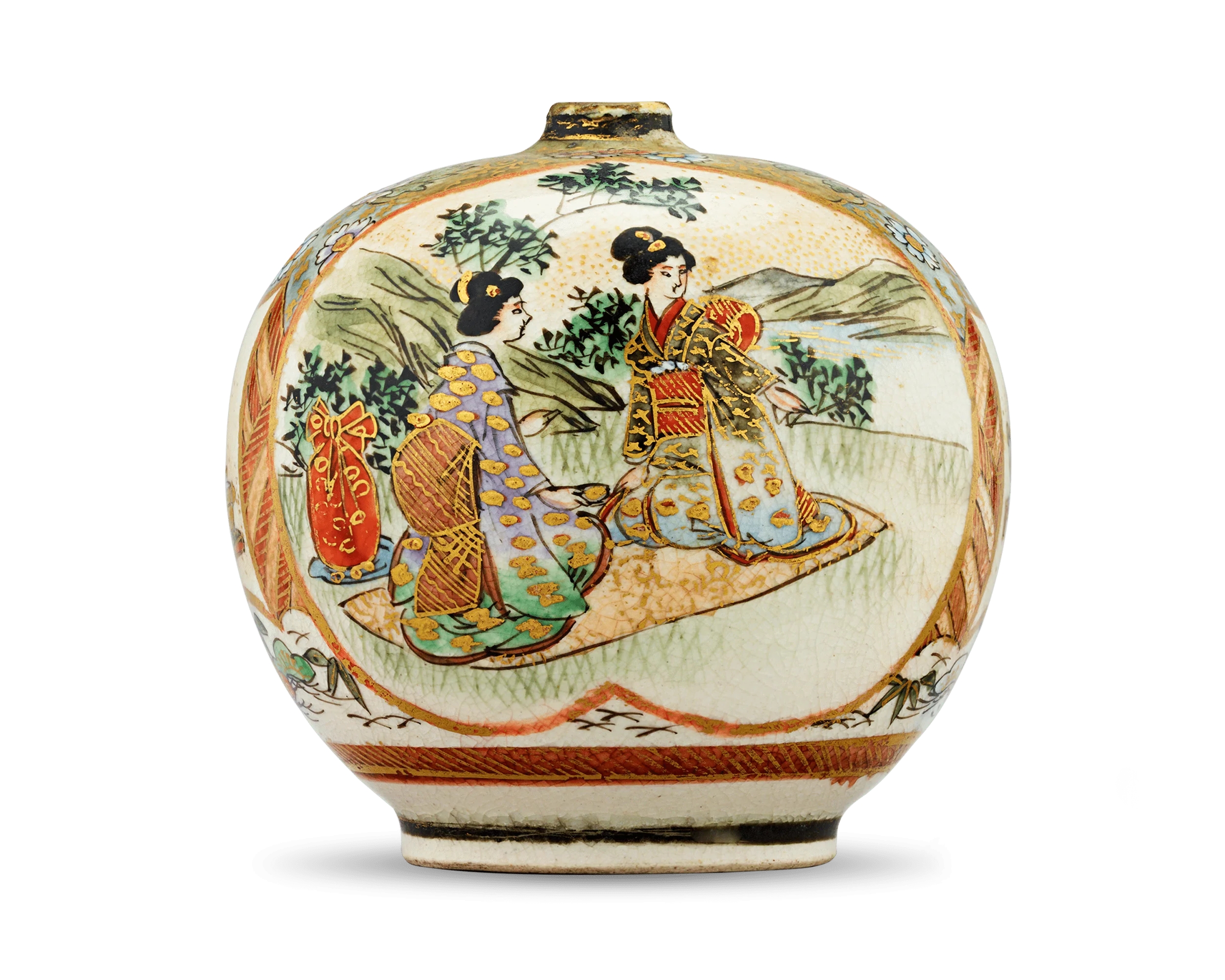
This vivid vase, featuring a small pinhole top, is intricately painted with floral designs and a detailed scene. The scene depicts two women in nature, adorned in brightly colored traditional clothing. Such beautiful, naturalistic scenes are characteristic of Satsuma ware and are highly sought after by collectors. The vase is signed "Shuzan" on the underside, attributing this vase to the talented painter. Despite the small size of the vessel, the level of detail is extraordinary. There are even legends that the finest painters went blind from years of painting such intricate designs on a small scale.
Satsuma ware, a cherished art form from Japan's Meiji era, has enthralled collectors for over 150 years with its intricate overglaze enameling and delicate gilding. Originating near Kagoshima Prefecture, this exquisite pottery serves as a vibrant canvas, capturing the essence of nature through its detailed portrayals of flowers and animals. Initially brought to prominence by Korean artisans, Satsuma ware was originally a symbol of prestige among Japan's elite. Its international recognition soared following its display at the 1867 Exposition Universelle in Paris. Today, Satsuma ware remains a highly valued and celebrated cultural treasure, revered for its enduring beauty and exceptional craftsmanship.
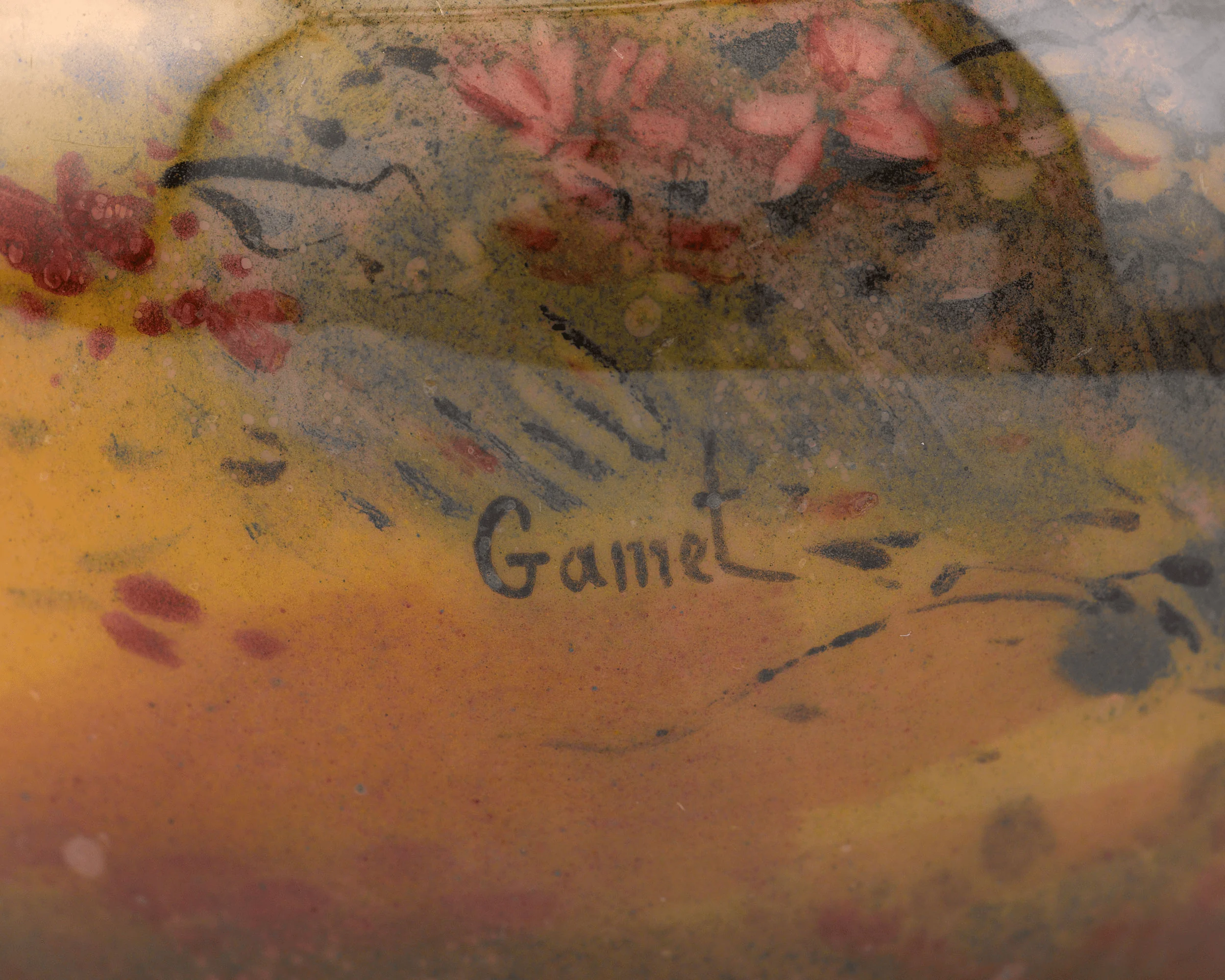
Signed "Shuzan" on the underside
Meiji period (1868-1912)
2 1/4” high x 2 3/4” wide x 2 3/4” deep
Satsuma ware, a cherished art form from Japan's Meiji era, has enthralled collectors for over 150 years with its intricate overglaze enameling and delicate gilding. Originating near Kagoshima Prefecture, this exquisite pottery serves as a vibrant canvas, capturing the essence of nature through its detailed portrayals of flowers and animals. Initially brought to prominence by Korean artisans, Satsuma ware was originally a symbol of prestige among Japan's elite. Its international recognition soared following its display at the 1867 Exposition Universelle in Paris. Today, Satsuma ware remains a highly valued and celebrated cultural treasure, revered for its enduring beauty and exceptional craftsmanship.
Signed "Shuzan" on the underside
Meiji period (1868-1912)
2 1/4” high x 2 3/4” wide x 2 3/4” deep
This vivid vase, featuring a small pinhole top, is intricately painted with floral designs and a detailed scene. The scene depicts two women in nature, adorned in brightly colored traditional clothing. Such beautiful, naturalistic scenes are characteristic of Satsuma ware and are highly sought after by collectors. The vase is signed "Shuzan" on the underside, attributing this vase to the talented painter. Despite the small size of the vessel, the level of detail is extraordinary. There are even legends that the finest painters went blind from years of painting such intricate designs on a small scale.
Satsuma ware, a cherished art form from Japan's Meiji era, has enthralled collectors for over 150 years with its intricate overglaze enameling and delicate gilding. Originating near Kagoshima Prefecture, this exquisite pottery serves as a vibrant canvas, capturing the essence of nature through its detailed portrayals of flowers and animals. Initially brought to prominence by Korean artisans, Satsuma ware was originally a symbol of prestige among Japan's elite. Its international recognition soared following its display at the 1867 Exposition Universelle in Paris. Today, Satsuma ware remains a highly valued and celebrated cultural treasure, revered for its enduring beauty and exceptional craftsmanship.
Signed "Shuzan" on the underside
Meiji period (1868-1912)
2 1/4” high x 2 3/4” wide x 2 3/4” deep
Satsuma ware, a cherished art form from Japan's Meiji era, has enthralled collectors for over 150 years with its intricate overglaze enameling and delicate gilding. Originating near Kagoshima Prefecture, this exquisite pottery serves as a vibrant canvas, capturing the essence of nature through its detailed portrayals of flowers and animals. Initially brought to prominence by Korean artisans, Satsuma ware was originally a symbol of prestige among Japan's elite. Its international recognition soared following its display at the 1867 Exposition Universelle in Paris. Today, Satsuma ware remains a highly valued and celebrated cultural treasure, revered for its enduring beauty and exceptional craftsmanship.
Signed "Shuzan" on the underside
Meiji period (1868-1912)
2 1/4” high x 2 3/4” wide x 2 3/4” deep
$577.50
Original: $1,650.00
-65%Satsuma Vase with Pinhole Top—
$1,650.00
$577.50Description
This vivid vase, featuring a small pinhole top, is intricately painted with floral designs and a detailed scene. The scene depicts two women in nature, adorned in brightly colored traditional clothing. Such beautiful, naturalistic scenes are characteristic of Satsuma ware and are highly sought after by collectors. The vase is signed "Shuzan" on the underside, attributing this vase to the talented painter. Despite the small size of the vessel, the level of detail is extraordinary. There are even legends that the finest painters went blind from years of painting such intricate designs on a small scale.
Satsuma ware, a cherished art form from Japan's Meiji era, has enthralled collectors for over 150 years with its intricate overglaze enameling and delicate gilding. Originating near Kagoshima Prefecture, this exquisite pottery serves as a vibrant canvas, capturing the essence of nature through its detailed portrayals of flowers and animals. Initially brought to prominence by Korean artisans, Satsuma ware was originally a symbol of prestige among Japan's elite. Its international recognition soared following its display at the 1867 Exposition Universelle in Paris. Today, Satsuma ware remains a highly valued and celebrated cultural treasure, revered for its enduring beauty and exceptional craftsmanship.
Signed "Shuzan" on the underside
Meiji period (1868-1912)
2 1/4” high x 2 3/4” wide x 2 3/4” deep
Satsuma ware, a cherished art form from Japan's Meiji era, has enthralled collectors for over 150 years with its intricate overglaze enameling and delicate gilding. Originating near Kagoshima Prefecture, this exquisite pottery serves as a vibrant canvas, capturing the essence of nature through its detailed portrayals of flowers and animals. Initially brought to prominence by Korean artisans, Satsuma ware was originally a symbol of prestige among Japan's elite. Its international recognition soared following its display at the 1867 Exposition Universelle in Paris. Today, Satsuma ware remains a highly valued and celebrated cultural treasure, revered for its enduring beauty and exceptional craftsmanship.
Signed "Shuzan" on the underside
Meiji period (1868-1912)
2 1/4” high x 2 3/4” wide x 2 3/4” deep