1 / 4
Tanzanite Pendant, 75.00 Carats
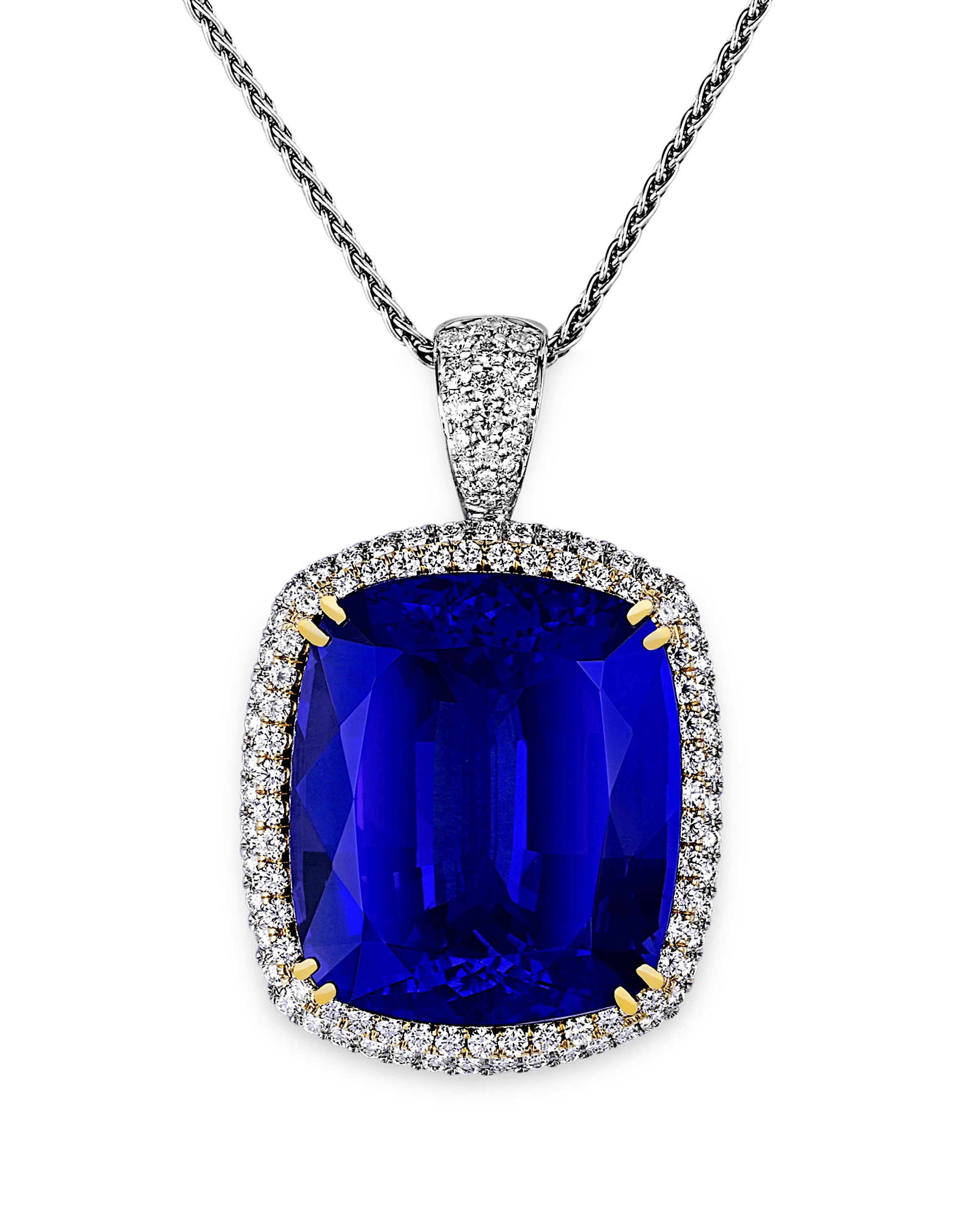
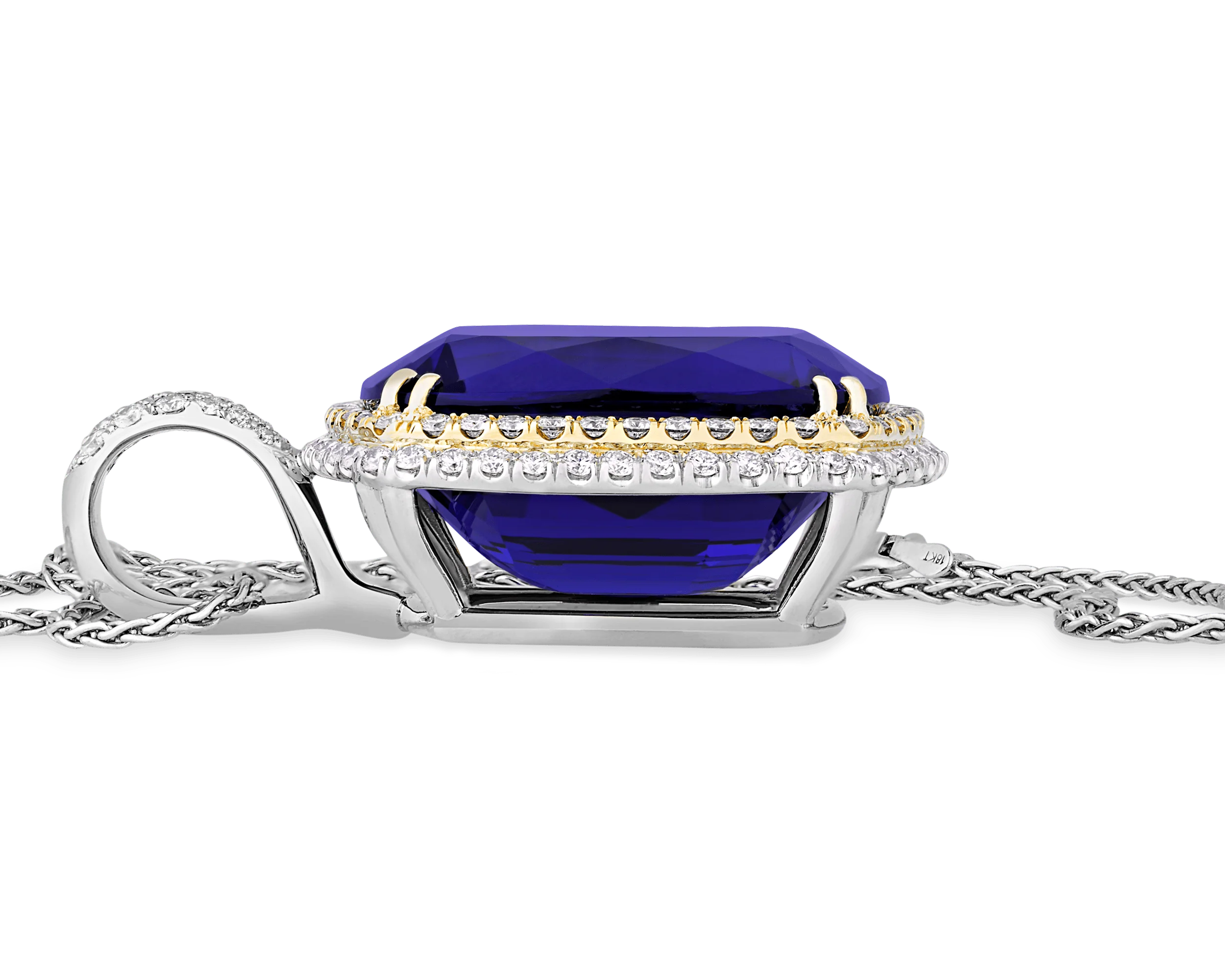
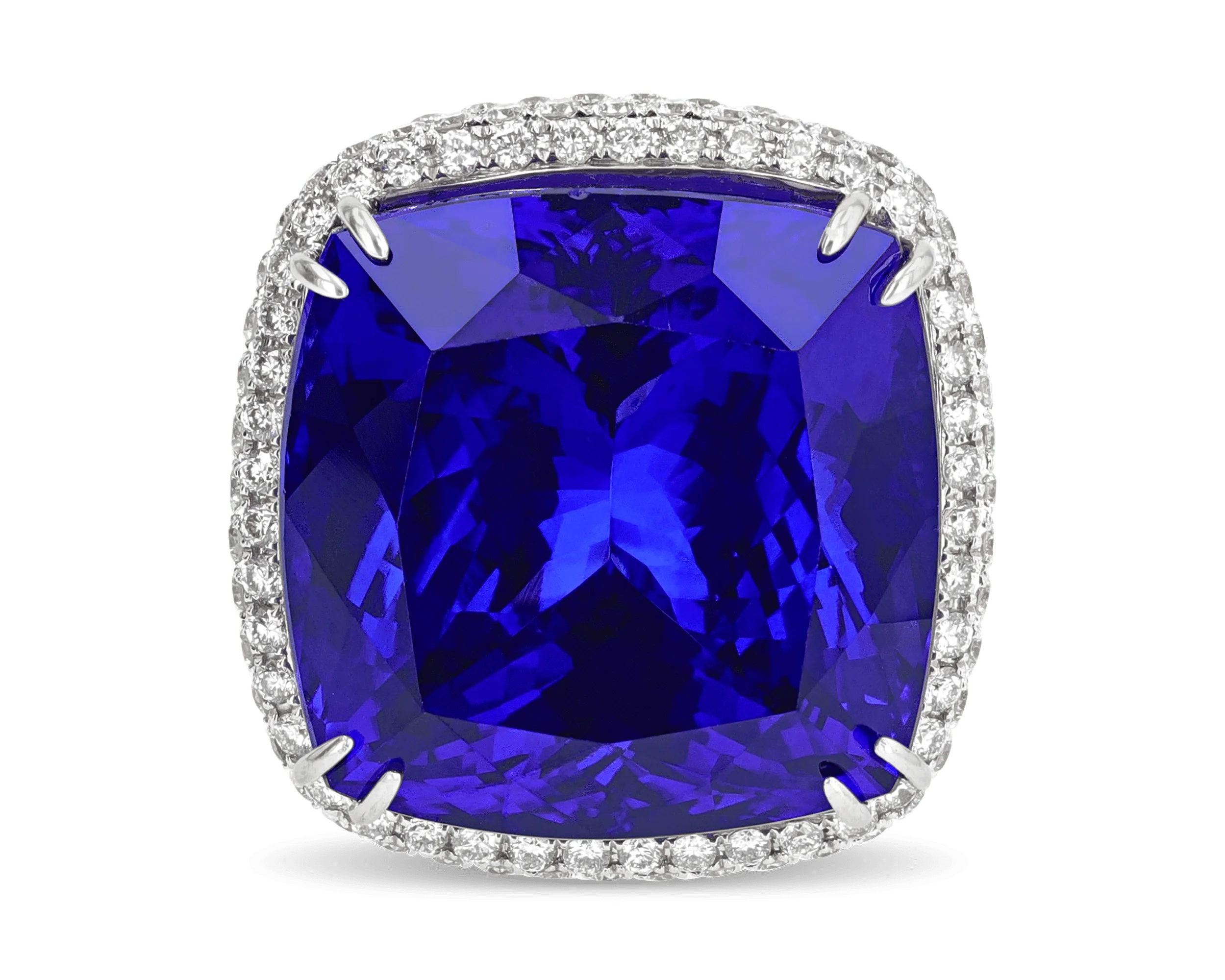
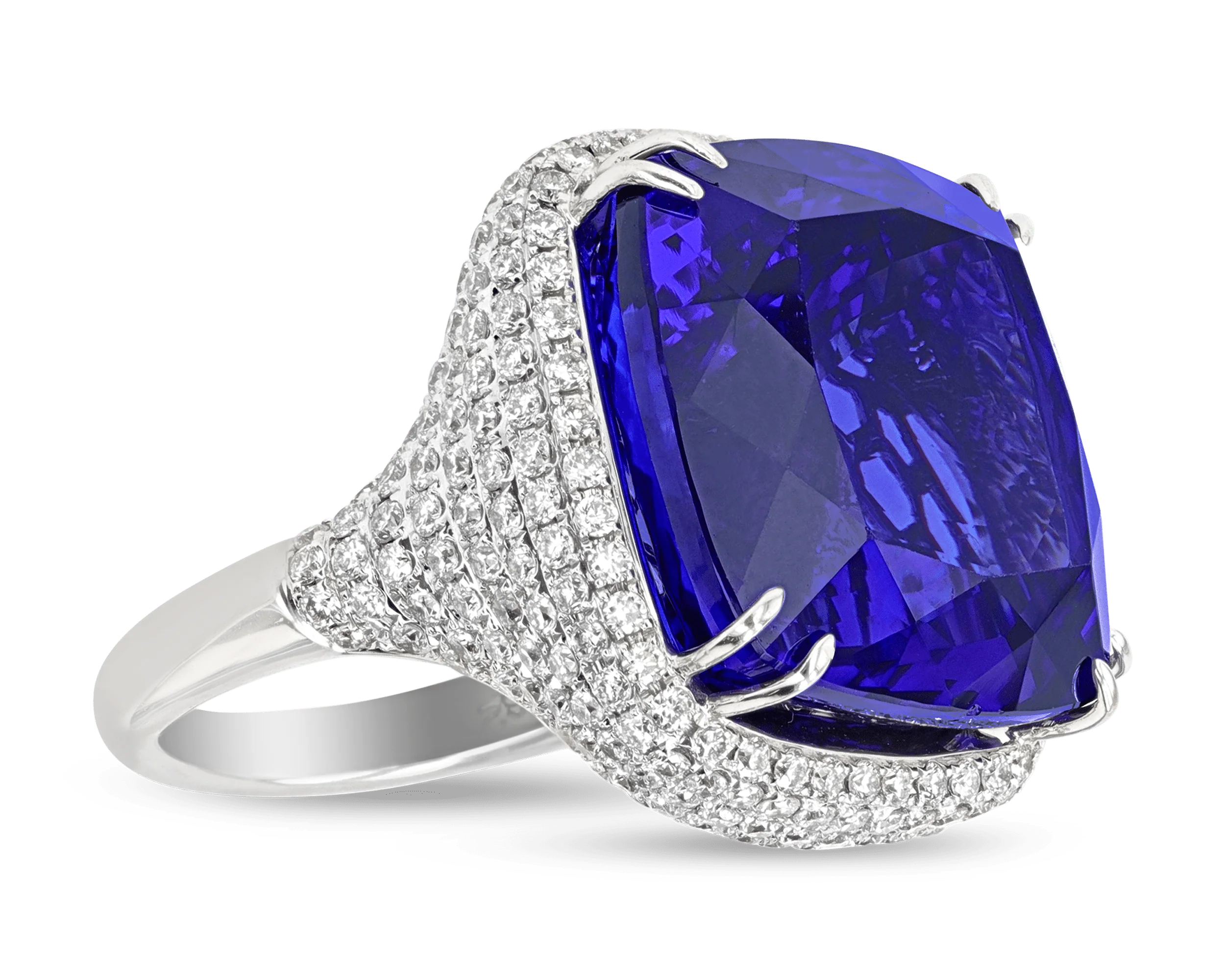
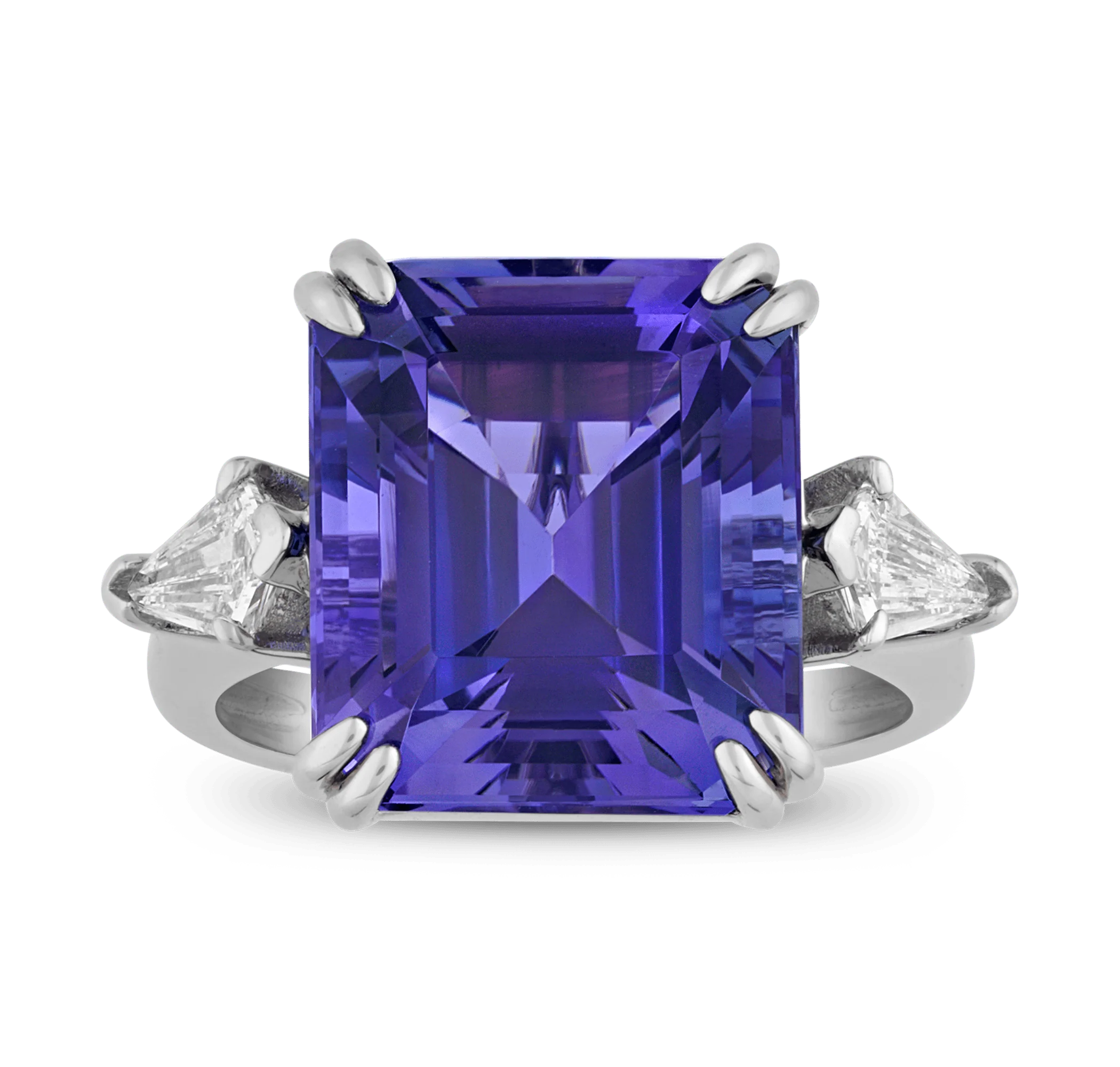
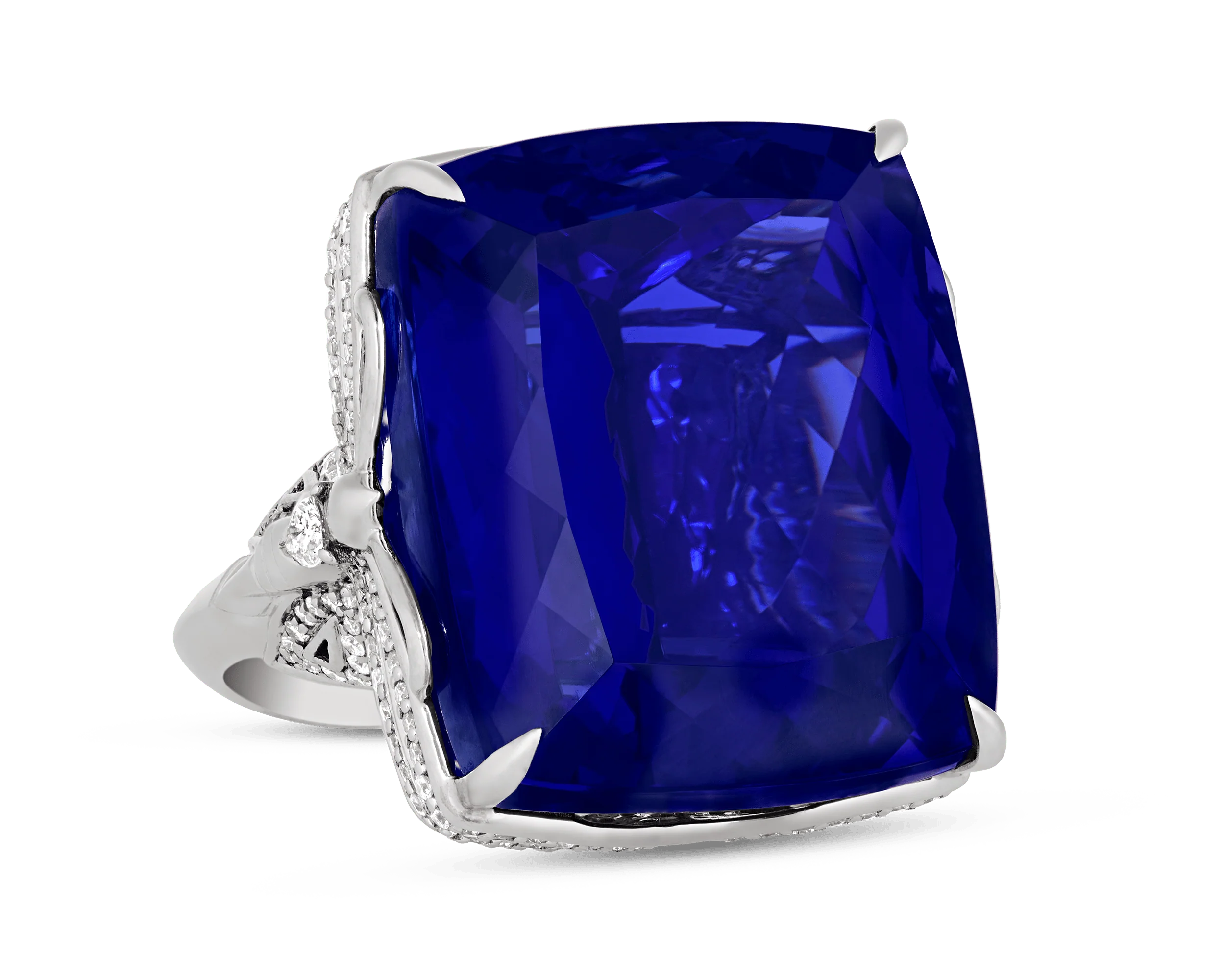
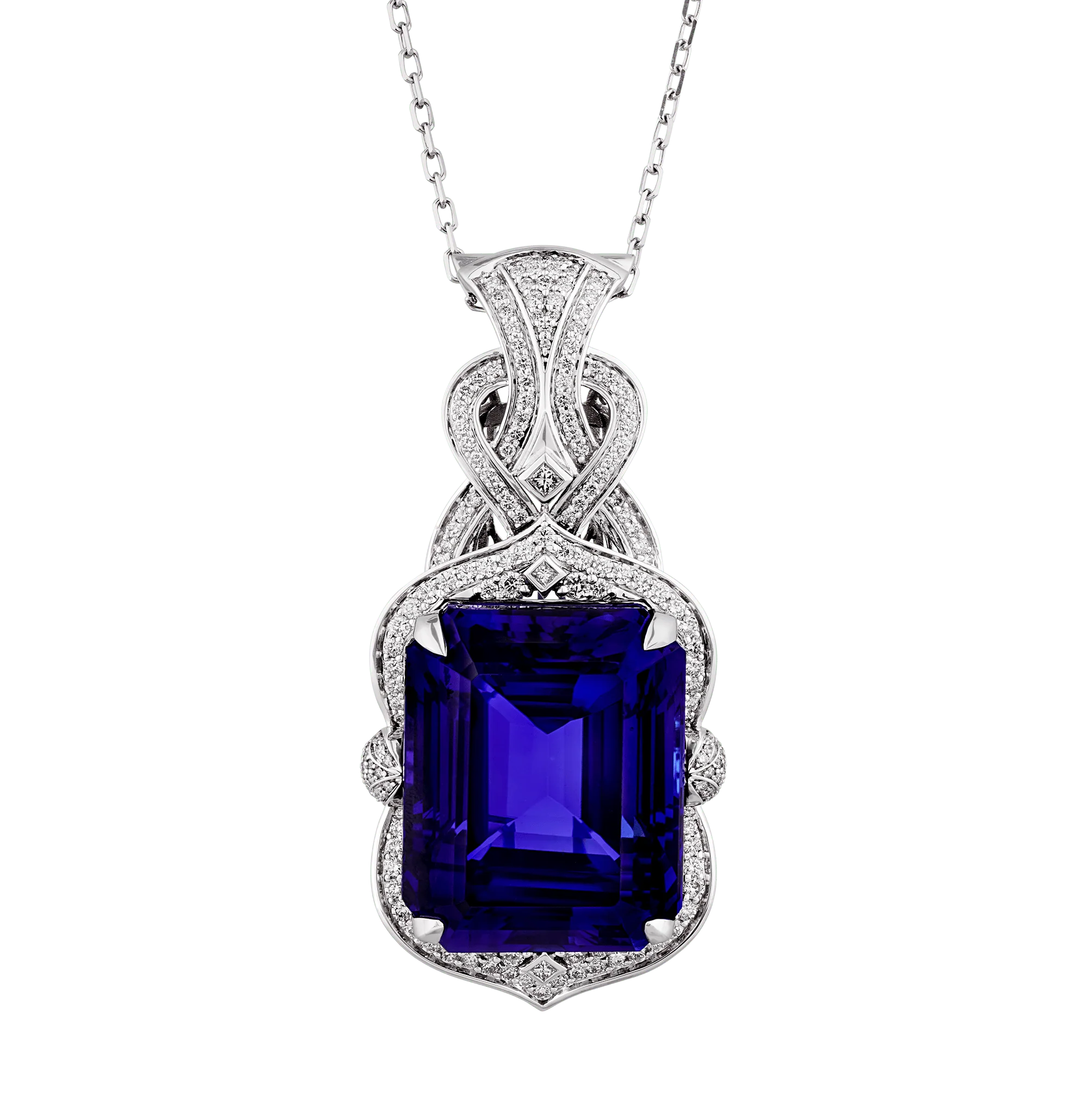
This captivating pendant presents a monumental emerald cut tanzanite weighing approximately 75.00 carats, distinguished by its richly saturated violet-blue hue. The exceptional depth of color is heightened by a surrounding halo of diamonds, creating a luminous contrast that draws the eye to the remarkable gemstone. Set in 18K white gold.
Discovered in the hills of Mount Kilimanjaro in 1967, tanzanite was initially mistaken for a variant of sapphire. However, upon closer examination, it revealed a more intricate and unique composition. The gemstone was named "Tanzanite" by Henry B. Platt, then president and chairman of Tiffany & Co., at the 1968 World's Fair. There, its extraordinary blue-violet brilliance captured the admiration of attendees. While many tanzanites display softer violet tones, examples of exceptional size with a richly saturated blue hue—such as this remarkable stone—are especially prized and command value commensurate with their rarity, scale and intensity of color.
Discovered in the hills of Mount Kilimanjaro in 1967, tanzanite was initially mistaken for a variant of sapphire. However, upon closer examination, it revealed a more intricate and unique composition. The gemstone was named "Tanzanite" by Henry B. Platt, then president and chairman of Tiffany & Co., at the 1968 World's Fair. There, its extraordinary blue-violet brilliance captured the admiration of attendees. While many tanzanites display softer violet tones, examples of exceptional size with a richly saturated blue hue—such as this remarkable stone—are especially prized and command value commensurate with their rarity, scale and intensity of color.
This captivating pendant presents a monumental emerald cut tanzanite weighing approximately 75.00 carats, distinguished by its richly saturated violet-blue hue. The exceptional depth of color is heightened by a surrounding halo of diamonds, creating a luminous contrast that draws the eye to the remarkable gemstone. Set in 18K white gold.
Discovered in the hills of Mount Kilimanjaro in 1967, tanzanite was initially mistaken for a variant of sapphire. However, upon closer examination, it revealed a more intricate and unique composition. The gemstone was named "Tanzanite" by Henry B. Platt, then president and chairman of Tiffany & Co., at the 1968 World's Fair. There, its extraordinary blue-violet brilliance captured the admiration of attendees. While many tanzanites display softer violet tones, examples of exceptional size with a richly saturated blue hue—such as this remarkable stone—are especially prized and command value commensurate with their rarity, scale and intensity of color.
Discovered in the hills of Mount Kilimanjaro in 1967, tanzanite was initially mistaken for a variant of sapphire. However, upon closer examination, it revealed a more intricate and unique composition. The gemstone was named "Tanzanite" by Henry B. Platt, then president and chairman of Tiffany & Co., at the 1968 World's Fair. There, its extraordinary blue-violet brilliance captured the admiration of attendees. While many tanzanites display softer violet tones, examples of exceptional size with a richly saturated blue hue—such as this remarkable stone—are especially prized and command value commensurate with their rarity, scale and intensity of color.
$48,475.00
Original: $138,500.00
-65%Tanzanite Pendant, 75.00 Carats—
$138,500.00
$48,475.00Description
This captivating pendant presents a monumental emerald cut tanzanite weighing approximately 75.00 carats, distinguished by its richly saturated violet-blue hue. The exceptional depth of color is heightened by a surrounding halo of diamonds, creating a luminous contrast that draws the eye to the remarkable gemstone. Set in 18K white gold.
Discovered in the hills of Mount Kilimanjaro in 1967, tanzanite was initially mistaken for a variant of sapphire. However, upon closer examination, it revealed a more intricate and unique composition. The gemstone was named "Tanzanite" by Henry B. Platt, then president and chairman of Tiffany & Co., at the 1968 World's Fair. There, its extraordinary blue-violet brilliance captured the admiration of attendees. While many tanzanites display softer violet tones, examples of exceptional size with a richly saturated blue hue—such as this remarkable stone—are especially prized and command value commensurate with their rarity, scale and intensity of color.
Discovered in the hills of Mount Kilimanjaro in 1967, tanzanite was initially mistaken for a variant of sapphire. However, upon closer examination, it revealed a more intricate and unique composition. The gemstone was named "Tanzanite" by Henry B. Platt, then president and chairman of Tiffany & Co., at the 1968 World's Fair. There, its extraordinary blue-violet brilliance captured the admiration of attendees. While many tanzanites display softer violet tones, examples of exceptional size with a richly saturated blue hue—such as this remarkable stone—are especially prized and command value commensurate with their rarity, scale and intensity of color.