1 / 6
+1
Un beau matin d'été by Henri Matisse
Henri Matisse
1869-1954 | French
Un beau matin d'été
(A beautiful summer morning)
Signed "Henri Matisse" (lower right)
Oil on canvas
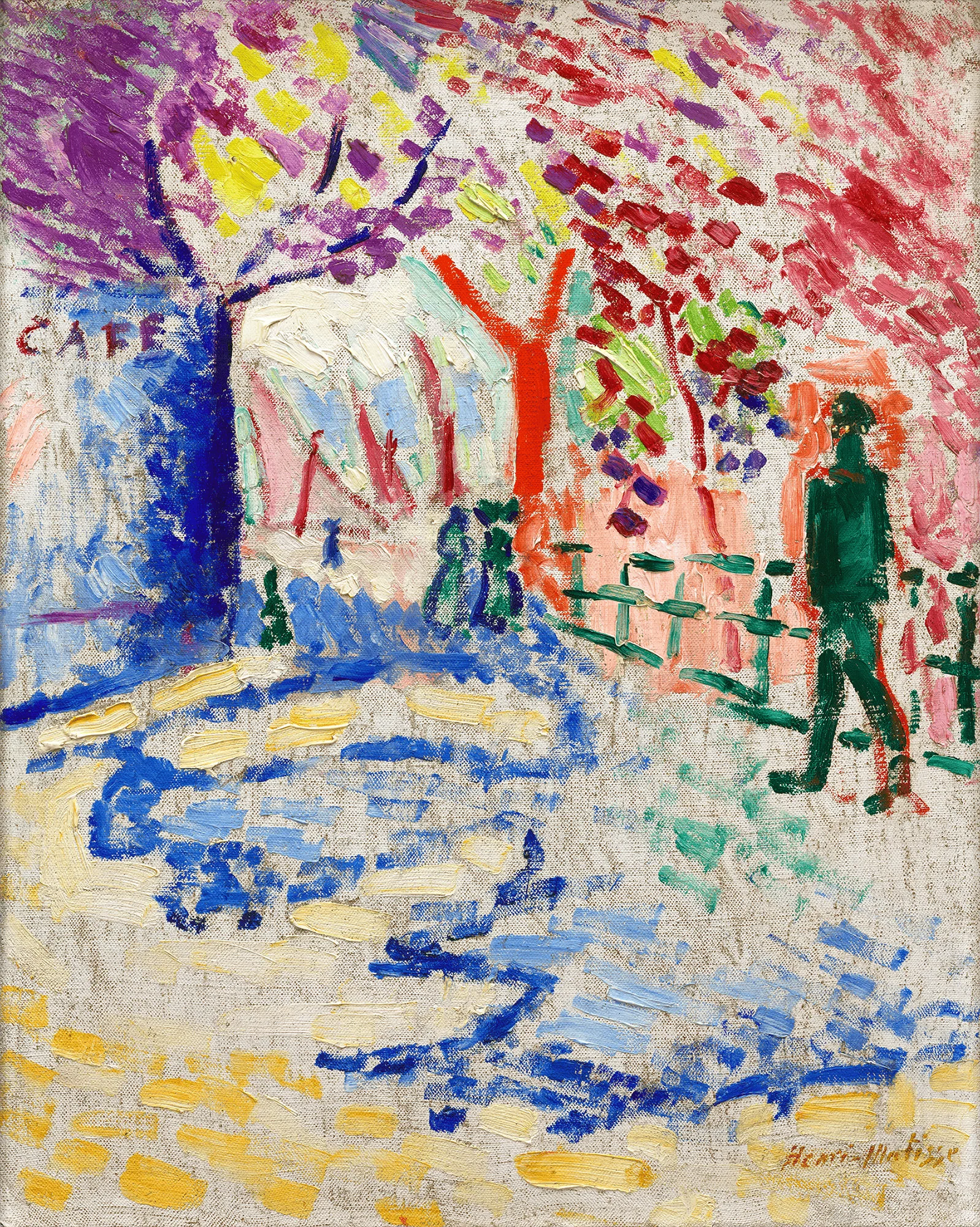
This exceptionally vibrant oil is among the most coveted Matisse masterworks. Finding any painting by this giant of modern art is difficult, but one from the pivotal year of 1905—the origin of the Fauves—is an incredible rarity. Un beau matin d'été was not only painted in this critical year, but it also captures the birthplace of this groundbreaking movement.
In the summer of 1905, Matisse and his friend André Derain spent a few weeks painting and drawing along the enchanting blue waters of the French Riviera. Their time in the quaint fishing village of Collioure would go on to be one of the most important moments in art history. It was here that Matisse pushed his color palette and energetic brushwork to daring new heights, which founded an entire movement. In Un beau matin d'été, painted during this fateful summer in Collioure, the surface pulses with electric hues, and Matisse's confident strokes bring the vivid street scene swirling to life.
When Matisse exhibited the works he created in Collioure a few months later at the Salon d'Automne, one critic, Louis Vauxcelles, famously referred to the works as "les fauves," which translates to "wild beasts." Matisse and his circle took up this name as a badge of honor, and the Fauves became the first modern art movement of the 20th century.
Matisse created just fifteen canvases during this pivotal stay in Collioure, making Un beau matin d'été one of the rarest treasures in his vast oeuvre. Almost all of these important works are in prestigious institutions worldwide, including the Museum of Modern Art, the Metropolitan Museum of Art and the San Francisco Museum of Modern Art. Importantly, this work has also been requested for an upcoming major exhibition at the San Francisco Museum of Modern Art in 2026.
Matisse was renowned throughout his career for his versatility as an artist, and his revolutionary works in painting, drawing, sculpture, graphic arts, paper cutouts and book illustration changed the course of modern art. As the leading force of the Fauves, his bold colors and simplified shapes radically challenged tradition and influenced generations of artists to come.
Painted 1905
Canvas: 15 1/4" high x 12 1/4" wide (38.74 x 31.12 cm)
Frame: 28 1/4" high x 25 1/4" wide x 4 1/4" deep (71.76 x 64.14 x 10.80 cm)
View the Dossier
Provenance:
Galerie Druet, Paris (1908)
Professor Braune, Breslauer (acquired from the above in 1908)
Galerie Thannhauser, Luzern (16 December 1926)
Galerie Matthiesen, Berlin (1927)
Charles H. Worcester (1928)
Helen W. Bradley (donated from the above)
Kenneth Ingels, California (by descent from the above)
Private collection, Europe (acquired in 2006)
Private collection, Paris (acquired in 2013)
M.S. Rau, New Orleans
Exhibited:
Ceret, Musée d’art moderne; Le Cateau-Cambresis, Musée Matisse, Matisse-Derain: Collioure 1905, un été fauve, 2005-06, p. 81, no. 8 (illustrated)
This work has been requested for a major Matisse exhibition at the San Francisco Museum of Modern Art in 2026
1869-1954 | French
Un beau matin d'été
(A beautiful summer morning)
Signed "Henri Matisse" (lower right)
Oil on canvas
This exceptionally vibrant oil is among the most coveted Matisse masterworks. Finding any painting by this giant of modern art is difficult, but one from the pivotal year of 1905—the origin of the Fauves—is an incredible rarity. Un beau matin d'été was not only painted in this critical year, but it also captures the birthplace of this groundbreaking movement.
In the summer of 1905, Matisse and his friend André Derain spent a few weeks painting and drawing along the enchanting blue waters of the French Riviera. Their time in the quaint fishing village of Collioure would go on to be one of the most important moments in art history. It was here that Matisse pushed his color palette and energetic brushwork to daring new heights, which founded an entire movement. In Un beau matin d'été, painted during this fateful summer in Collioure, the surface pulses with electric hues, and Matisse's confident strokes bring the vivid street scene swirling to life.
When Matisse exhibited the works he created in Collioure a few months later at the Salon d'Automne, one critic, Louis Vauxcelles, famously referred to the works as "les fauves," which translates to "wild beasts." Matisse and his circle took up this name as a badge of honor, and the Fauves became the first modern art movement of the 20th century.
Matisse created just fifteen canvases during this pivotal stay in Collioure, making Un beau matin d'été one of the rarest treasures in his vast oeuvre. Almost all of these important works are in prestigious institutions worldwide, including the Museum of Modern Art, the Metropolitan Museum of Art and the San Francisco Museum of Modern Art. Importantly, this work has also been requested for an upcoming major exhibition at the San Francisco Museum of Modern Art in 2026.
Matisse was renowned throughout his career for his versatility as an artist, and his revolutionary works in painting, drawing, sculpture, graphic arts, paper cutouts and book illustration changed the course of modern art. As the leading force of the Fauves, his bold colors and simplified shapes radically challenged tradition and influenced generations of artists to come.
Painted 1905
Canvas: 15 1/4" high x 12 1/4" wide (38.74 x 31.12 cm)
Frame: 28 1/4" high x 25 1/4" wide x 4 1/4" deep (71.76 x 64.14 x 10.80 cm)
View the Dossier
Provenance:
Galerie Druet, Paris (1908)
Professor Braune, Breslauer (acquired from the above in 1908)
Galerie Thannhauser, Luzern (16 December 1926)
Galerie Matthiesen, Berlin (1927)
Charles H. Worcester (1928)
Helen W. Bradley (donated from the above)
Kenneth Ingels, California (by descent from the above)
Private collection, Europe (acquired in 2006)
Private collection, Paris (acquired in 2013)
M.S. Rau, New Orleans
Exhibited:
Ceret, Musée d’art moderne; Le Cateau-Cambresis, Musée Matisse, Matisse-Derain: Collioure 1905, un été fauve, 2005-06, p. 81, no. 8 (illustrated)
This work has been requested for a major Matisse exhibition at the San Francisco Museum of Modern Art in 2026
Henri Matisse
1869-1954 | French
Un beau matin d'été
(A beautiful summer morning)
Signed "Henri Matisse" (lower right)
Oil on canvas
This exceptionally vibrant oil is among the most coveted Matisse masterworks. Finding any painting by this giant of modern art is difficult, but one from the pivotal year of 1905—the origin of the Fauves—is an incredible rarity. Un beau matin d'été was not only painted in this critical year, but it also captures the birthplace of this groundbreaking movement.
In the summer of 1905, Matisse and his friend André Derain spent a few weeks painting and drawing along the enchanting blue waters of the French Riviera. Their time in the quaint fishing village of Collioure would go on to be one of the most important moments in art history. It was here that Matisse pushed his color palette and energetic brushwork to daring new heights, which founded an entire movement. In Un beau matin d'été, painted during this fateful summer in Collioure, the surface pulses with electric hues, and Matisse's confident strokes bring the vivid street scene swirling to life.
When Matisse exhibited the works he created in Collioure a few months later at the Salon d'Automne, one critic, Louis Vauxcelles, famously referred to the works as "les fauves," which translates to "wild beasts." Matisse and his circle took up this name as a badge of honor, and the Fauves became the first modern art movement of the 20th century.
Matisse created just fifteen canvases during this pivotal stay in Collioure, making Un beau matin d'été one of the rarest treasures in his vast oeuvre. Almost all of these important works are in prestigious institutions worldwide, including the Museum of Modern Art, the Metropolitan Museum of Art and the San Francisco Museum of Modern Art. Importantly, this work has also been requested for an upcoming major exhibition at the San Francisco Museum of Modern Art in 2026.
Matisse was renowned throughout his career for his versatility as an artist, and his revolutionary works in painting, drawing, sculpture, graphic arts, paper cutouts and book illustration changed the course of modern art. As the leading force of the Fauves, his bold colors and simplified shapes radically challenged tradition and influenced generations of artists to come.
Painted 1905
Canvas: 15 1/4" high x 12 1/4" wide (38.74 x 31.12 cm)
Frame: 28 1/4" high x 25 1/4" wide x 4 1/4" deep (71.76 x 64.14 x 10.80 cm)
View the Dossier
Provenance:
Galerie Druet, Paris (1908)
Professor Braune, Breslauer (acquired from the above in 1908)
Galerie Thannhauser, Luzern (16 December 1926)
Galerie Matthiesen, Berlin (1927)
Charles H. Worcester (1928)
Helen W. Bradley (donated from the above)
Kenneth Ingels, California (by descent from the above)
Private collection, Europe (acquired in 2006)
Private collection, Paris (acquired in 2013)
M.S. Rau, New Orleans
Exhibited:
Ceret, Musée d’art moderne; Le Cateau-Cambresis, Musée Matisse, Matisse-Derain: Collioure 1905, un été fauve, 2005-06, p. 81, no. 8 (illustrated)
This work has been requested for a major Matisse exhibition at the San Francisco Museum of Modern Art in 2026
1869-1954 | French
Un beau matin d'été
(A beautiful summer morning)
Signed "Henri Matisse" (lower right)
Oil on canvas
This exceptionally vibrant oil is among the most coveted Matisse masterworks. Finding any painting by this giant of modern art is difficult, but one from the pivotal year of 1905—the origin of the Fauves—is an incredible rarity. Un beau matin d'été was not only painted in this critical year, but it also captures the birthplace of this groundbreaking movement.
In the summer of 1905, Matisse and his friend André Derain spent a few weeks painting and drawing along the enchanting blue waters of the French Riviera. Their time in the quaint fishing village of Collioure would go on to be one of the most important moments in art history. It was here that Matisse pushed his color palette and energetic brushwork to daring new heights, which founded an entire movement. In Un beau matin d'été, painted during this fateful summer in Collioure, the surface pulses with electric hues, and Matisse's confident strokes bring the vivid street scene swirling to life.
When Matisse exhibited the works he created in Collioure a few months later at the Salon d'Automne, one critic, Louis Vauxcelles, famously referred to the works as "les fauves," which translates to "wild beasts." Matisse and his circle took up this name as a badge of honor, and the Fauves became the first modern art movement of the 20th century.
Matisse created just fifteen canvases during this pivotal stay in Collioure, making Un beau matin d'été one of the rarest treasures in his vast oeuvre. Almost all of these important works are in prestigious institutions worldwide, including the Museum of Modern Art, the Metropolitan Museum of Art and the San Francisco Museum of Modern Art. Importantly, this work has also been requested for an upcoming major exhibition at the San Francisco Museum of Modern Art in 2026.
Matisse was renowned throughout his career for his versatility as an artist, and his revolutionary works in painting, drawing, sculpture, graphic arts, paper cutouts and book illustration changed the course of modern art. As the leading force of the Fauves, his bold colors and simplified shapes radically challenged tradition and influenced generations of artists to come.
Painted 1905
Canvas: 15 1/4" high x 12 1/4" wide (38.74 x 31.12 cm)
Frame: 28 1/4" high x 25 1/4" wide x 4 1/4" deep (71.76 x 64.14 x 10.80 cm)
View the Dossier
Provenance:
Galerie Druet, Paris (1908)
Professor Braune, Breslauer (acquired from the above in 1908)
Galerie Thannhauser, Luzern (16 December 1926)
Galerie Matthiesen, Berlin (1927)
Charles H. Worcester (1928)
Helen W. Bradley (donated from the above)
Kenneth Ingels, California (by descent from the above)
Private collection, Europe (acquired in 2006)
Private collection, Paris (acquired in 2013)
M.S. Rau, New Orleans
Exhibited:
Ceret, Musée d’art moderne; Le Cateau-Cambresis, Musée Matisse, Matisse-Derain: Collioure 1905, un été fauve, 2005-06, p. 81, no. 8 (illustrated)
This work has been requested for a major Matisse exhibition at the San Francisco Museum of Modern Art in 2026
$5,500,000.00
Un beau matin d'été by Henri Matisse—
$5,500,000.00
Description
Henri Matisse
1869-1954 | French
Un beau matin d'été
(A beautiful summer morning)
Signed "Henri Matisse" (lower right)
Oil on canvas
This exceptionally vibrant oil is among the most coveted Matisse masterworks. Finding any painting by this giant of modern art is difficult, but one from the pivotal year of 1905—the origin of the Fauves—is an incredible rarity. Un beau matin d'été was not only painted in this critical year, but it also captures the birthplace of this groundbreaking movement.
In the summer of 1905, Matisse and his friend André Derain spent a few weeks painting and drawing along the enchanting blue waters of the French Riviera. Their time in the quaint fishing village of Collioure would go on to be one of the most important moments in art history. It was here that Matisse pushed his color palette and energetic brushwork to daring new heights, which founded an entire movement. In Un beau matin d'été, painted during this fateful summer in Collioure, the surface pulses with electric hues, and Matisse's confident strokes bring the vivid street scene swirling to life.
When Matisse exhibited the works he created in Collioure a few months later at the Salon d'Automne, one critic, Louis Vauxcelles, famously referred to the works as "les fauves," which translates to "wild beasts." Matisse and his circle took up this name as a badge of honor, and the Fauves became the first modern art movement of the 20th century.
Matisse created just fifteen canvases during this pivotal stay in Collioure, making Un beau matin d'été one of the rarest treasures in his vast oeuvre. Almost all of these important works are in prestigious institutions worldwide, including the Museum of Modern Art, the Metropolitan Museum of Art and the San Francisco Museum of Modern Art. Importantly, this work has also been requested for an upcoming major exhibition at the San Francisco Museum of Modern Art in 2026.
Matisse was renowned throughout his career for his versatility as an artist, and his revolutionary works in painting, drawing, sculpture, graphic arts, paper cutouts and book illustration changed the course of modern art. As the leading force of the Fauves, his bold colors and simplified shapes radically challenged tradition and influenced generations of artists to come.
Painted 1905
Canvas: 15 1/4" high x 12 1/4" wide (38.74 x 31.12 cm)
Frame: 28 1/4" high x 25 1/4" wide x 4 1/4" deep (71.76 x 64.14 x 10.80 cm)
View the Dossier
Provenance:
Galerie Druet, Paris (1908)
Professor Braune, Breslauer (acquired from the above in 1908)
Galerie Thannhauser, Luzern (16 December 1926)
Galerie Matthiesen, Berlin (1927)
Charles H. Worcester (1928)
Helen W. Bradley (donated from the above)
Kenneth Ingels, California (by descent from the above)
Private collection, Europe (acquired in 2006)
Private collection, Paris (acquired in 2013)
M.S. Rau, New Orleans
Exhibited:
Ceret, Musée d’art moderne; Le Cateau-Cambresis, Musée Matisse, Matisse-Derain: Collioure 1905, un été fauve, 2005-06, p. 81, no. 8 (illustrated)
This work has been requested for a major Matisse exhibition at the San Francisco Museum of Modern Art in 2026
1869-1954 | French
Un beau matin d'été
(A beautiful summer morning)
Signed "Henri Matisse" (lower right)
Oil on canvas
This exceptionally vibrant oil is among the most coveted Matisse masterworks. Finding any painting by this giant of modern art is difficult, but one from the pivotal year of 1905—the origin of the Fauves—is an incredible rarity. Un beau matin d'été was not only painted in this critical year, but it also captures the birthplace of this groundbreaking movement.
In the summer of 1905, Matisse and his friend André Derain spent a few weeks painting and drawing along the enchanting blue waters of the French Riviera. Their time in the quaint fishing village of Collioure would go on to be one of the most important moments in art history. It was here that Matisse pushed his color palette and energetic brushwork to daring new heights, which founded an entire movement. In Un beau matin d'été, painted during this fateful summer in Collioure, the surface pulses with electric hues, and Matisse's confident strokes bring the vivid street scene swirling to life.
When Matisse exhibited the works he created in Collioure a few months later at the Salon d'Automne, one critic, Louis Vauxcelles, famously referred to the works as "les fauves," which translates to "wild beasts." Matisse and his circle took up this name as a badge of honor, and the Fauves became the first modern art movement of the 20th century.
Matisse created just fifteen canvases during this pivotal stay in Collioure, making Un beau matin d'été one of the rarest treasures in his vast oeuvre. Almost all of these important works are in prestigious institutions worldwide, including the Museum of Modern Art, the Metropolitan Museum of Art and the San Francisco Museum of Modern Art. Importantly, this work has also been requested for an upcoming major exhibition at the San Francisco Museum of Modern Art in 2026.
Matisse was renowned throughout his career for his versatility as an artist, and his revolutionary works in painting, drawing, sculpture, graphic arts, paper cutouts and book illustration changed the course of modern art. As the leading force of the Fauves, his bold colors and simplified shapes radically challenged tradition and influenced generations of artists to come.
Painted 1905
Canvas: 15 1/4" high x 12 1/4" wide (38.74 x 31.12 cm)
Frame: 28 1/4" high x 25 1/4" wide x 4 1/4" deep (71.76 x 64.14 x 10.80 cm)
View the Dossier
Provenance:
Galerie Druet, Paris (1908)
Professor Braune, Breslauer (acquired from the above in 1908)
Galerie Thannhauser, Luzern (16 December 1926)
Galerie Matthiesen, Berlin (1927)
Charles H. Worcester (1928)
Helen W. Bradley (donated from the above)
Kenneth Ingels, California (by descent from the above)
Private collection, Europe (acquired in 2006)
Private collection, Paris (acquired in 2013)
M.S. Rau, New Orleans
Exhibited:
Ceret, Musée d’art moderne; Le Cateau-Cambresis, Musée Matisse, Matisse-Derain: Collioure 1905, un été fauve, 2005-06, p. 81, no. 8 (illustrated)
This work has been requested for a major Matisse exhibition at the San Francisco Museum of Modern Art in 2026