1 / 4
Victorian Jockey Scale
Jockey Scale
Late 19th Century
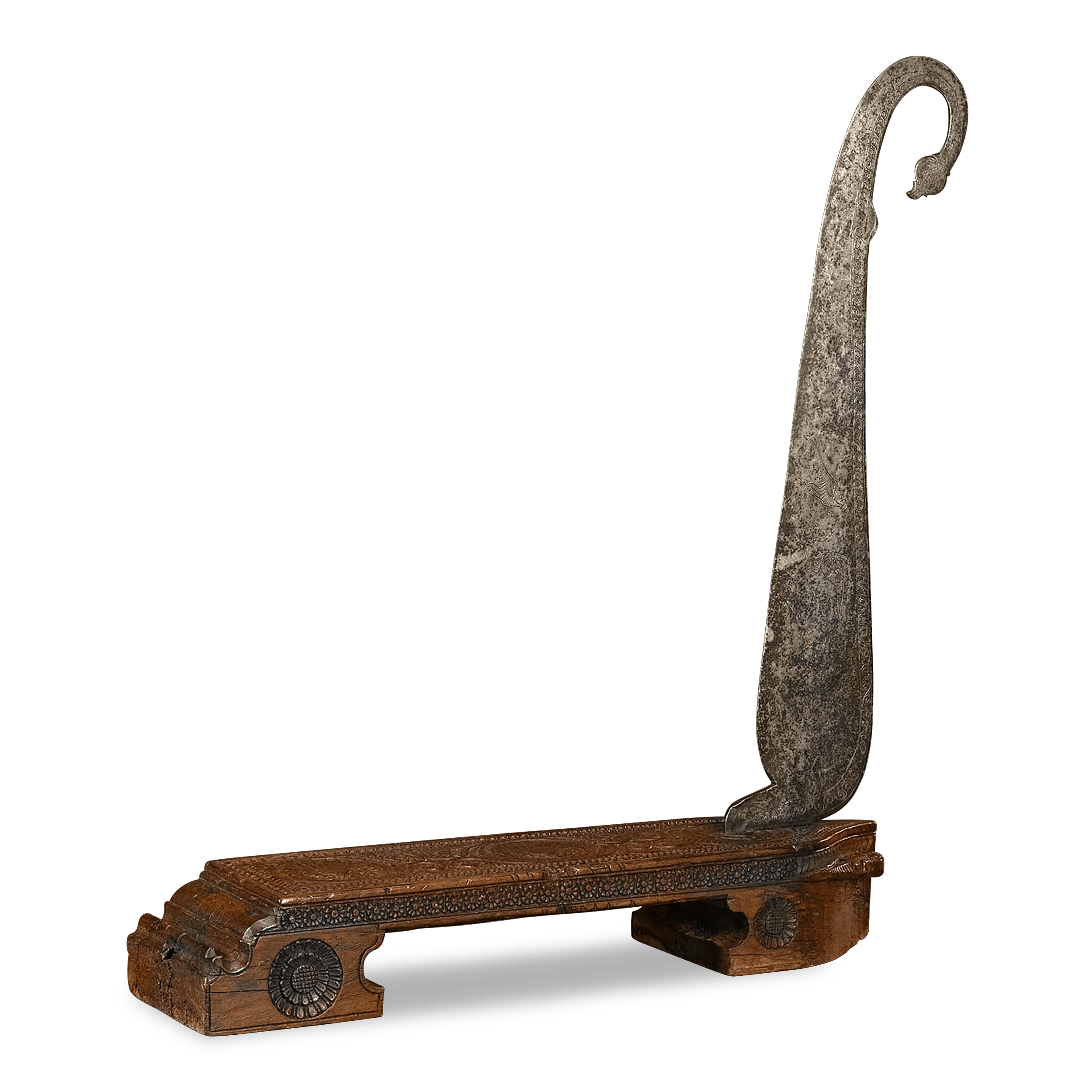
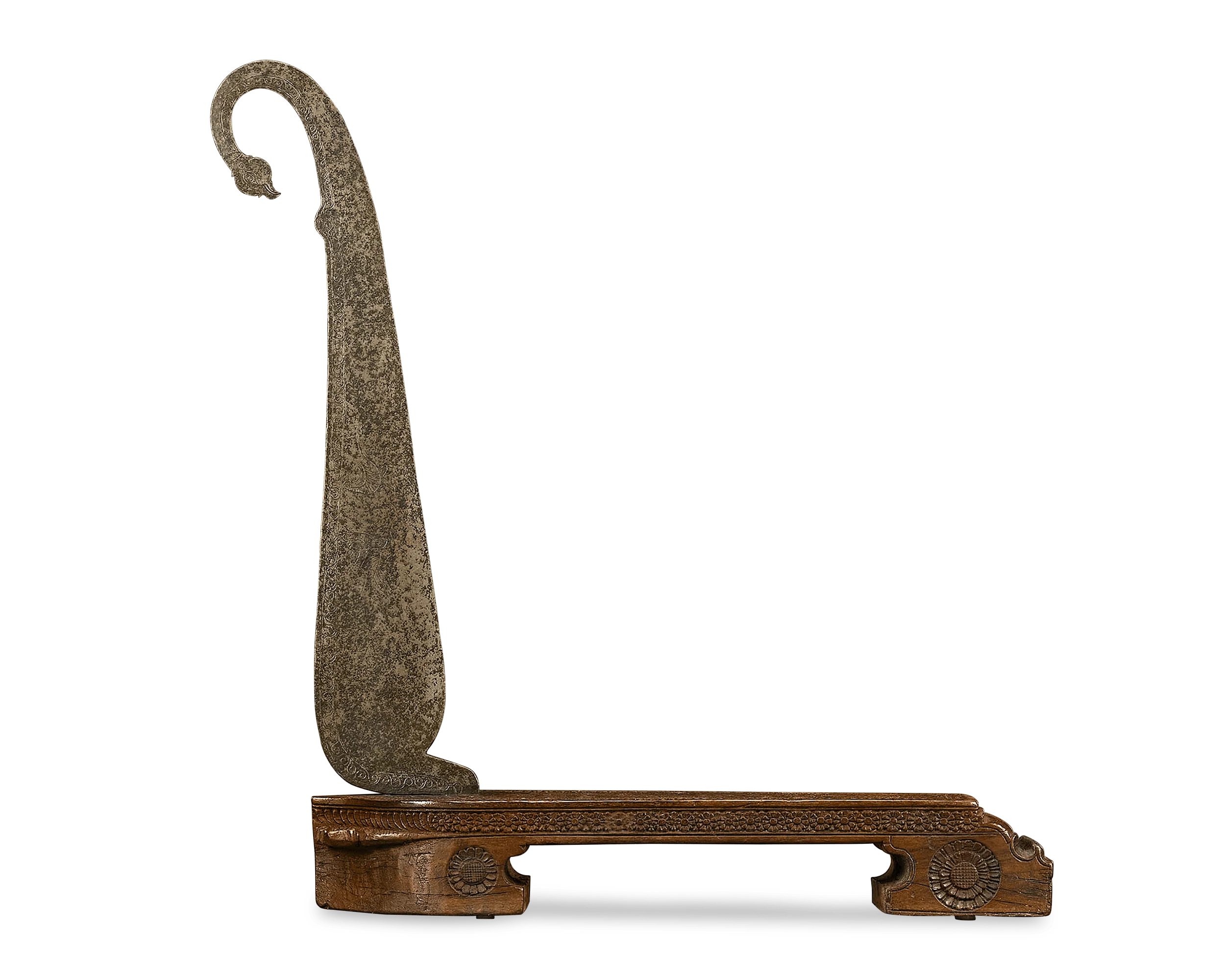
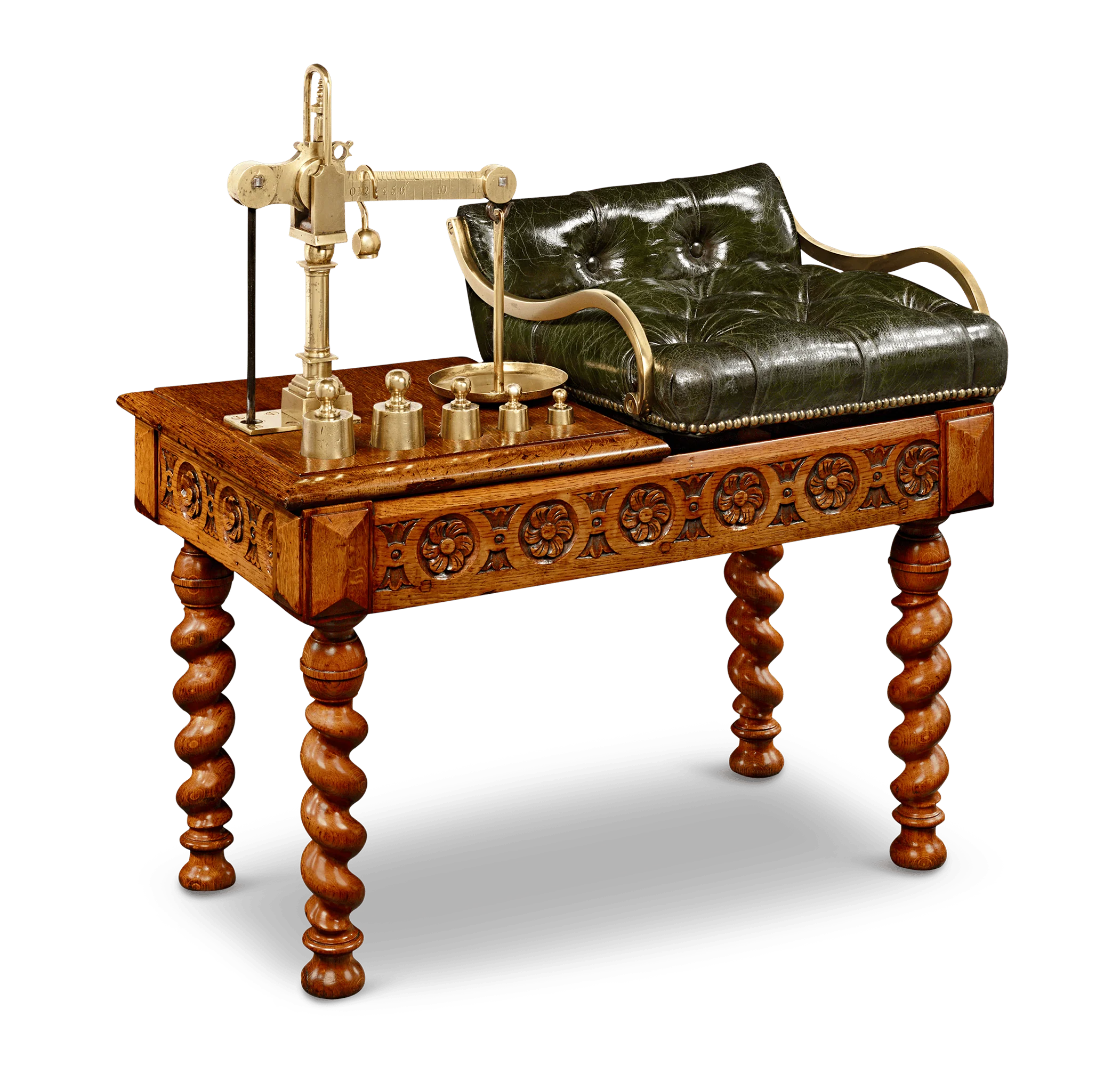
This Victorian jockey scale is an iconic piece of horse racing history. These handsome scales were used at the tracks to determine the jockey’s weight before a big race. This was done to prevent jockeys from being lighter than the rules regulated, since it would give them and their horse the utmost advantage over their competitors. Crafted of oak and intricately carved with floral motifs, this example features a tufted leather seat and a beautifully crafted, built-in brass scale.
The scale retains its original brass weights, each representing a certain number of stones, the British unit of weight measurement. The jockey would sit in the seat and the brass weights would be placed in the pan until nearly balanced. To refine the measurement, the slide would be placed within the notches along the main scale arm until perfectly balanced, and the corresponding measurement would provide the jockey's weight.
36 1/2" high x 33 1/2" wide x 19 1/2" deep
Late 19th Century
This Victorian jockey scale is an iconic piece of horse racing history. These handsome scales were used at the tracks to determine the jockey’s weight before a big race. This was done to prevent jockeys from being lighter than the rules regulated, since it would give them and their horse the utmost advantage over their competitors. Crafted of oak and intricately carved with floral motifs, this example features a tufted leather seat and a beautifully crafted, built-in brass scale.
The scale retains its original brass weights, each representing a certain number of stones, the British unit of weight measurement. The jockey would sit in the seat and the brass weights would be placed in the pan until nearly balanced. To refine the measurement, the slide would be placed within the notches along the main scale arm until perfectly balanced, and the corresponding measurement would provide the jockey's weight.
36 1/2" high x 33 1/2" wide x 19 1/2" deep
Jockey Scale
Late 19th Century
This Victorian jockey scale is an iconic piece of horse racing history. These handsome scales were used at the tracks to determine the jockey’s weight before a big race. This was done to prevent jockeys from being lighter than the rules regulated, since it would give them and their horse the utmost advantage over their competitors. Crafted of oak and intricately carved with floral motifs, this example features a tufted leather seat and a beautifully crafted, built-in brass scale.
The scale retains its original brass weights, each representing a certain number of stones, the British unit of weight measurement. The jockey would sit in the seat and the brass weights would be placed in the pan until nearly balanced. To refine the measurement, the slide would be placed within the notches along the main scale arm until perfectly balanced, and the corresponding measurement would provide the jockey's weight.
36 1/2" high x 33 1/2" wide x 19 1/2" deep
Late 19th Century
This Victorian jockey scale is an iconic piece of horse racing history. These handsome scales were used at the tracks to determine the jockey’s weight before a big race. This was done to prevent jockeys from being lighter than the rules regulated, since it would give them and their horse the utmost advantage over their competitors. Crafted of oak and intricately carved with floral motifs, this example features a tufted leather seat and a beautifully crafted, built-in brass scale.
The scale retains its original brass weights, each representing a certain number of stones, the British unit of weight measurement. The jockey would sit in the seat and the brass weights would be placed in the pan until nearly balanced. To refine the measurement, the slide would be placed within the notches along the main scale arm until perfectly balanced, and the corresponding measurement would provide the jockey's weight.
36 1/2" high x 33 1/2" wide x 19 1/2" deep
$34,500.00
Victorian Jockey Scale—
$34,500.00
Description
Jockey Scale
Late 19th Century
This Victorian jockey scale is an iconic piece of horse racing history. These handsome scales were used at the tracks to determine the jockey’s weight before a big race. This was done to prevent jockeys from being lighter than the rules regulated, since it would give them and their horse the utmost advantage over their competitors. Crafted of oak and intricately carved with floral motifs, this example features a tufted leather seat and a beautifully crafted, built-in brass scale.
The scale retains its original brass weights, each representing a certain number of stones, the British unit of weight measurement. The jockey would sit in the seat and the brass weights would be placed in the pan until nearly balanced. To refine the measurement, the slide would be placed within the notches along the main scale arm until perfectly balanced, and the corresponding measurement would provide the jockey's weight.
36 1/2" high x 33 1/2" wide x 19 1/2" deep
Late 19th Century
This Victorian jockey scale is an iconic piece of horse racing history. These handsome scales were used at the tracks to determine the jockey’s weight before a big race. This was done to prevent jockeys from being lighter than the rules regulated, since it would give them and their horse the utmost advantage over their competitors. Crafted of oak and intricately carved with floral motifs, this example features a tufted leather seat and a beautifully crafted, built-in brass scale.
The scale retains its original brass weights, each representing a certain number of stones, the British unit of weight measurement. The jockey would sit in the seat and the brass weights would be placed in the pan until nearly balanced. To refine the measurement, the slide would be placed within the notches along the main scale arm until perfectly balanced, and the corresponding measurement would provide the jockey's weight.
36 1/2" high x 33 1/2" wide x 19 1/2" deep