
1 / 4
Viennese Enamel Candlesticks
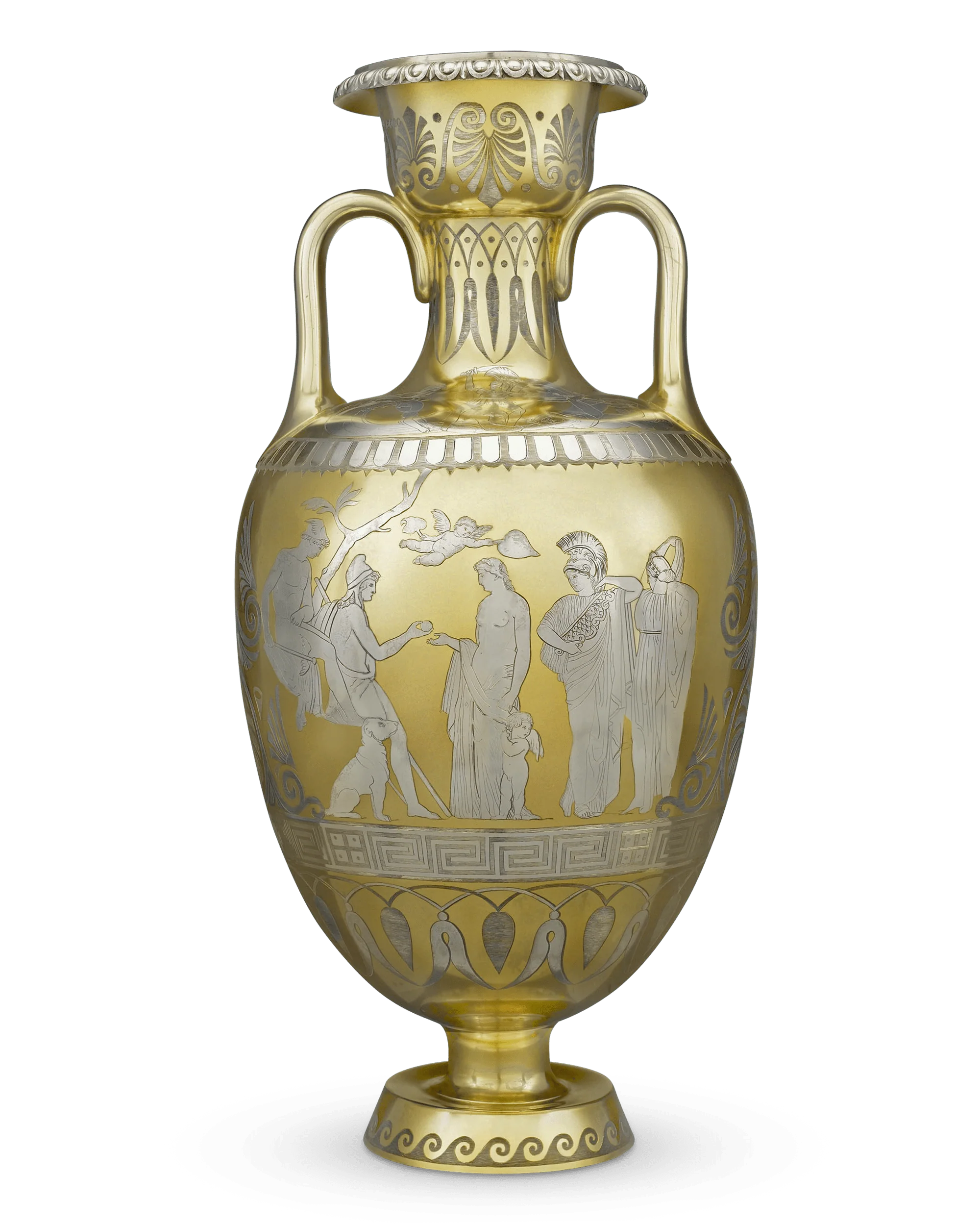
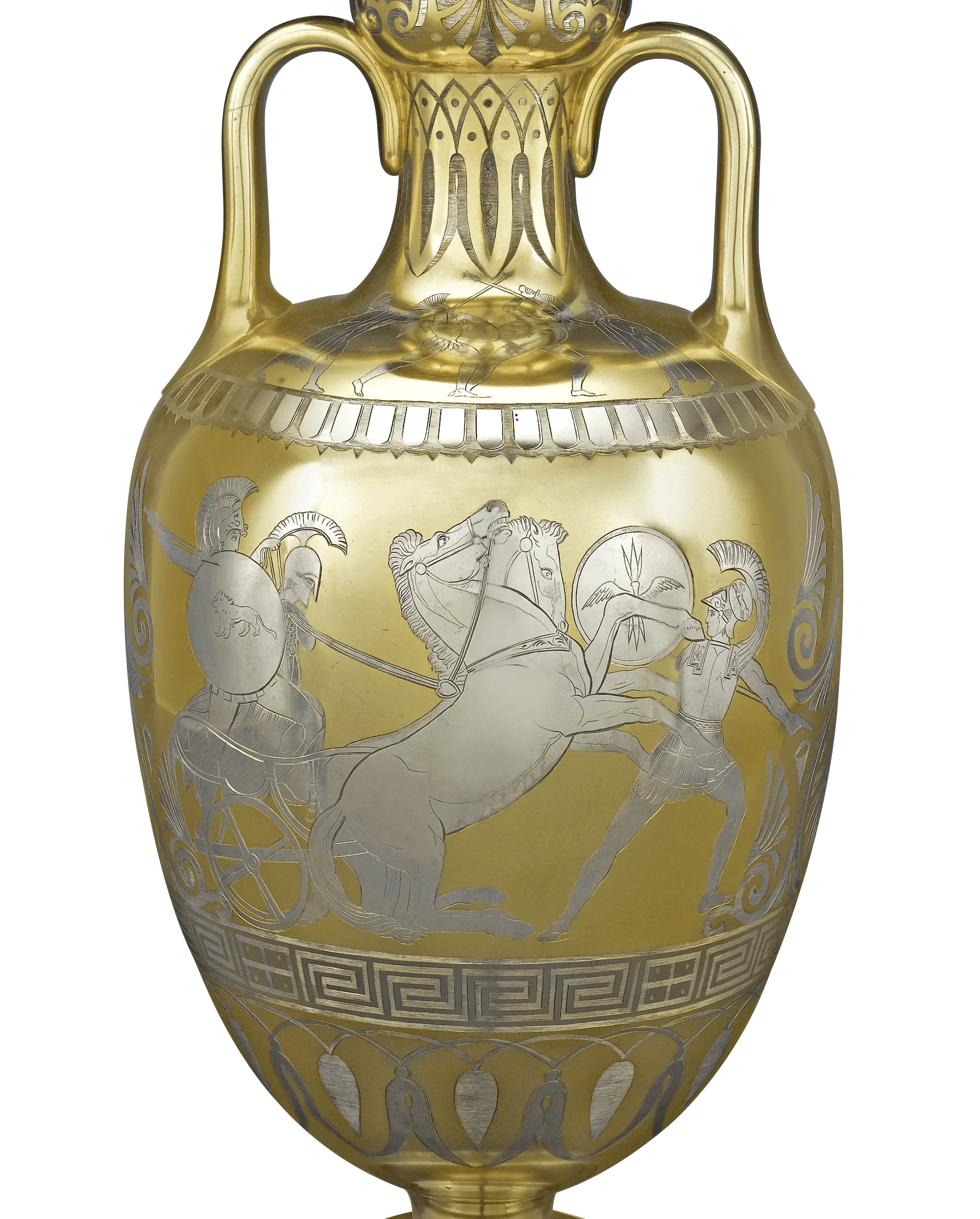
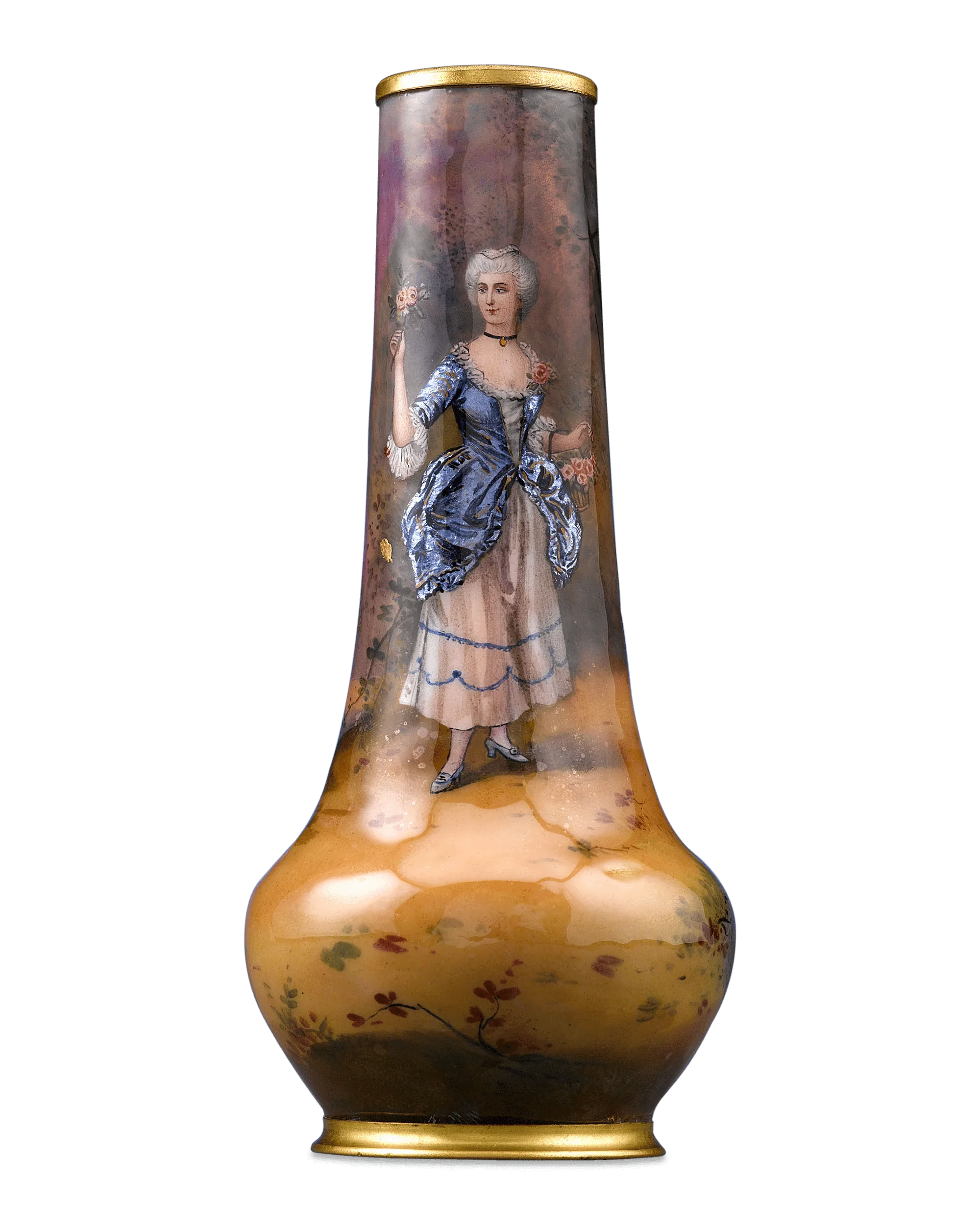
Splendid continuous hand-painted scenes adorn these graceful and rare Viennese silver and enamel candlesticks. Adorned with scenes of gods and goddesses from classical mythology, these lights are executed with exceptional detail and artistry. A fantastic testament to the skilled artisans of Austria, they exemplify remarkable design and craftsmanship.
Enameling is one of the oldest forms of decorative art with examples dating back almost 3,000 years to Mycenaean Greece. The methods used in the enameling process have changed very little since that time. Enamel is actually glass colored with metallic pigments that are fused to metal by firing. Because different colors fire at different temperatures, it was essential that the artist paint the colors that required the highest heat first, adding the others in descending order of their firing temperature.
The forte of the Viennese enamelers was their success in following the trend set by the interior decorators of mansions and great public buildings with regard to color schemes and pictorial themes from classical mythology. Considering the highly skilled craftsmanship of the Viennese artisans, this ornamental work often surpassed the original Renaissance and Rococo designs it emulated, making Vienna one of the most important European centers for decorative arts.
Feature Austria silver marks
Circa 1860
8 3/4” high
Enameling is one of the oldest forms of decorative art with examples dating back almost 3,000 years to Mycenaean Greece. The methods used in the enameling process have changed very little since that time. Enamel is actually glass colored with metallic pigments that are fused to metal by firing. Because different colors fire at different temperatures, it was essential that the artist paint the colors that required the highest heat first, adding the others in descending order of their firing temperature.
The forte of the Viennese enamelers was their success in following the trend set by the interior decorators of mansions and great public buildings with regard to color schemes and pictorial themes from classical mythology. Considering the highly skilled craftsmanship of the Viennese artisans, this ornamental work often surpassed the original Renaissance and Rococo designs it emulated, making Vienna one of the most important European centers for decorative arts.
Feature Austria silver marks
Circa 1860
8 3/4” high
Splendid continuous hand-painted scenes adorn these graceful and rare Viennese silver and enamel candlesticks. Adorned with scenes of gods and goddesses from classical mythology, these lights are executed with exceptional detail and artistry. A fantastic testament to the skilled artisans of Austria, they exemplify remarkable design and craftsmanship.
Enameling is one of the oldest forms of decorative art with examples dating back almost 3,000 years to Mycenaean Greece. The methods used in the enameling process have changed very little since that time. Enamel is actually glass colored with metallic pigments that are fused to metal by firing. Because different colors fire at different temperatures, it was essential that the artist paint the colors that required the highest heat first, adding the others in descending order of their firing temperature.
The forte of the Viennese enamelers was their success in following the trend set by the interior decorators of mansions and great public buildings with regard to color schemes and pictorial themes from classical mythology. Considering the highly skilled craftsmanship of the Viennese artisans, this ornamental work often surpassed the original Renaissance and Rococo designs it emulated, making Vienna one of the most important European centers for decorative arts.
Feature Austria silver marks
Circa 1860
8 3/4” high
Enameling is one of the oldest forms of decorative art with examples dating back almost 3,000 years to Mycenaean Greece. The methods used in the enameling process have changed very little since that time. Enamel is actually glass colored with metallic pigments that are fused to metal by firing. Because different colors fire at different temperatures, it was essential that the artist paint the colors that required the highest heat first, adding the others in descending order of their firing temperature.
The forte of the Viennese enamelers was their success in following the trend set by the interior decorators of mansions and great public buildings with regard to color schemes and pictorial themes from classical mythology. Considering the highly skilled craftsmanship of the Viennese artisans, this ornamental work often surpassed the original Renaissance and Rococo designs it emulated, making Vienna one of the most important European centers for decorative arts.
Feature Austria silver marks
Circa 1860
8 3/4” high
$18,850.00
Viennese Enamel Candlesticks—
$18,850.00
Description
Splendid continuous hand-painted scenes adorn these graceful and rare Viennese silver and enamel candlesticks. Adorned with scenes of gods and goddesses from classical mythology, these lights are executed with exceptional detail and artistry. A fantastic testament to the skilled artisans of Austria, they exemplify remarkable design and craftsmanship.
Enameling is one of the oldest forms of decorative art with examples dating back almost 3,000 years to Mycenaean Greece. The methods used in the enameling process have changed very little since that time. Enamel is actually glass colored with metallic pigments that are fused to metal by firing. Because different colors fire at different temperatures, it was essential that the artist paint the colors that required the highest heat first, adding the others in descending order of their firing temperature.
The forte of the Viennese enamelers was their success in following the trend set by the interior decorators of mansions and great public buildings with regard to color schemes and pictorial themes from classical mythology. Considering the highly skilled craftsmanship of the Viennese artisans, this ornamental work often surpassed the original Renaissance and Rococo designs it emulated, making Vienna one of the most important European centers for decorative arts.
Feature Austria silver marks
Circa 1860
8 3/4” high
Enameling is one of the oldest forms of decorative art with examples dating back almost 3,000 years to Mycenaean Greece. The methods used in the enameling process have changed very little since that time. Enamel is actually glass colored with metallic pigments that are fused to metal by firing. Because different colors fire at different temperatures, it was essential that the artist paint the colors that required the highest heat first, adding the others in descending order of their firing temperature.
The forte of the Viennese enamelers was their success in following the trend set by the interior decorators of mansions and great public buildings with regard to color schemes and pictorial themes from classical mythology. Considering the highly skilled craftsmanship of the Viennese artisans, this ornamental work often surpassed the original Renaissance and Rococo designs it emulated, making Vienna one of the most important European centers for decorative arts.
Feature Austria silver marks
Circa 1860
8 3/4” high