1 / 4
Chinese Canton Enamel Plate
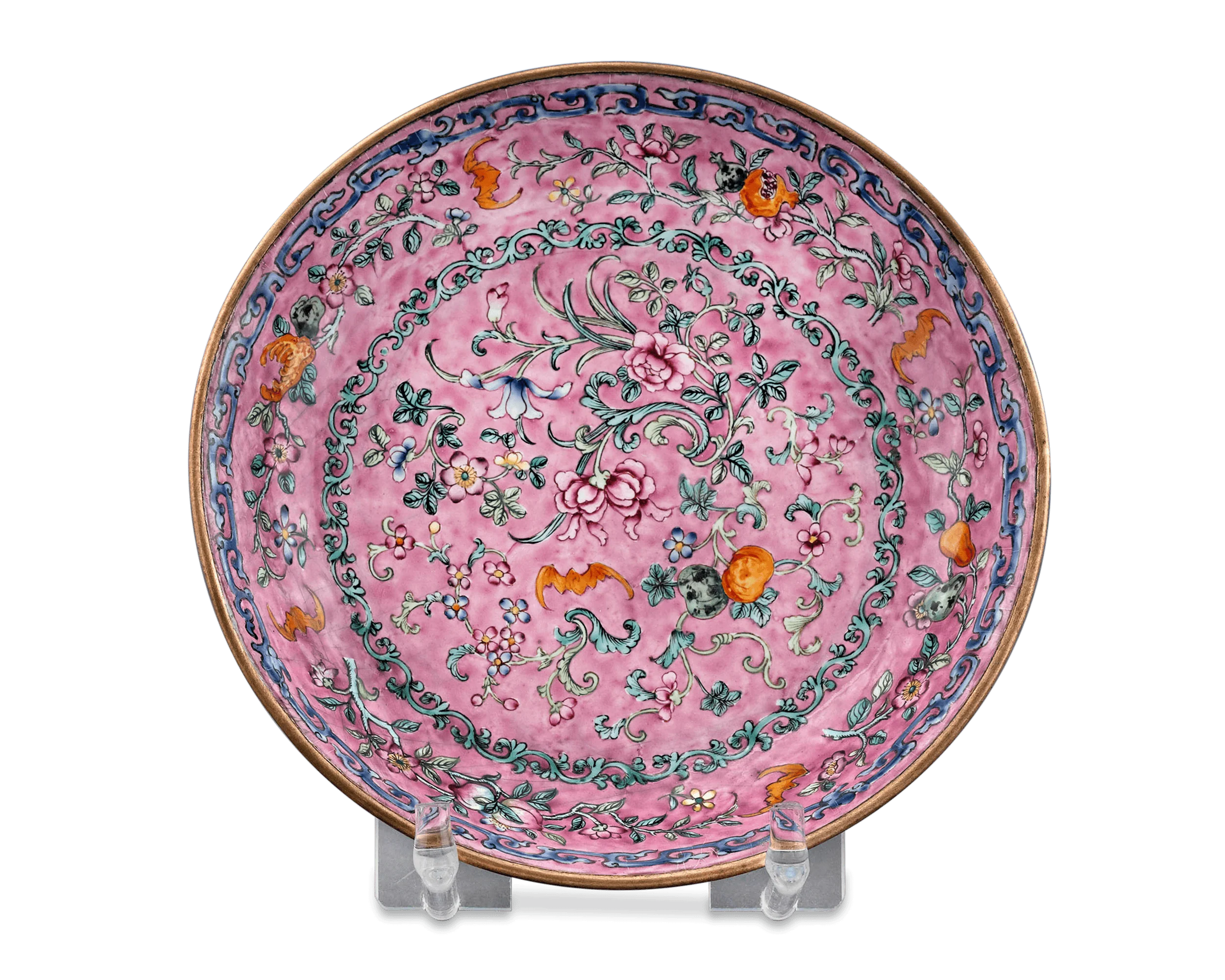
This enchanting Chinese plate, known as Canton enamel, evokes the intrigue and exclusivity of the 18th- century Imperial court. Boasting a magnificent famille rose background hue, this plate is adorned with a sophisticated floral design of exceptional intricacy. A stylized mark graces the plate’s underside. Almost certainly crafted during the Qianlong period, this piece is a rarity on the market today.
Chinese painted enamel, or Canton enamel, is so named for the principal place of its manufacture, Canton. Introduced into China in the 18th century, probably by French missionaries, this painted-enamel technique is based on those developed in Limoges, France around 1470, and accordingly is referred to by the Chinese as “foreign porcelain.” This term is also appropriate, in that much of it was made for export. There was a great demand in the West during the 18th and 19th centuries for Chinese porcelain dinner sets, tea services, vases, etc., and Canton enamel helped to fill this demand. Hence, most of the Canton enamels, such as this plate, used the famille rose colors peculiar to Europe. To make these wares, a metal object, usually copper but sometimes silver or gold, is covered with a background layer of enamel (often white), fired, and then is painted with colored enamels in much the same way as porcelain. Those crafted during the 18th century are of much finer quality and are much harder to find today.
18th century
6 3/8" diameter
Chinese painted enamel, or Canton enamel, is so named for the principal place of its manufacture, Canton. Introduced into China in the 18th century, probably by French missionaries, this painted-enamel technique is based on those developed in Limoges, France around 1470, and accordingly is referred to by the Chinese as “foreign porcelain.” This term is also appropriate, in that much of it was made for export. There was a great demand in the West during the 18th and 19th centuries for Chinese porcelain dinner sets, tea services, vases, etc., and Canton enamel helped to fill this demand. Hence, most of the Canton enamels, such as this plate, used the famille rose colors peculiar to Europe. To make these wares, a metal object, usually copper but sometimes silver or gold, is covered with a background layer of enamel (often white), fired, and then is painted with colored enamels in much the same way as porcelain. Those crafted during the 18th century are of much finer quality and are much harder to find today.
18th century
6 3/8" diameter
This enchanting Chinese plate, known as Canton enamel, evokes the intrigue and exclusivity of the 18th- century Imperial court. Boasting a magnificent famille rose background hue, this plate is adorned with a sophisticated floral design of exceptional intricacy. A stylized mark graces the plate’s underside. Almost certainly crafted during the Qianlong period, this piece is a rarity on the market today.
Chinese painted enamel, or Canton enamel, is so named for the principal place of its manufacture, Canton. Introduced into China in the 18th century, probably by French missionaries, this painted-enamel technique is based on those developed in Limoges, France around 1470, and accordingly is referred to by the Chinese as “foreign porcelain.” This term is also appropriate, in that much of it was made for export. There was a great demand in the West during the 18th and 19th centuries for Chinese porcelain dinner sets, tea services, vases, etc., and Canton enamel helped to fill this demand. Hence, most of the Canton enamels, such as this plate, used the famille rose colors peculiar to Europe. To make these wares, a metal object, usually copper but sometimes silver or gold, is covered with a background layer of enamel (often white), fired, and then is painted with colored enamels in much the same way as porcelain. Those crafted during the 18th century are of much finer quality and are much harder to find today.
18th century
6 3/8" diameter
Chinese painted enamel, or Canton enamel, is so named for the principal place of its manufacture, Canton. Introduced into China in the 18th century, probably by French missionaries, this painted-enamel technique is based on those developed in Limoges, France around 1470, and accordingly is referred to by the Chinese as “foreign porcelain.” This term is also appropriate, in that much of it was made for export. There was a great demand in the West during the 18th and 19th centuries for Chinese porcelain dinner sets, tea services, vases, etc., and Canton enamel helped to fill this demand. Hence, most of the Canton enamels, such as this plate, used the famille rose colors peculiar to Europe. To make these wares, a metal object, usually copper but sometimes silver or gold, is covered with a background layer of enamel (often white), fired, and then is painted with colored enamels in much the same way as porcelain. Those crafted during the 18th century are of much finer quality and are much harder to find today.
18th century
6 3/8" diameter
$5,197.50
Original: $14,850.00
-65%Chinese Canton Enamel Plate—
$14,850.00
$5,197.50Description
This enchanting Chinese plate, known as Canton enamel, evokes the intrigue and exclusivity of the 18th- century Imperial court. Boasting a magnificent famille rose background hue, this plate is adorned with a sophisticated floral design of exceptional intricacy. A stylized mark graces the plate’s underside. Almost certainly crafted during the Qianlong period, this piece is a rarity on the market today.
Chinese painted enamel, or Canton enamel, is so named for the principal place of its manufacture, Canton. Introduced into China in the 18th century, probably by French missionaries, this painted-enamel technique is based on those developed in Limoges, France around 1470, and accordingly is referred to by the Chinese as “foreign porcelain.” This term is also appropriate, in that much of it was made for export. There was a great demand in the West during the 18th and 19th centuries for Chinese porcelain dinner sets, tea services, vases, etc., and Canton enamel helped to fill this demand. Hence, most of the Canton enamels, such as this plate, used the famille rose colors peculiar to Europe. To make these wares, a metal object, usually copper but sometimes silver or gold, is covered with a background layer of enamel (often white), fired, and then is painted with colored enamels in much the same way as porcelain. Those crafted during the 18th century are of much finer quality and are much harder to find today.
18th century
6 3/8" diameter
Chinese painted enamel, or Canton enamel, is so named for the principal place of its manufacture, Canton. Introduced into China in the 18th century, probably by French missionaries, this painted-enamel technique is based on those developed in Limoges, France around 1470, and accordingly is referred to by the Chinese as “foreign porcelain.” This term is also appropriate, in that much of it was made for export. There was a great demand in the West during the 18th and 19th centuries for Chinese porcelain dinner sets, tea services, vases, etc., and Canton enamel helped to fill this demand. Hence, most of the Canton enamels, such as this plate, used the famille rose colors peculiar to Europe. To make these wares, a metal object, usually copper but sometimes silver or gold, is covered with a background layer of enamel (often white), fired, and then is painted with colored enamels in much the same way as porcelain. Those crafted during the 18th century are of much finer quality and are much harder to find today.
18th century
6 3/8" diameter