1 / 5
Tang Dynasty Terracotta Camel
Tang Dynasty Terracotta Camel
Circa 7th-10th century
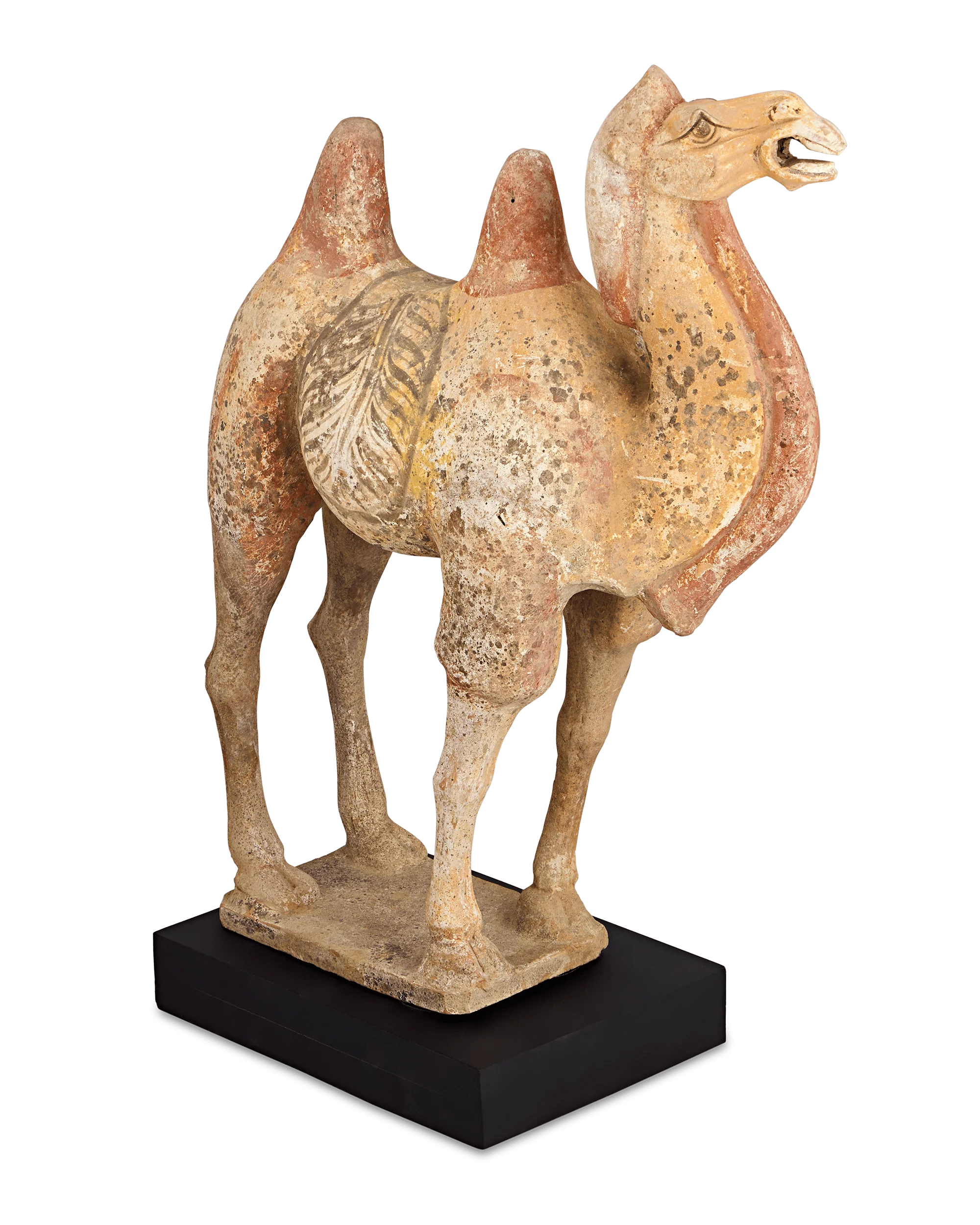
Exceptionally rare, this Tang dynasty camel is sculpted in richly pigmented terracotta and has a commanding presence. Created as mingqi—funerary objects intended to accompany the deceased—such works flourished during the Tang dynasty’s cultural zenith between the seventh and tenth centuries CE. The camel’s powerful stance and simplified form reflect the period’s renowned artistic language.
Tang dynasty mingqi represent China’s central role along the Silk Road, a network that facilitated cultural exchange across East and Central Asia and the Middle East. Camels, essential to long-distance travel and trade, appear frequently in funerary sculpture as symbols of mobility, protection and prosperity, underscoring their importance in both life and the afterlife.
16 1/4" high by 12 1/4" wide by 5" deep
Provenance:
Private collection, Florida
M.S. Rau, New Orleans
Circa 7th-10th century
Exceptionally rare, this Tang dynasty camel is sculpted in richly pigmented terracotta and has a commanding presence. Created as mingqi—funerary objects intended to accompany the deceased—such works flourished during the Tang dynasty’s cultural zenith between the seventh and tenth centuries CE. The camel’s powerful stance and simplified form reflect the period’s renowned artistic language.
Tang dynasty mingqi represent China’s central role along the Silk Road, a network that facilitated cultural exchange across East and Central Asia and the Middle East. Camels, essential to long-distance travel and trade, appear frequently in funerary sculpture as symbols of mobility, protection and prosperity, underscoring their importance in both life and the afterlife.
16 1/4" high by 12 1/4" wide by 5" deep
Provenance:
Private collection, Florida
M.S. Rau, New Orleans
Tang Dynasty Terracotta Camel
Circa 7th-10th century
Exceptionally rare, this Tang dynasty camel is sculpted in richly pigmented terracotta and has a commanding presence. Created as mingqi—funerary objects intended to accompany the deceased—such works flourished during the Tang dynasty’s cultural zenith between the seventh and tenth centuries CE. The camel’s powerful stance and simplified form reflect the period’s renowned artistic language.
Tang dynasty mingqi represent China’s central role along the Silk Road, a network that facilitated cultural exchange across East and Central Asia and the Middle East. Camels, essential to long-distance travel and trade, appear frequently in funerary sculpture as symbols of mobility, protection and prosperity, underscoring their importance in both life and the afterlife.
16 1/4" high by 12 1/4" wide by 5" deep
Provenance:
Private collection, Florida
M.S. Rau, New Orleans
Circa 7th-10th century
Exceptionally rare, this Tang dynasty camel is sculpted in richly pigmented terracotta and has a commanding presence. Created as mingqi—funerary objects intended to accompany the deceased—such works flourished during the Tang dynasty’s cultural zenith between the seventh and tenth centuries CE. The camel’s powerful stance and simplified form reflect the period’s renowned artistic language.
Tang dynasty mingqi represent China’s central role along the Silk Road, a network that facilitated cultural exchange across East and Central Asia and the Middle East. Camels, essential to long-distance travel and trade, appear frequently in funerary sculpture as symbols of mobility, protection and prosperity, underscoring their importance in both life and the afterlife.
16 1/4" high by 12 1/4" wide by 5" deep
Provenance:
Private collection, Florida
M.S. Rau, New Orleans
$10,447.50
Original: $29,850.00
-65%Tang Dynasty Terracotta Camel—
$29,850.00
$10,447.50Description
Tang Dynasty Terracotta Camel
Circa 7th-10th century
Exceptionally rare, this Tang dynasty camel is sculpted in richly pigmented terracotta and has a commanding presence. Created as mingqi—funerary objects intended to accompany the deceased—such works flourished during the Tang dynasty’s cultural zenith between the seventh and tenth centuries CE. The camel’s powerful stance and simplified form reflect the period’s renowned artistic language.
Tang dynasty mingqi represent China’s central role along the Silk Road, a network that facilitated cultural exchange across East and Central Asia and the Middle East. Camels, essential to long-distance travel and trade, appear frequently in funerary sculpture as symbols of mobility, protection and prosperity, underscoring their importance in both life and the afterlife.
16 1/4" high by 12 1/4" wide by 5" deep
Provenance:
Private collection, Florida
M.S. Rau, New Orleans
Circa 7th-10th century
Exceptionally rare, this Tang dynasty camel is sculpted in richly pigmented terracotta and has a commanding presence. Created as mingqi—funerary objects intended to accompany the deceased—such works flourished during the Tang dynasty’s cultural zenith between the seventh and tenth centuries CE. The camel’s powerful stance and simplified form reflect the period’s renowned artistic language.
Tang dynasty mingqi represent China’s central role along the Silk Road, a network that facilitated cultural exchange across East and Central Asia and the Middle East. Camels, essential to long-distance travel and trade, appear frequently in funerary sculpture as symbols of mobility, protection and prosperity, underscoring their importance in both life and the afterlife.
16 1/4" high by 12 1/4" wide by 5" deep
Provenance:
Private collection, Florida
M.S. Rau, New Orleans