
1 / 5
Temple of Vespasian and Titus Roman Micromosaic
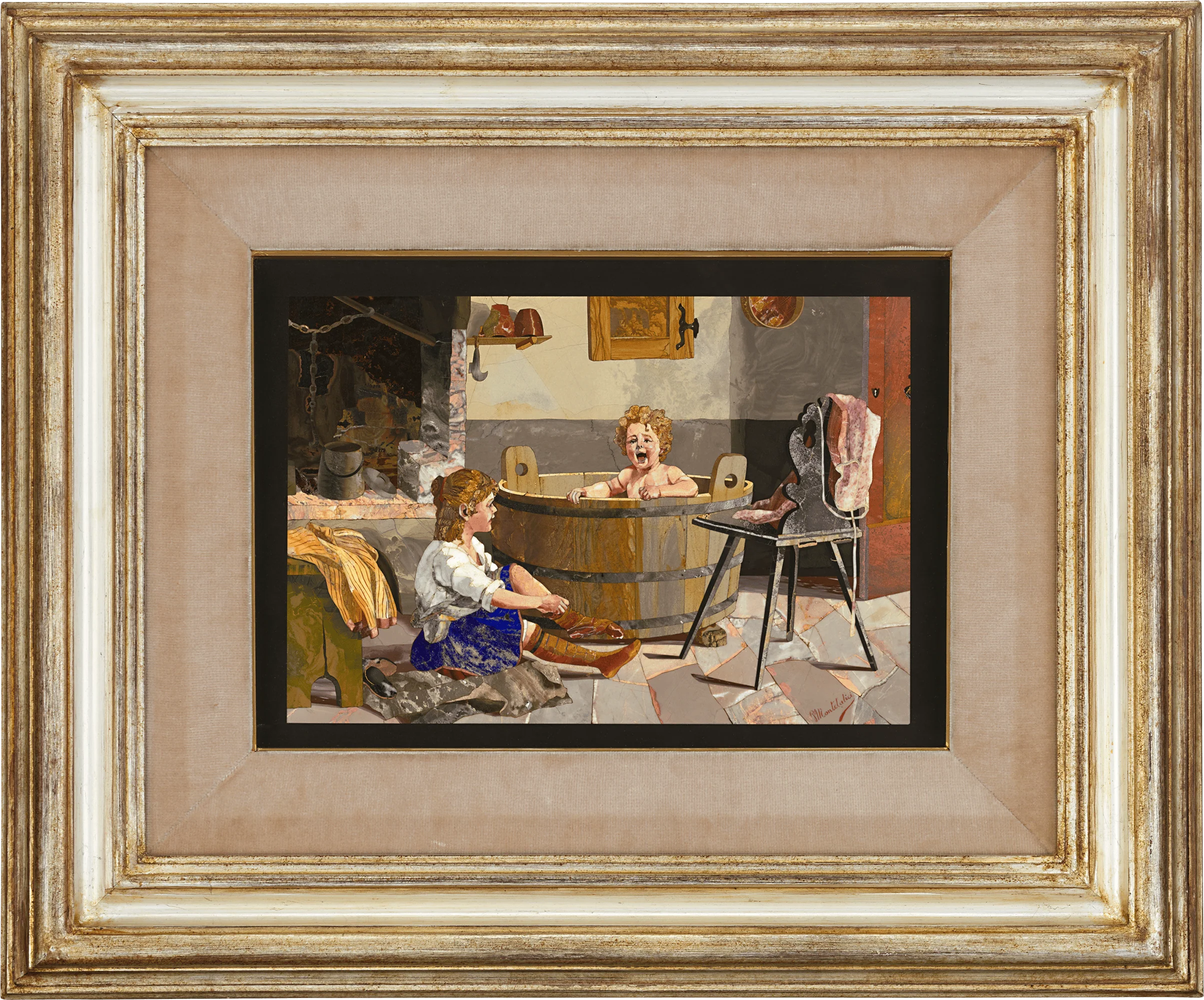
The ruins of the ancient Roman Temple of Vespasian and Titus are the subject of this Italian micromosaic. Crafted in intricate detail, the scene is composed of thousands of tiny glass tiles that have been painstakingly chosen and placed to create a painting-like effect. A bucolic landscape surrounds the ruins, lending a sense of romance to the scene that is further enhanced by the presence of a mother and child seated near the temple's columns. It is an extraordinary example of this ancient art form that experienced a surge in popularity in the 18th and 19th centuries.
Vespasian was the Roman Emperor from 69 AD to 79 AD and the founder of the Flavian dynasty, which ruled the empire for 25 years. This temple was constructed to honor Vespasian and his older son and successor Titus (ruled 79-81 AD); it was completed by Titus’ brother, Domitian, around 87 AD. Titus and Vespasian were each deified through the ceremony of apotheosis. Thus, tradition dictated that they be honored by Roman citizens and subjects as Roman deities. This imperial worship was as much a sign of allegiance to the emperor of Rome as it was a formal religion.
The temple suffered significant damage during medieval times, particularly circa 1300 under Pope Boniface VIII and in Pope Nicholas V's remodeling of the Forum. All that survives today is the podium's core, parts of the inner chamber, and the three Corinthian columns depicted in this classic micromosaic. The architrave surmounting the capitals displays the last few letters of an inscription, [R]ESTITVER[UNT] (meaning "they restored"), commemorating the restoration of the temple by Septimius Severus and his son, Caracalla, around 200 AD.
Late 19th century
Micromosaic: 10 1/2" high x 12 5/8" wide
Frame: 12 1/2" high x 14 3/4" wide
Vespasian was the Roman Emperor from 69 AD to 79 AD and the founder of the Flavian dynasty, which ruled the empire for 25 years. This temple was constructed to honor Vespasian and his older son and successor Titus (ruled 79-81 AD); it was completed by Titus’ brother, Domitian, around 87 AD. Titus and Vespasian were each deified through the ceremony of apotheosis. Thus, tradition dictated that they be honored by Roman citizens and subjects as Roman deities. This imperial worship was as much a sign of allegiance to the emperor of Rome as it was a formal religion.
The temple suffered significant damage during medieval times, particularly circa 1300 under Pope Boniface VIII and in Pope Nicholas V's remodeling of the Forum. All that survives today is the podium's core, parts of the inner chamber, and the three Corinthian columns depicted in this classic micromosaic. The architrave surmounting the capitals displays the last few letters of an inscription, [R]ESTITVER[UNT] (meaning "they restored"), commemorating the restoration of the temple by Septimius Severus and his son, Caracalla, around 200 AD.
Late 19th century
Micromosaic: 10 1/2" high x 12 5/8" wide
Frame: 12 1/2" high x 14 3/4" wide
The ruins of the ancient Roman Temple of Vespasian and Titus are the subject of this Italian micromosaic. Crafted in intricate detail, the scene is composed of thousands of tiny glass tiles that have been painstakingly chosen and placed to create a painting-like effect. A bucolic landscape surrounds the ruins, lending a sense of romance to the scene that is further enhanced by the presence of a mother and child seated near the temple's columns. It is an extraordinary example of this ancient art form that experienced a surge in popularity in the 18th and 19th centuries.
Vespasian was the Roman Emperor from 69 AD to 79 AD and the founder of the Flavian dynasty, which ruled the empire for 25 years. This temple was constructed to honor Vespasian and his older son and successor Titus (ruled 79-81 AD); it was completed by Titus’ brother, Domitian, around 87 AD. Titus and Vespasian were each deified through the ceremony of apotheosis. Thus, tradition dictated that they be honored by Roman citizens and subjects as Roman deities. This imperial worship was as much a sign of allegiance to the emperor of Rome as it was a formal religion.
The temple suffered significant damage during medieval times, particularly circa 1300 under Pope Boniface VIII and in Pope Nicholas V's remodeling of the Forum. All that survives today is the podium's core, parts of the inner chamber, and the three Corinthian columns depicted in this classic micromosaic. The architrave surmounting the capitals displays the last few letters of an inscription, [R]ESTITVER[UNT] (meaning "they restored"), commemorating the restoration of the temple by Septimius Severus and his son, Caracalla, around 200 AD.
Late 19th century
Micromosaic: 10 1/2" high x 12 5/8" wide
Frame: 12 1/2" high x 14 3/4" wide
Vespasian was the Roman Emperor from 69 AD to 79 AD and the founder of the Flavian dynasty, which ruled the empire for 25 years. This temple was constructed to honor Vespasian and his older son and successor Titus (ruled 79-81 AD); it was completed by Titus’ brother, Domitian, around 87 AD. Titus and Vespasian were each deified through the ceremony of apotheosis. Thus, tradition dictated that they be honored by Roman citizens and subjects as Roman deities. This imperial worship was as much a sign of allegiance to the emperor of Rome as it was a formal religion.
The temple suffered significant damage during medieval times, particularly circa 1300 under Pope Boniface VIII and in Pope Nicholas V's remodeling of the Forum. All that survives today is the podium's core, parts of the inner chamber, and the three Corinthian columns depicted in this classic micromosaic. The architrave surmounting the capitals displays the last few letters of an inscription, [R]ESTITVER[UNT] (meaning "they restored"), commemorating the restoration of the temple by Septimius Severus and his son, Caracalla, around 200 AD.
Late 19th century
Micromosaic: 10 1/2" high x 12 5/8" wide
Frame: 12 1/2" high x 14 3/4" wide
$68,500.00
Temple of Vespasian and Titus Roman Micromosaic—
$68,500.00
Description
The ruins of the ancient Roman Temple of Vespasian and Titus are the subject of this Italian micromosaic. Crafted in intricate detail, the scene is composed of thousands of tiny glass tiles that have been painstakingly chosen and placed to create a painting-like effect. A bucolic landscape surrounds the ruins, lending a sense of romance to the scene that is further enhanced by the presence of a mother and child seated near the temple's columns. It is an extraordinary example of this ancient art form that experienced a surge in popularity in the 18th and 19th centuries.
Vespasian was the Roman Emperor from 69 AD to 79 AD and the founder of the Flavian dynasty, which ruled the empire for 25 years. This temple was constructed to honor Vespasian and his older son and successor Titus (ruled 79-81 AD); it was completed by Titus’ brother, Domitian, around 87 AD. Titus and Vespasian were each deified through the ceremony of apotheosis. Thus, tradition dictated that they be honored by Roman citizens and subjects as Roman deities. This imperial worship was as much a sign of allegiance to the emperor of Rome as it was a formal religion.
The temple suffered significant damage during medieval times, particularly circa 1300 under Pope Boniface VIII and in Pope Nicholas V's remodeling of the Forum. All that survives today is the podium's core, parts of the inner chamber, and the three Corinthian columns depicted in this classic micromosaic. The architrave surmounting the capitals displays the last few letters of an inscription, [R]ESTITVER[UNT] (meaning "they restored"), commemorating the restoration of the temple by Septimius Severus and his son, Caracalla, around 200 AD.
Late 19th century
Micromosaic: 10 1/2" high x 12 5/8" wide
Frame: 12 1/2" high x 14 3/4" wide
Vespasian was the Roman Emperor from 69 AD to 79 AD and the founder of the Flavian dynasty, which ruled the empire for 25 years. This temple was constructed to honor Vespasian and his older son and successor Titus (ruled 79-81 AD); it was completed by Titus’ brother, Domitian, around 87 AD. Titus and Vespasian were each deified through the ceremony of apotheosis. Thus, tradition dictated that they be honored by Roman citizens and subjects as Roman deities. This imperial worship was as much a sign of allegiance to the emperor of Rome as it was a formal religion.
The temple suffered significant damage during medieval times, particularly circa 1300 under Pope Boniface VIII and in Pope Nicholas V's remodeling of the Forum. All that survives today is the podium's core, parts of the inner chamber, and the three Corinthian columns depicted in this classic micromosaic. The architrave surmounting the capitals displays the last few letters of an inscription, [R]ESTITVER[UNT] (meaning "they restored"), commemorating the restoration of the temple by Septimius Severus and his son, Caracalla, around 200 AD.
Late 19th century
Micromosaic: 10 1/2" high x 12 5/8" wide
Frame: 12 1/2" high x 14 3/4" wide